
What is landscape fabric made of? Polypropylene, a tough plastic that does not rot in soil. How is landscape fabric made from it? Either the polypropylene is slit into flat tapes and woven on a loom, or it is spun into fibers that are needle punched into a felt.
Bulk/contractor pricing on request, pallet quantities available
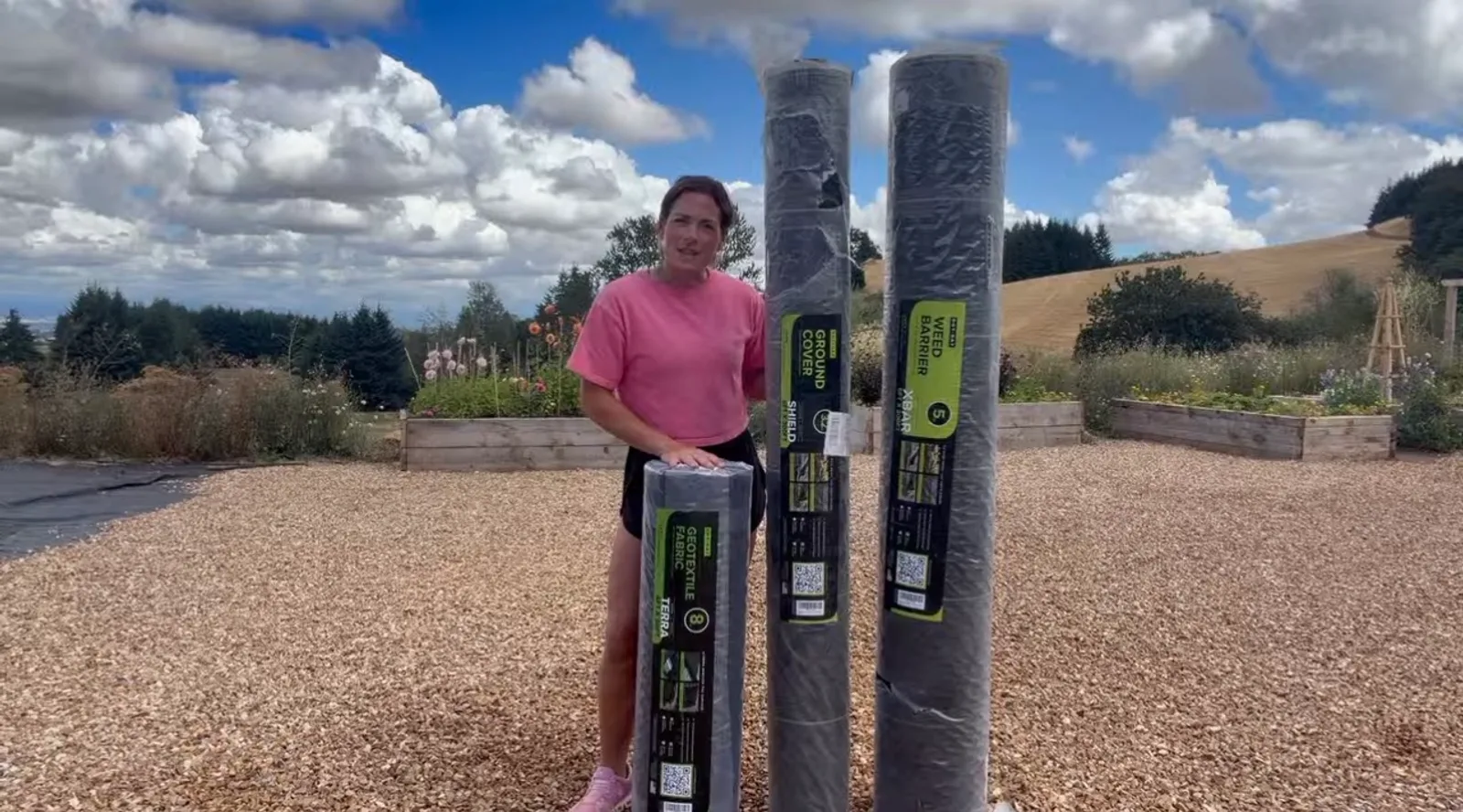
We manufacture SHIELD, XBAR and TERRA and ship from Miami Gardens. Get full-pallet and volume pricing for your crew.
What is landscape fabric made of, and why it matters
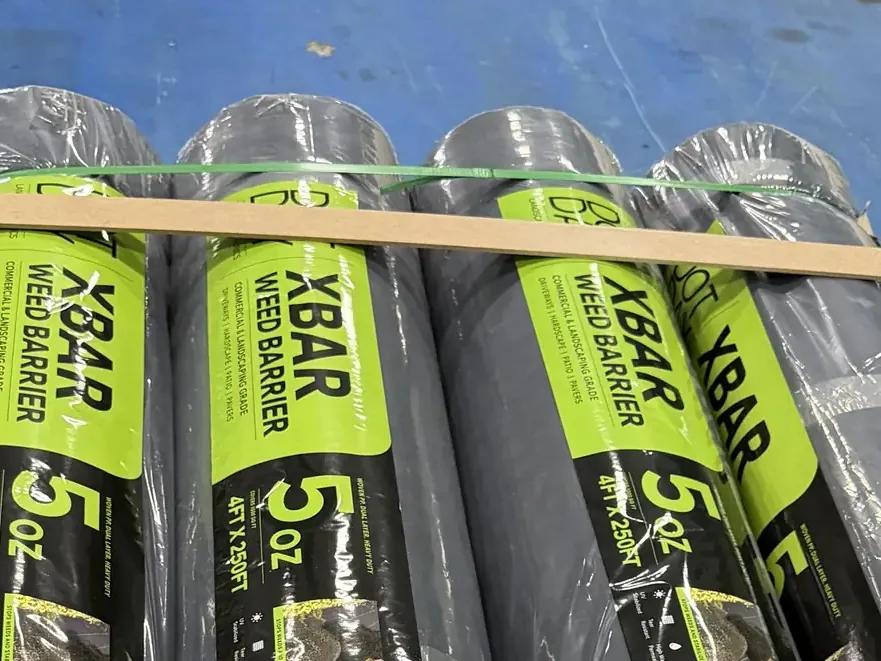
That one fork decides how a fabric blocks weeds, carries stone and passes water. We manufacture three fabrics that take those routes: SHIELD for beds, TERRA for drainage, and XBAR for gravel and pavers. Every roll ships from Miami Gardens.
Why landscape fabric manufacturers matter to crews
Most landscape fabric manufacturers sell through a chain of distributors, and the roll on your truck can change from one order to the next. For a crew that is a real cost: a lighter roll tears on the second job, a narrow roll adds seams, and a short roll leaves you scrambling on site.
When we manufacture the fabric ourselves, the build stays the same order after order. Same polymer, same weave or punch, same roll size, same label. That is what lets a landscaper quote a job off one data sheet and trust the pallet that shows up.
Woven vs nonwoven: how each is made
Every landscape fabric comes down to one of two builds, or a mix of both.
| Build | How it is made | What it is good at |
|---|---|---|
| Woven (SHIELD 3.2 oz) | Slit-film PP tapes interlaced on a loom | Blocking light, holding pull, staying flat |
| Needle punched (TERRA 4, 6, 8 oz) | PP fiber web locked by barbed needles, then thermally bonded | Water flow in every direction, filtering fines |
| Dual-layer (XBAR 5 oz) | Woven face capped onto a needle-punched backing | Weed control plus puncture resistance under stone |
### Woven: slit-film tape extrusion and loom weaving (SHIELD)
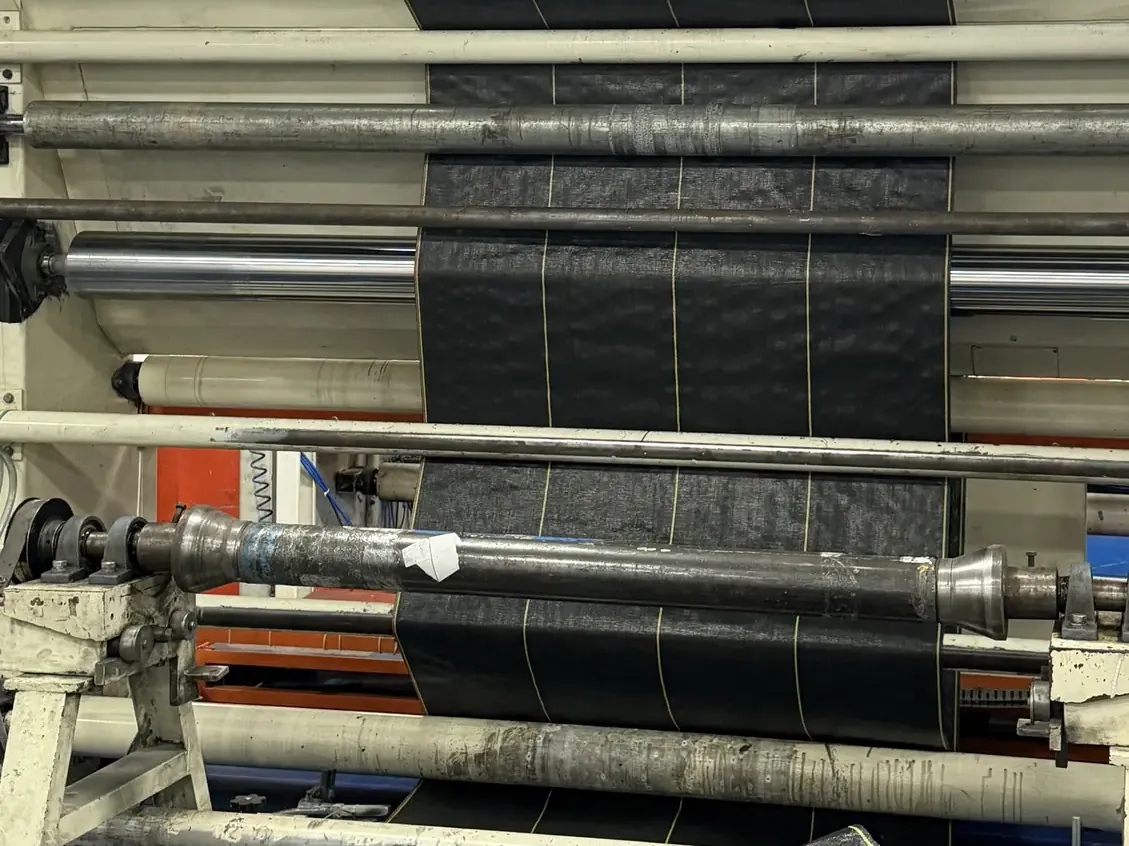
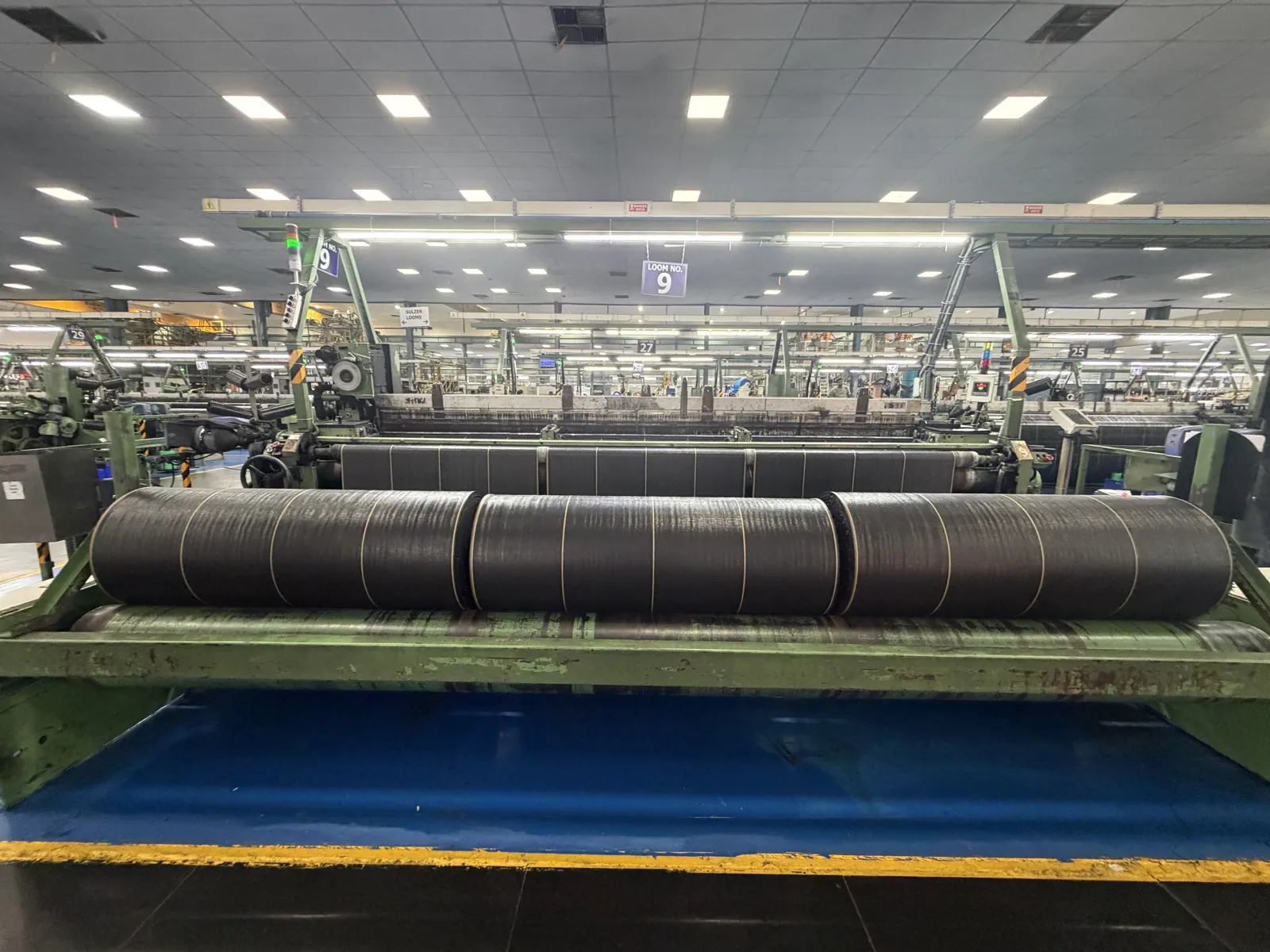
Polypropylene pellets are melted and extruded as a thin film. The film is slit into narrow flat tapes and stretched, which lines up the plastic and makes each tape far stronger along its length. On the loom, lengthwise tapes (the warp) run through while crosswise tapes (the weft) pass over and under them, row after row.
That grid is where SHIELD gets its pull strength: 180 lb lengthwise and 105 lb crosswise grab tensile (ASTM D4632), and 82 / 75 lb trapezoid tear (ASTM D4533). It stays flat and tight across a bed under mulch.
### Needle punched geotextile: fiber web and needle punching (TERRA and XBAR)
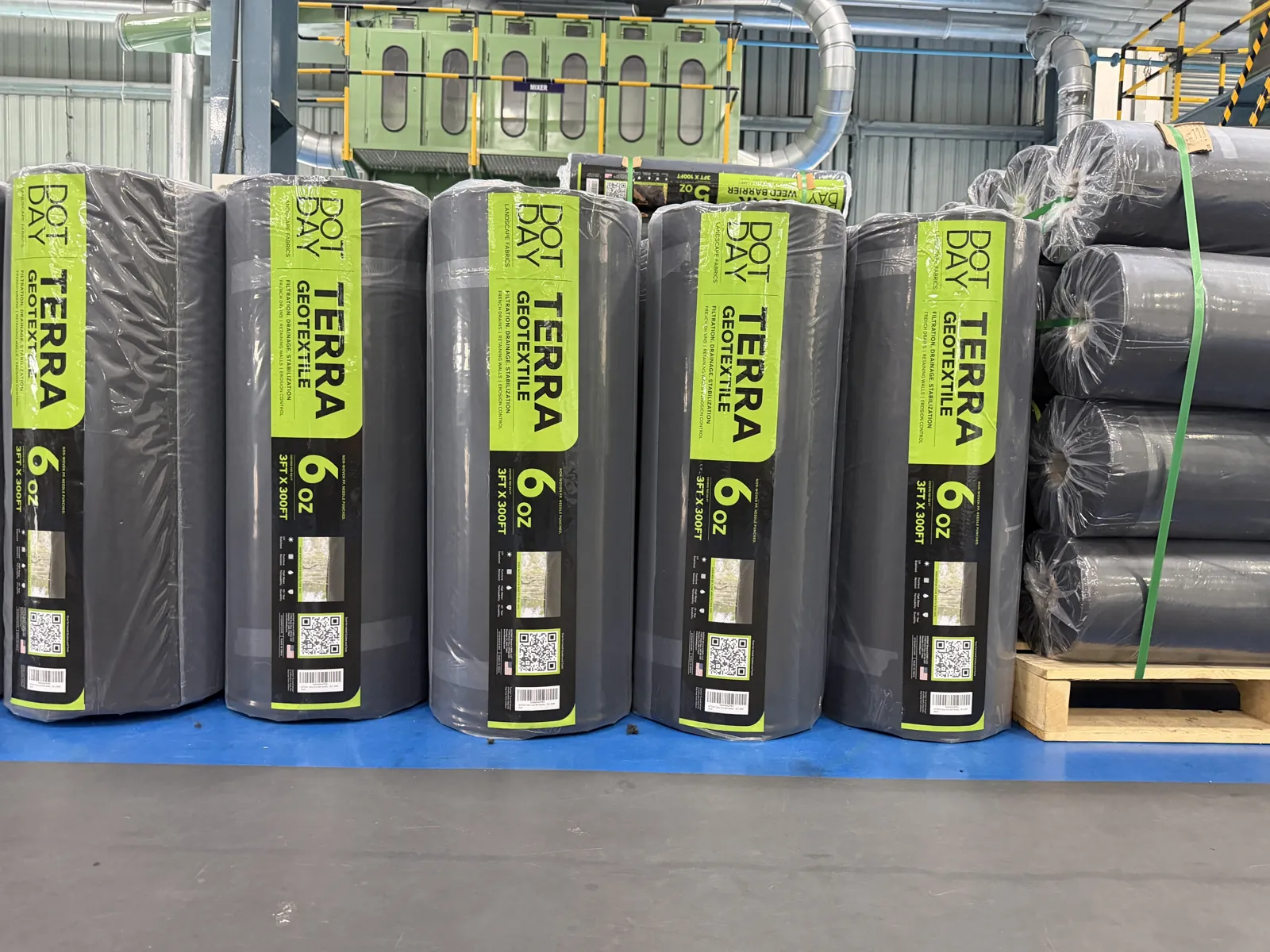
How is geotextile made when it is not woven? Polypropylene fibers are laid into a loose web. The web runs through a needle loom where thousands of barbed needles punch through it, hooking and tangling the fibers into a dense felt. TERRA is then thermally bonded to set the surface. That is how non woven polypropylene fabric is made, and it is why a needle punched geotextile passes water in every direction while holding back fine soil.
XBAR uses the same needle-punched felt as a backing and caps a woven face on top. The face blocks weeds and carries load; the felt adds bulk so angular stone does not punch through.
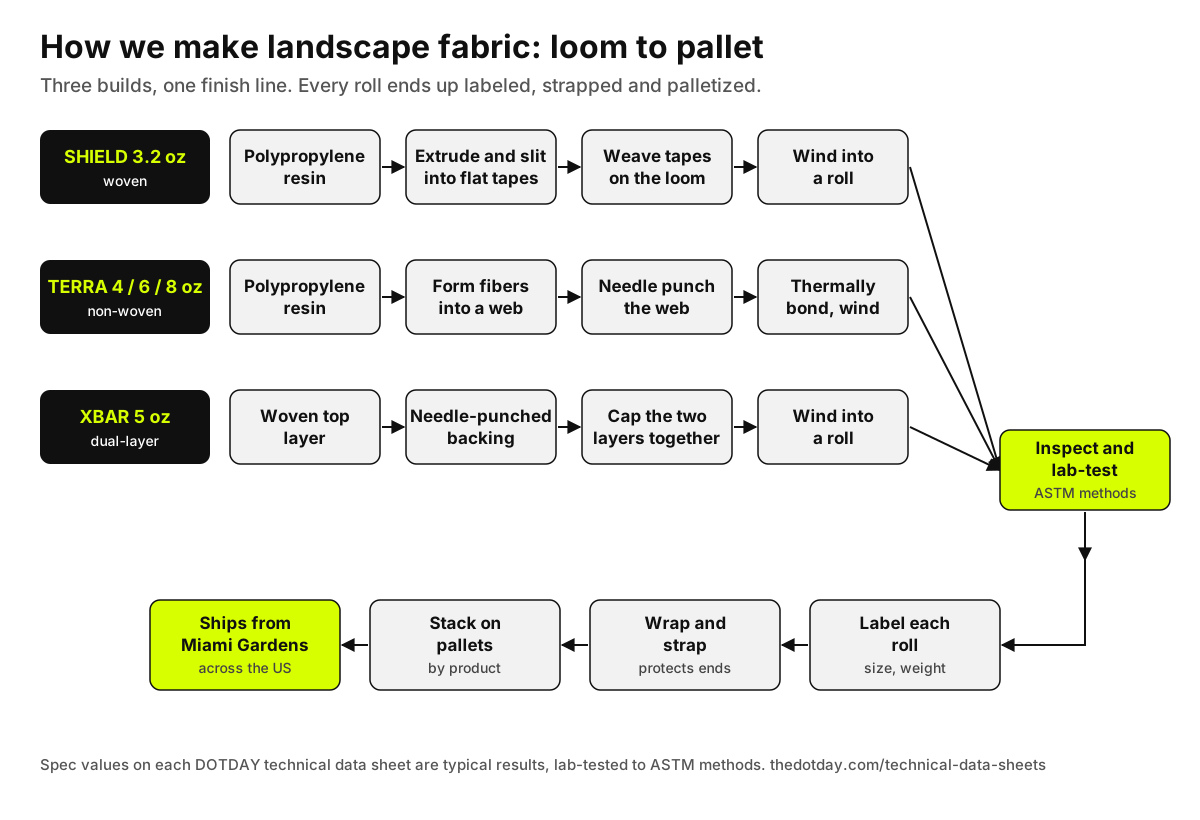
How is landscape fabric made, step by step
Here is the whole path on one page. Each lane is one build, and all three meet at the same inspection, labeling and pallet line.
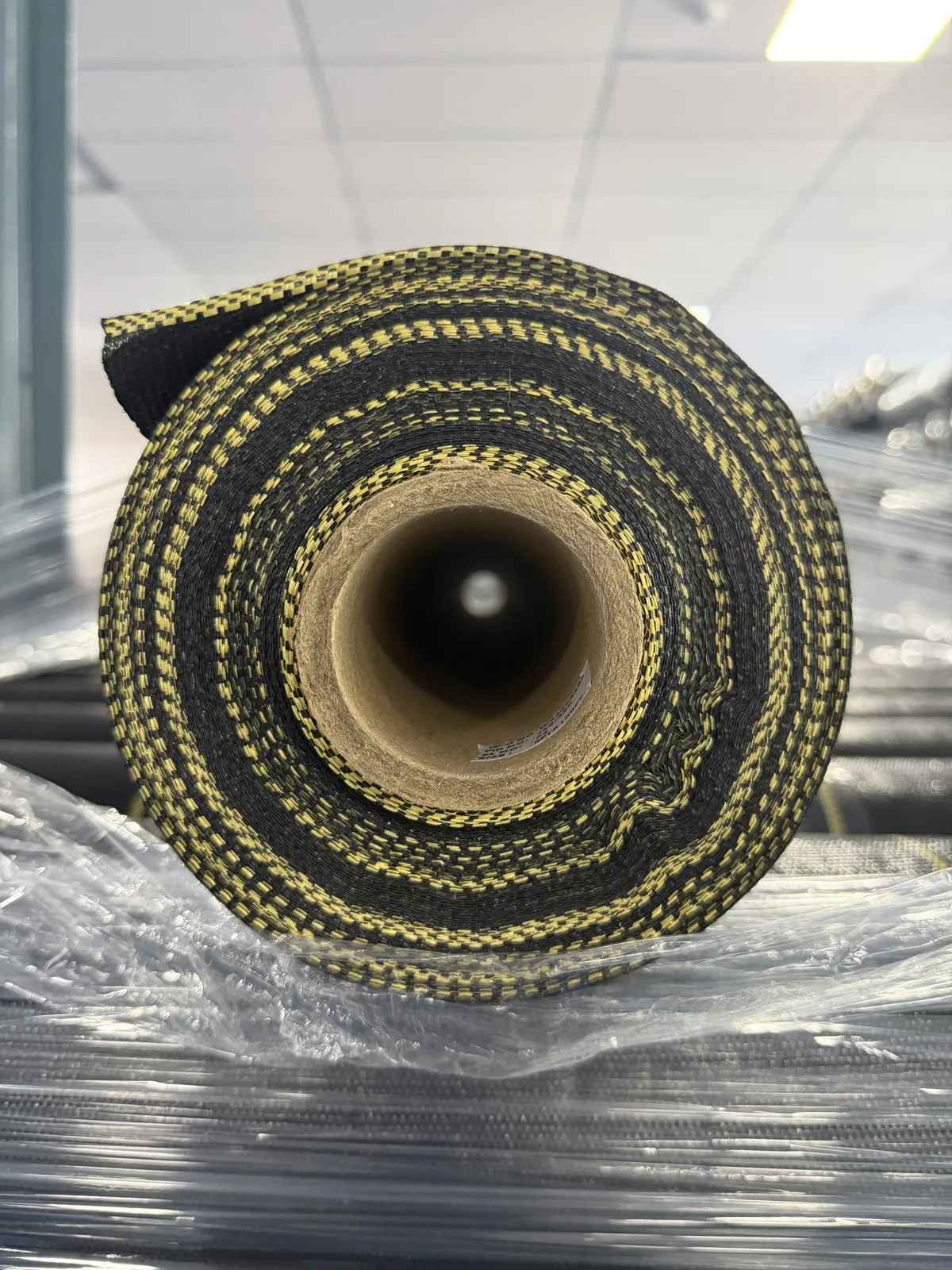
QC checkpoints before a roll is wrapped
Before any roll is wrapped, it goes through the same checks. These are the things that cost a crew time when they are off:
- Weight. Fabric weight per square yard is checked against the data sheet value for that product.
- Width. A roll sold at 6 ft wide has to cover 6 ft, or your overlaps and seam count change.
- Roll length. Length is checked so a 300 ft roll covers 300 ft and your takeoff holds.
- Guide lines. Guide lines are checked for a straight, even run along the roll, so crews can lay rows and trim square.
Each fabric is lab-tested to ASTM methods, and the results are published on our technical data sheets page.
What the numbers mean: ASTM D4632, D6241, D4491 and more
A data sheet is only useful if you know what each test does to the fabric. Here is the plain version, with our values where our sheets report them.
| Test (ASTM method) | What it does physically | Why a crew cares |
|---|---|---|
| CBR puncture (D6241) | Pushes a 2 in plunger through clamped fabric | Survives stone and compaction. XBAR: 332 lb; TERRA: 300 to 500 lb |
| Rod puncture (D4833) | Pushes a small rod through the fabric | A sharper-point puncture check; our sheets report D6241 instead |
| AOS (D4751) | Finds the largest particle that passes through | Holds fines back in a drain. TERRA: 0.20 mm (4, 6 oz), 0.16 mm (8 oz) |
| Permittivity and flow (D4491) | Measures water passing through under a set head | Keeps drains and bases from ponding. TERRA 6 oz: 4,000 l/min/m² |
| UV (D4355 or G154) | Exposes fabric to UV light and retests strength | Tells you how it holds up before cover goes on. SHIELD and XBAR: 70% retained after 500 hr (G154) |
| Thickness (D5199) | Measures fabric thickness under light pressure | More bulk cushions stone. XBAR: 29.5 mil |
| Grab tensile (D4632) | Clamps a strip and pulls until it breaks | Resists tearing when you stretch it tight across the bed. SHIELD: 180 / 105 lb |
Data sheet values are typical results. Compare the same method on two sheets, not just the number. For weights side by side, see the landscape fabric thickness chart.
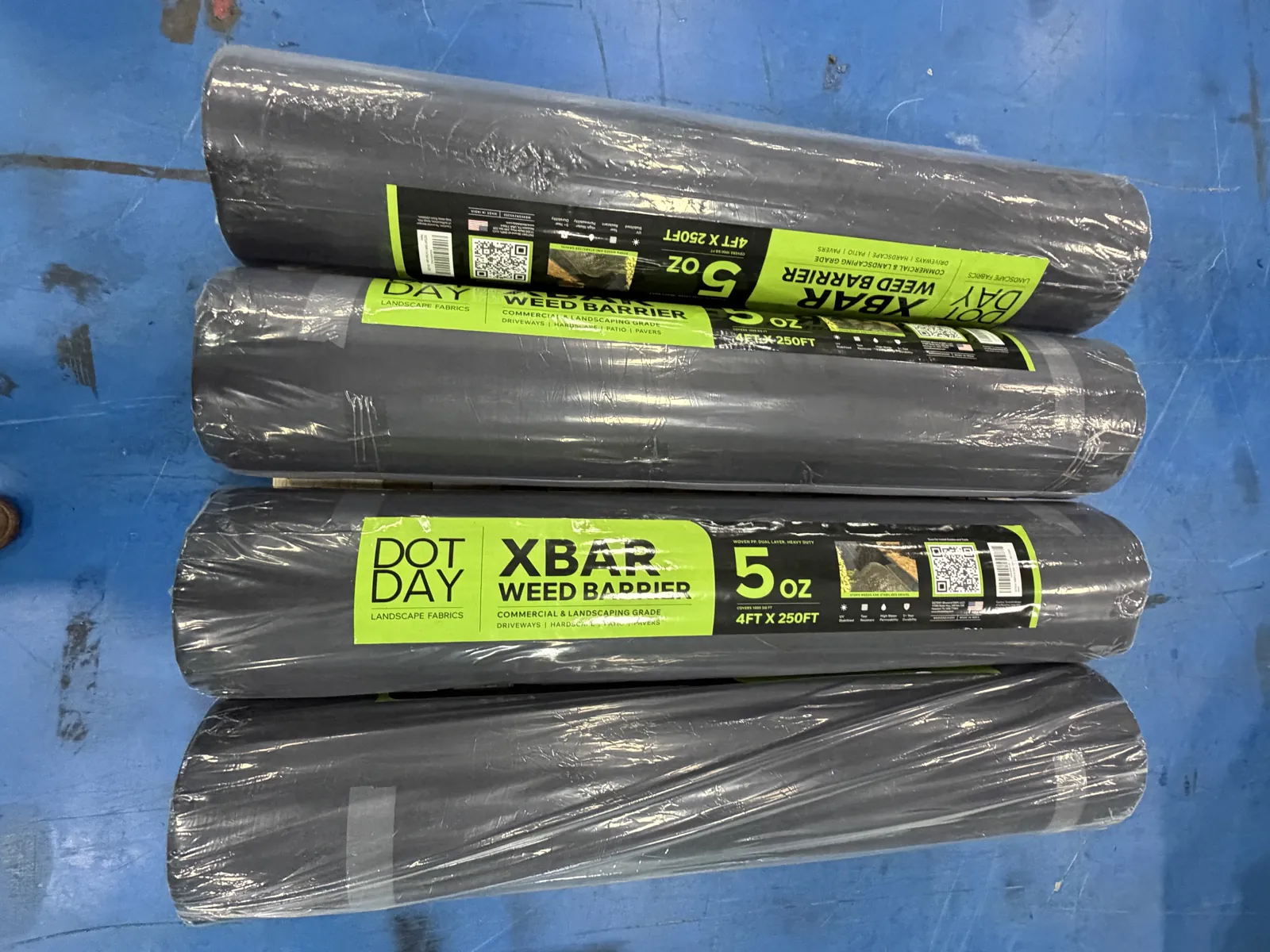
Wrapped, strapped and palletized for big jobs
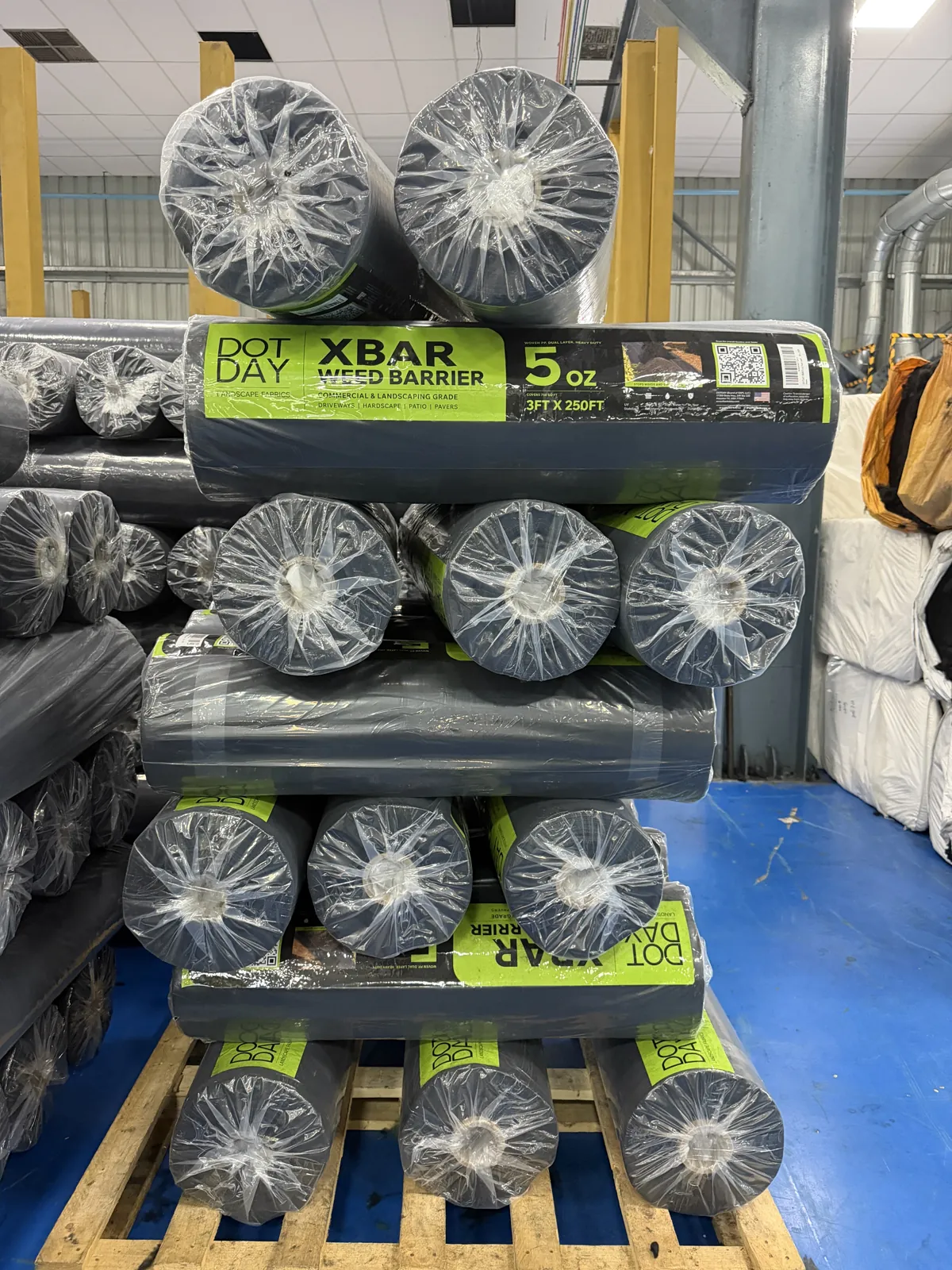
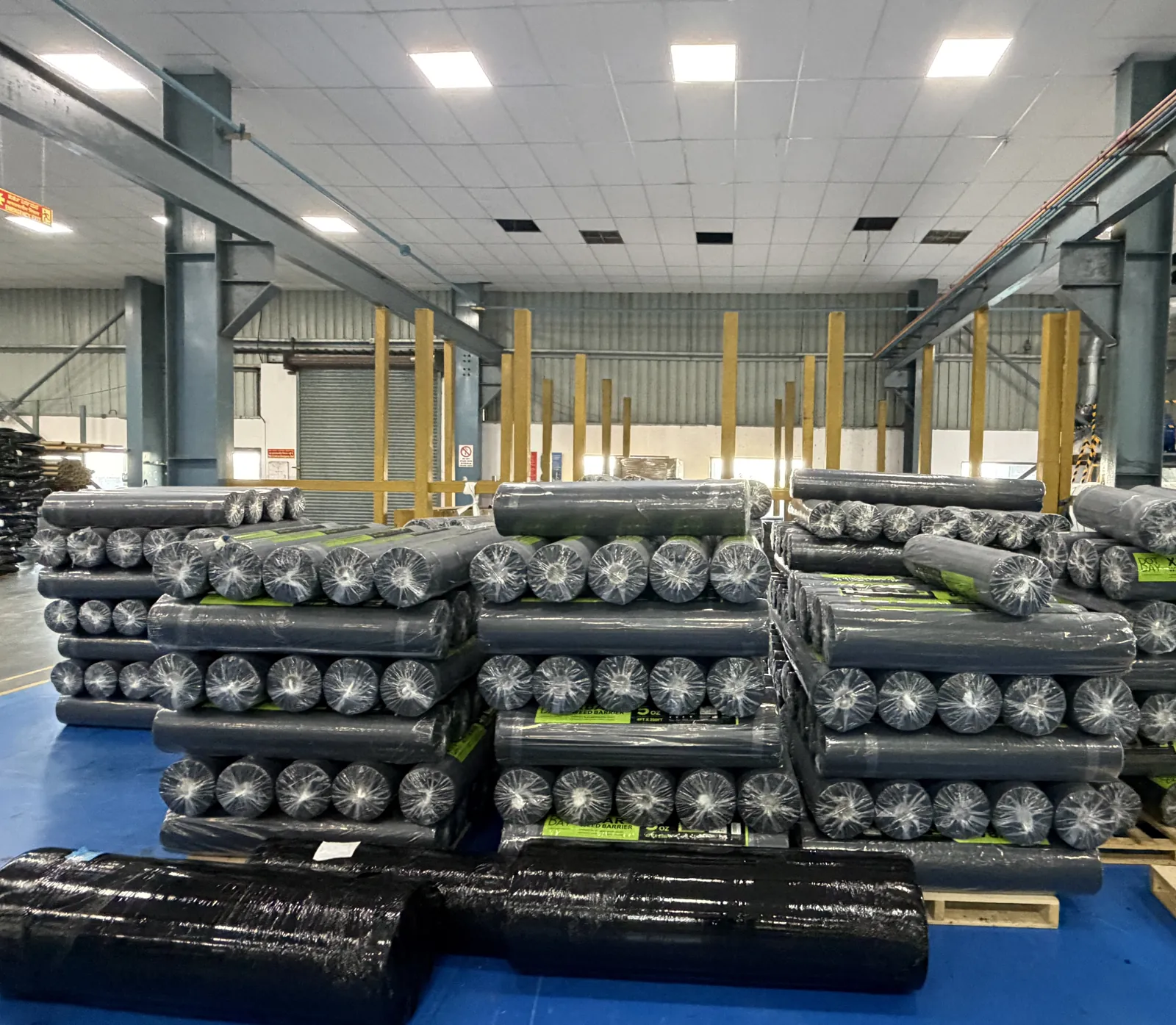
After QC, each roll gets a product label with the fabric name, weight and roll size, then a protective wrap so the ends stay clean. Rolls are strapped in bundles and stacked by product on full pallets.
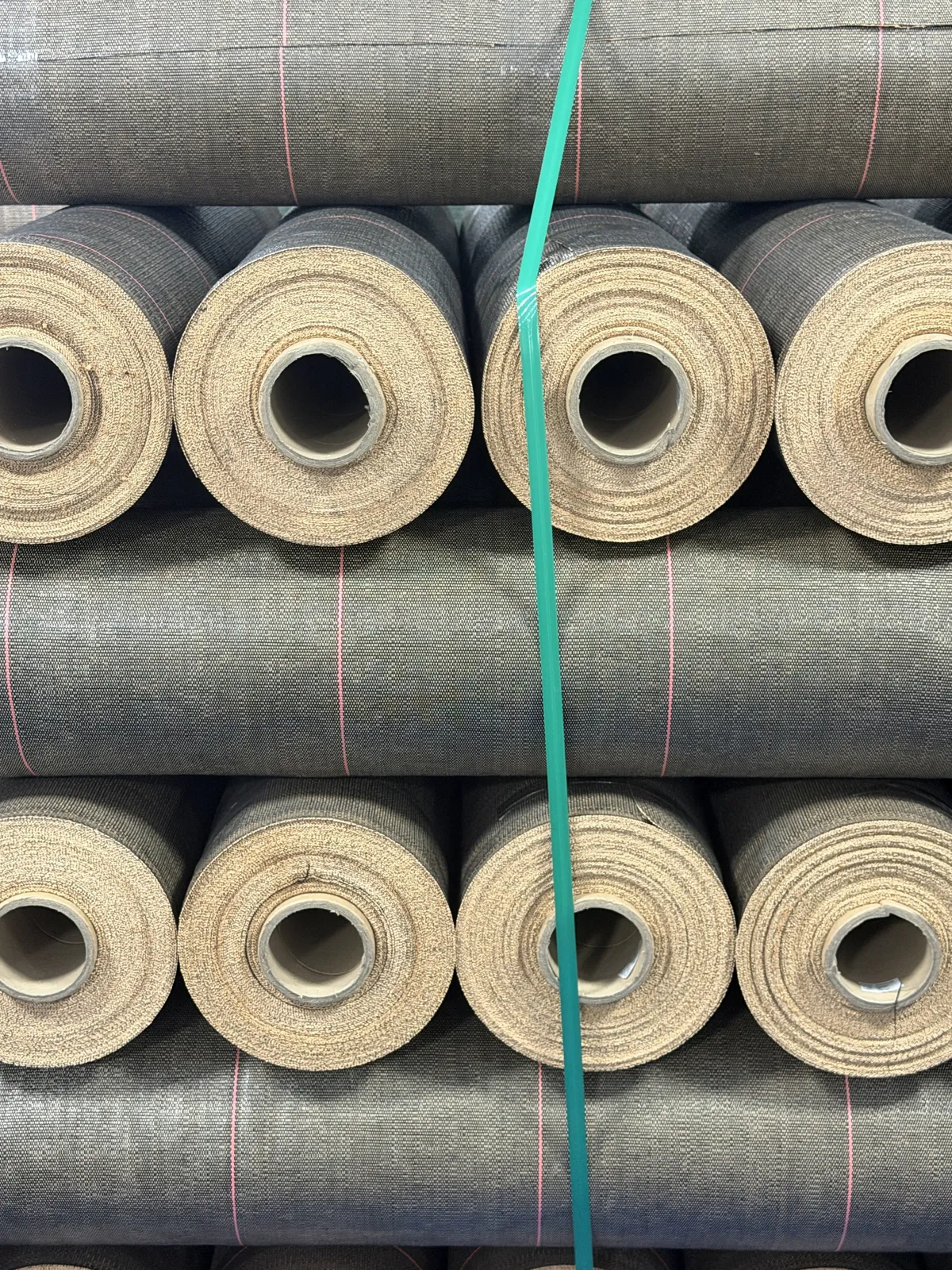
For big jobs, long rolls cut seams and labor. SHIELD, XBAR and TERRA each come in several widths and lengths; current roll sizes and prices are listed on the SHIELD, XBAR and TERRA product pages. Full-pallet and volume pricing is quoted on request.
Not sure how many rolls? The landscape fabric calculator handles the overlap and roll math for beds, bases and trenches.
How much fabric does your job need?
Use the DOTDAY Fabric Calculator to handle the overlap and roll math for your area.
What we recommend
Match the build to what sits on top:
- Mulch, soil or straw on top: woven SHIELD. It blocks light and lies flat. See why professionals choose 5 oz when beds see foot traffic.
- Gravel, rock or pavers on top: dual-layer XBAR. Read how to install landscape fabric under gravel and the weed barrier for gravel driveway guide.
- Water has to pass through: needle punched TERRA. Plan drains with our French drain installation cost guide, and compare builds in woven vs non-woven landscape fabric and types of geotextile fabric.
Unsure? The Fabric Finder asks what goes on top and points you to a roll.
Buying for a crew? Start with bulk pricing, then see our bulk landscape fabric for contractors guide, the landscape fabric for contractors overview and our professional landscape fabric lineup. For pallet quotes, contact us or email orders@thedotday.com.
Need full pallets or a job-site quote?
Tell us the fabric, roll size and quantity. We reply with volume pricing. Prefer email? Write to orders@thedotday.com.
Talk to an ExpertWrapping up
What is landscape fabric made of? Polypropylene, woven on a loom or needle punched into a felt, then checked for weight, width, length and guide lines before it is wrapped and palletized. At DOTDAY we manufacture all three builds and ship from Miami Gardens. Crews can request bulk pricing and full-pallet quotes on our bulk pricing page.
Not sure which DOTDAY fabric fits?
SHIELD for beds, XBAR under gravel, TERRA for drainage and separation. The Fabric Finder matches your job to the right roll.
Find Your FabricThree fabrics. One simple rule.
Use the right fabric for the right ground condition.
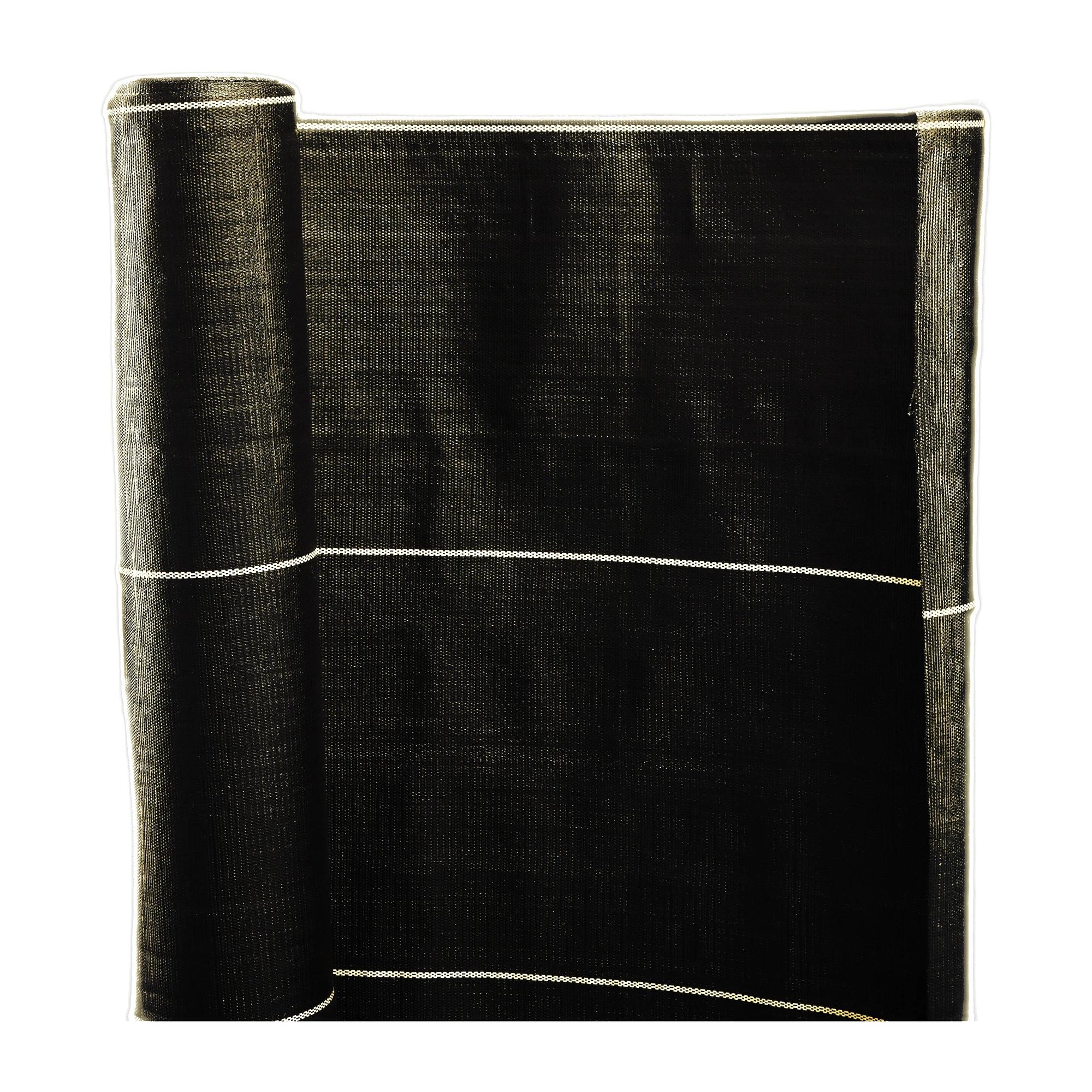
SHIELD
Woven polypropylene weed barrier built to suppress weeds while letting water and air through.
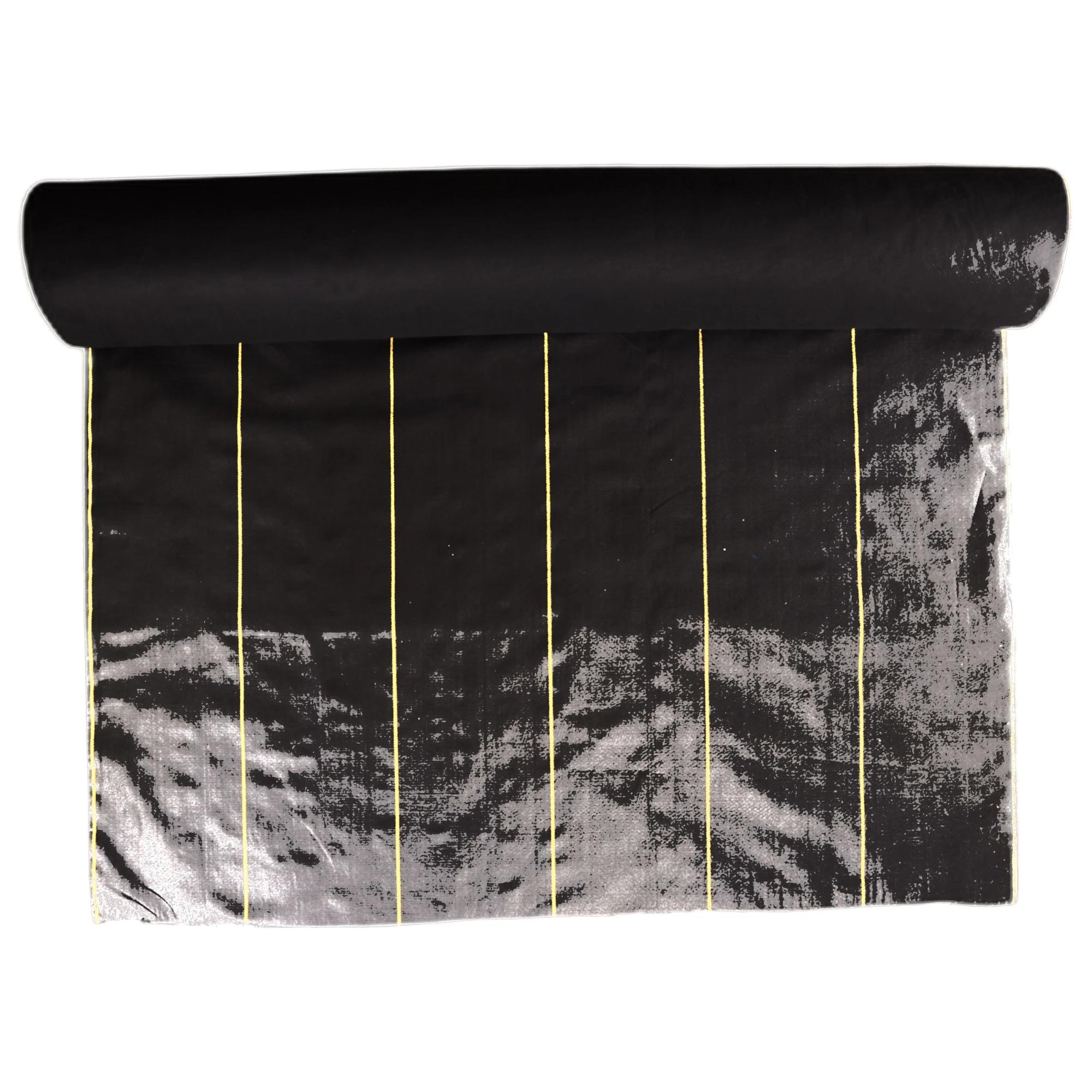
XBAR
Heavy-duty woven hybrid engineered for load and separation under hard surfaces.
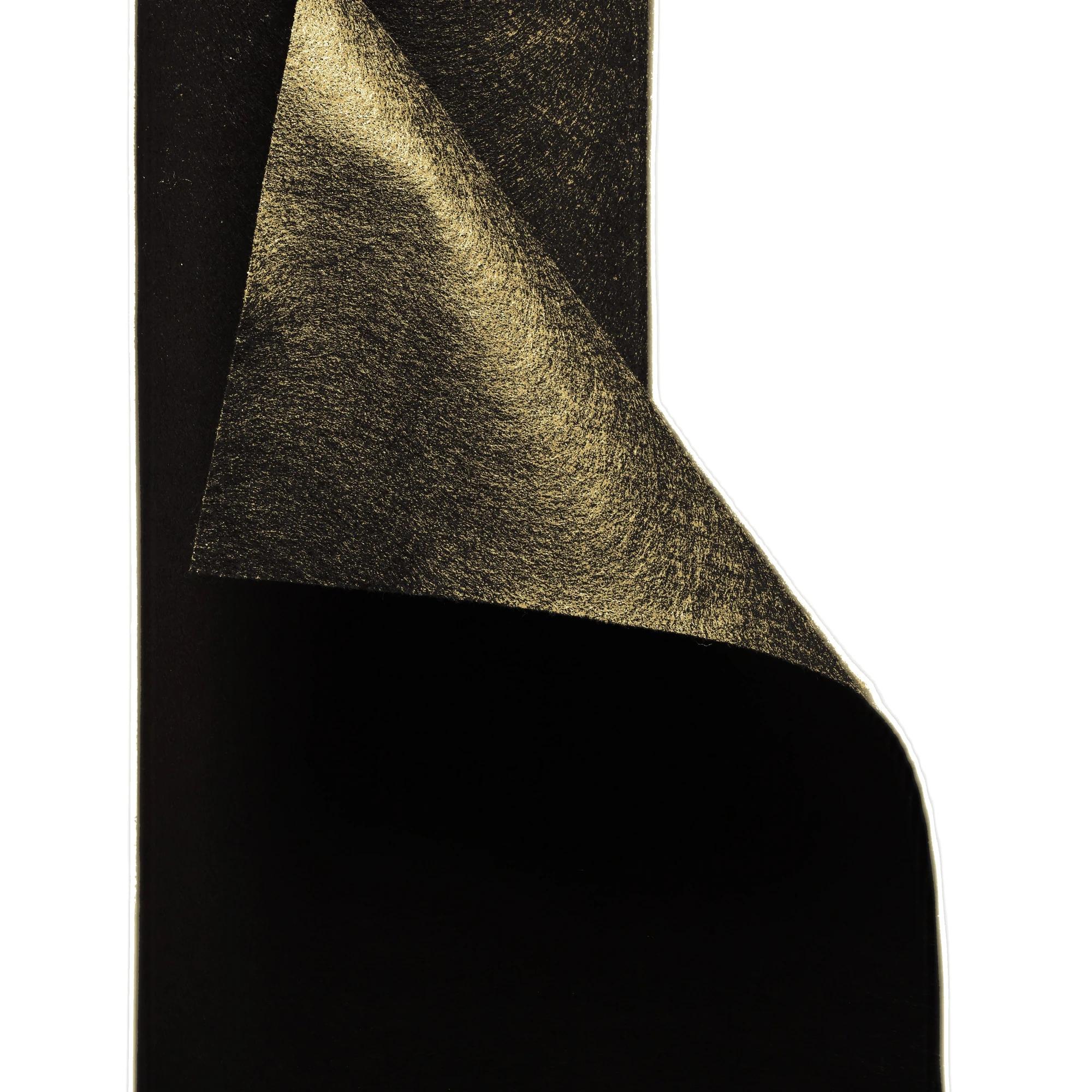
TERRA
Non-woven geotextile designed for drainage, filtration, and soil separation.