
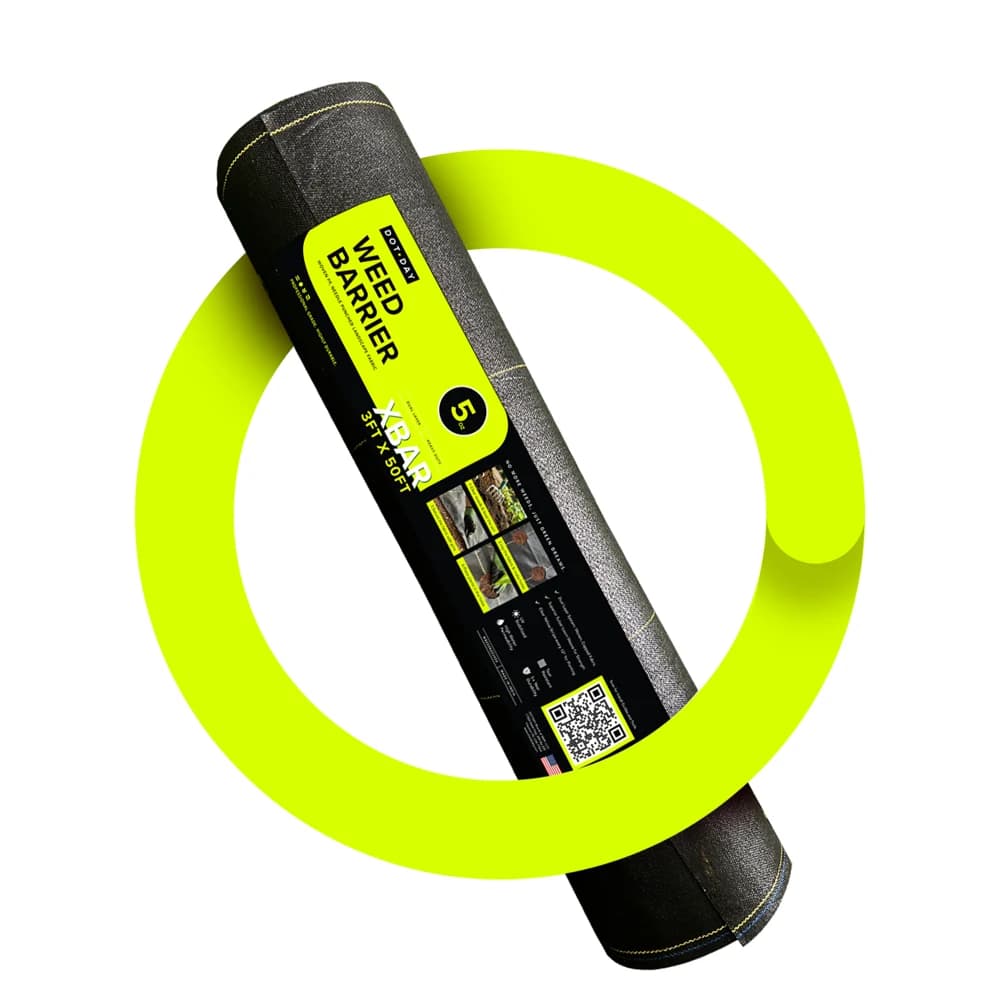
Gravel & Hardscape
Load and separation under stone
Gravel driveways, paver bases, walkways, and parking pads need puncture resistance and a fabric that keeps stone from pumping into the soil. Read the XBAR sheet.
Use XBAR 5ozView Fabric
One sheet per DOTDAY fabric and weight: SHIELD 3.2 oz, XBAR 5 oz, and TERRA 4, 6, and 8 oz. Each PDF lists construction, ASTM test methods, typical values, and applications, so you can spec the right fabric, attach it to a submittal, or check a number before you order.
Five data sheets, Rev 1.0, September 2026 · ASTM test method on every line · Ships from Miami Gardens, FL
Each sheet is a single page: performance highlights, the technical data table with test method and unit, applications, product details, and the family the fabric belongs to. Open it in the browser or save the PDF.
Flat-tape woven polypropylene weed barrier for garden beds, farm rows, nurseries, and everything under mulch.
Dual-layer capped fabric: woven polypropylene top over a needle-punched non-woven backing, for gravel, pavers, and high-traffic surfaces.
Non-woven needle-punched geotextile, light-duty separation, filtration, and drainage layer for landscape and light civil work.
Non-woven needle-punched geotextile, mid-weight grade for stabilization, drainage, and residential driveway builds.
Non-woven needle-punched geotextile, heavy-duty grade for driveways, access roads, and demanding stabilization work.
Five sheets, one per fabric and weight. Start from what is going on top of the fabric.
All sheets Rev 1.0, September 2026. Test methods are ASTM; values are typical, not MARV.
Values on every sheet are typical averages from production runs and independent testing, offered as general guidance and not as a limited warranty or minimum average roll values (MARV). Confirm suitability for your specific application before installation.
Mass per unit area is the first line on every sheet, but weight alone does not pick a fabric. Construction decides what the fabric does. Weight sets how much of it you get.
Weights are ounces per square yard, measured to ASTM D5261. Pick by ground condition first, then confirm the weight.
Numbers below are copied from the Rev 1.0 data sheets. A dimmed cell means the value is not published on that sheet.
| Attribute | 3.2 oz woven | 5 oz dual-layer | non-woven | non-woven | non-woven |
|---|---|---|---|---|---|
| Build | |||||
| Construction | Flat-tape woven polypropylene | Woven top, needle-punched backing | Needle-punched staple fiber, thermally bonded, calendered | Needle-punched staple fiber, thermally bonded, calendered | Needle-punched staple fiber, thermally bonded, calendered |
| Color | Black | Black | Black | Black | Black |
| Edges and stripes | Sealed, zero-fray cutting | Sealed edges, 12 inch printed guide stripes | Not listed | Not listed | Not listed |
| Mass and thickness | |||||
| Mass per unit area, ASTM D5261 (oz/yd²) | 3.2 | 5.0 | 4.0 | 6.0 | 8.0 |
| Thickness, ASTM D5199 | Not published | 29.5 mil | 1.0 mm | Not published | Not published |
| Strength | |||||
| Grab tensile MD / CD, ASTM D4632 (lbs) | 180 / 105 | 96 / 68 | 100 / 100 | 160 / 160 | 205 / 205 |
| Grab elongation, ASTM D4632 (%) | 25 | Not published | > 50 MD and CD | > 50 MD and CD | > 50 MD and CD |
| Wide-width tensile MD / CD, ASTM D4595 (kN/m) | 21 / 18 | Not published | Not published | Not published | Not published |
| Trapezoid tear MD / CD, ASTM D4533 (lbs) | 82 / 75 | Not published | 45 / 45 | 60 / 60 | 85 / 85 |
| CBR puncture resistance, ASTM D6241 (lbs) | Not rated for load | 332 | 300 | 400 | 500 |
| Water | |||||
| Apparent opening size, ASTM D4751 (mm) | Not published | Not published | 0.20 | 0.20 | 0.16 |
| Water flow rate, ASTM D4491 | Permeable, not rated | 10.5 gal/min/ft² | 4,800 l/min/m² | 4,000 l/min/m² | 3,300 l/min/m² |
| Durability | |||||
| UV resistance, 500 hrs, ASTM G154 (% retained) | 70 | 70 | Not published | Not published | Not published |
MD is machine direction (along the roll) and CD is cross direction (across the roll); the SHIELD sheet labels its tear figure TD, the same axis as CD. 1 gal/min/ft² is about 40.7 l/min/m². All figures are typical values, not MARV; the TERRA sheets state a tolerance of plus or minus 15 percent on individual results.
Every line in the technical data table names its test method. Here is what the common ones tell you about the fabric once it is in the ground.
The weight of the fabric in ounces per square yard. It is the number on the label (3.2 oz, 5 oz, 4 / 6 / 8 oz) and a rough proxy for bulk, not a direct measure of strength. Two fabrics at the same weight can perform very differently if their construction differs.
How much pull the fabric takes before it breaks, in pounds, reported in the machine direction (MD, along the roll) and cross direction (CD, across it). Grab elongation is how far it stretches first. Higher tensile means a run can be pulled tight and pinned without tearing.
The force needed to keep a cut growing once it has started. It matters at pin holes, at X-cuts for plants, and along edges under gravel, which is where a fabric usually fails first.
A plunger is pushed through the fabric until it fails. This is the number to check for fabric under angular stone, riprap, and equipment traffic. It is why XBAR and TERRA carry a CBR rating and SHIELD, built for weed control under mulch, does not.
Water flow rate is how fast water passes through the fabric. Apparent opening size (AOS) is the largest soil particle that can pass with it. Drainage and filtration fabric needs high flow with a small AOS so water keeps moving and fines stay put.
Strength retained after 500 hours of accelerated UV exposure. 70 percent retained is a solid result for polypropylene, and the reason every sheet says to cover the fabric promptly after installation.
The data sheets describe what each fabric can do. The ground you are covering decides which one you should be reading.
Gravel driveways, paver bases, walkways, and parking pads need puncture resistance and a fabric that keeps stone from pumping into the soil. Read the XBAR sheet.
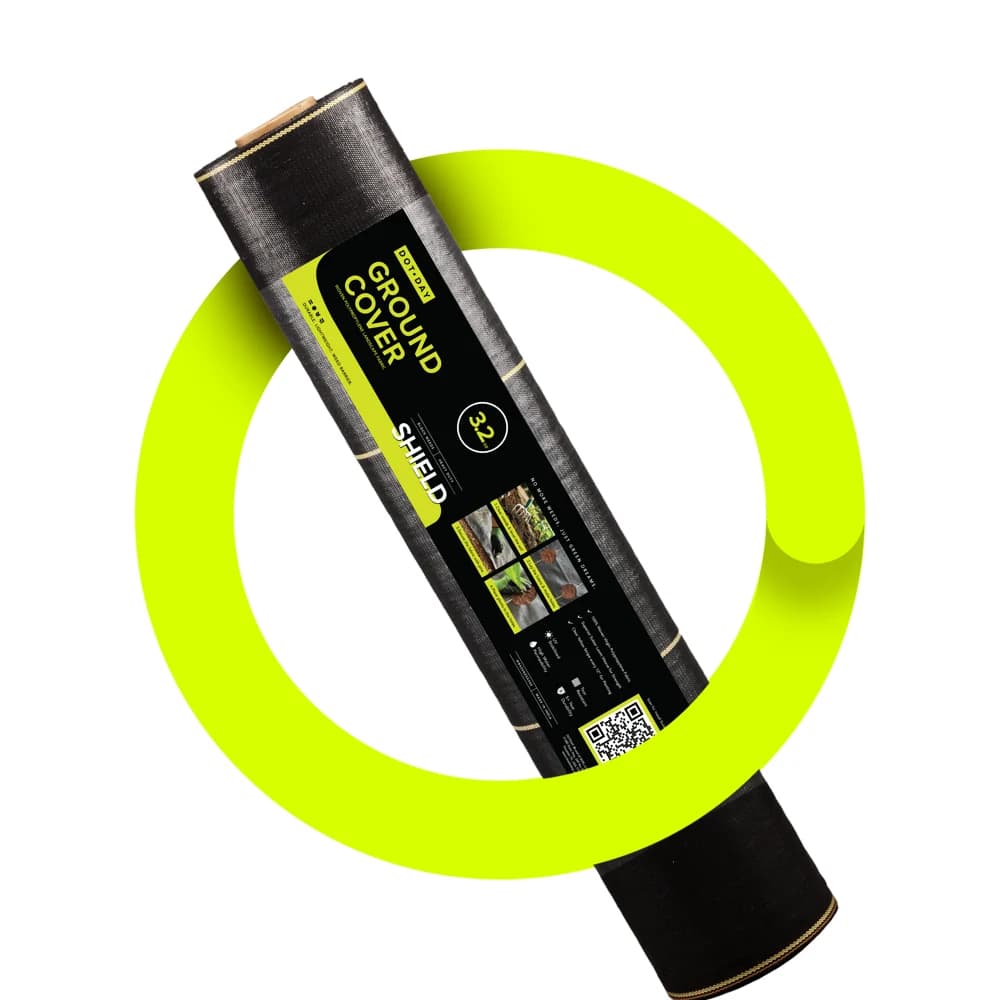
Beds, raised planters, farm rows, and nursery pads need a fabric that blocks light, passes water, and pulls tight without tearing. Read the SHIELD sheet.
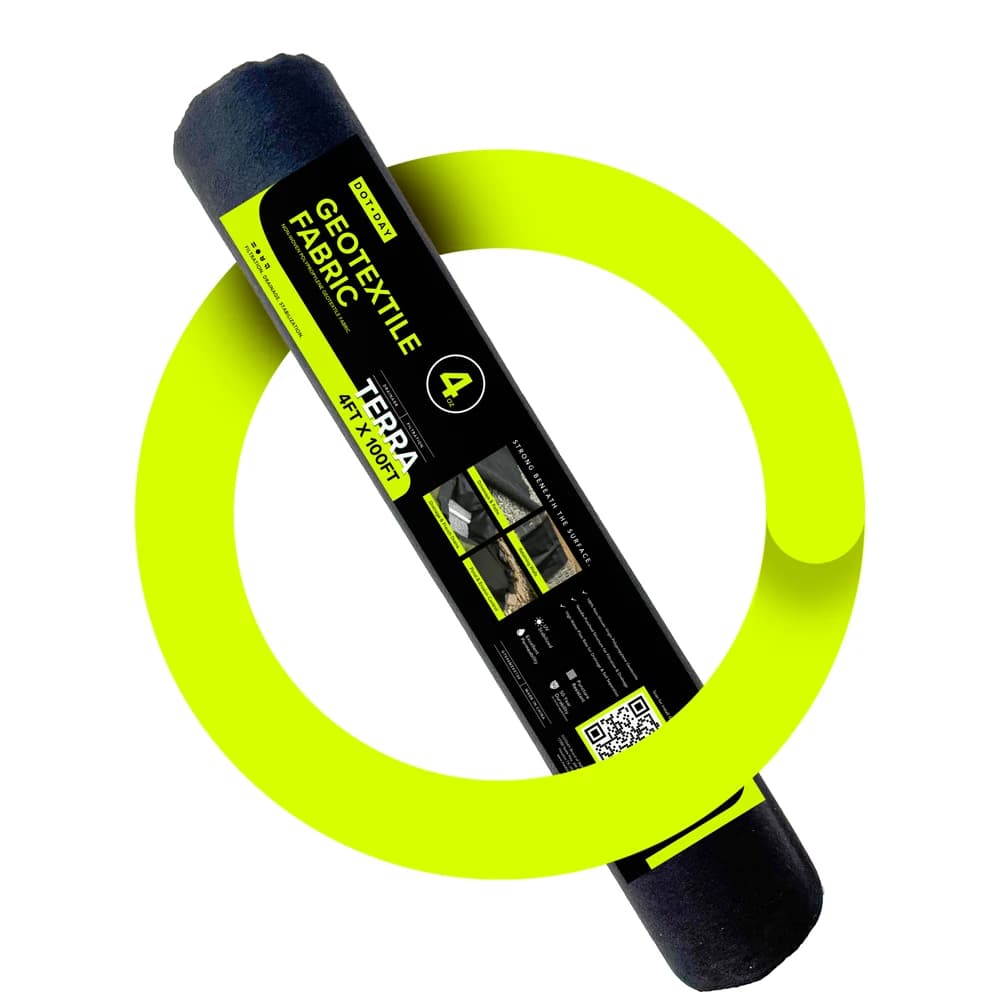
French drains, retaining walls, culverts, and road base need high water flow with a small opening size. Read the TERRA sheet for the weight the load calls for.
A one-page document that states what the fabric is made of, the tests it was measured with, the typical values from those tests, and the applications it is built for. DOTDAY publishes one sheet per fabric and weight. It is the document to read when you need a number rather than a description, and the one to attach when a job needs paperwork.
Typical values. Each sheet states that its data comes from average values across production runs and independent testing, offered as general guidance rather than a limited warranty or minimum average roll values (MARV). The TERRA sheets add a plus or minus 15 percent tolerance on individual results. If a specification requires MARV, tell us the spec when you request bulk pricing.
MD is machine direction, along the length of the roll. CD is cross direction, across the roll width. Woven fabric like SHIELD is stronger in MD, so a run pulled along the bed sees the higher figure. Needle-punched TERRA reports the same value both ways. The SHIELD sheet labels its tear figure TD (transverse direction), which is the same axis as CD.
All of them: SHIELD 3.2 oz woven weed barrier, XBAR 5 oz dual-layer hardscape fabric, and TERRA non-woven geotextile in 4, 6, and 8 oz. If you are not sure which one your job needs, the Fabric Finder matches you by ground condition in under a minute.
Roll widths and lengths are listed on each product page and change as new sizes are added, so the sheets point there instead of printing a list. Use the Fabric Calculator to turn your dimensions into a roll count, and request bulk pricing for contractor and job-site quantities.
The document number, revision, and month are printed at the top right of every sheet (currently Rev 1.0, September 2026). This page always links the latest revision. If a value on an older printed copy differs from this page, use this page and contact us if you need the change confirmed in writing.
Send the fabric, the square footage or roll count, and the ship-to zip. We quote contractor and bulk pricing direct from the Miami Gardens warehouse.