

How to Install Landscape Fabric Under Gravel
The right weight, overlap, and depth, plus the five mistakes that ruin gravel installs.
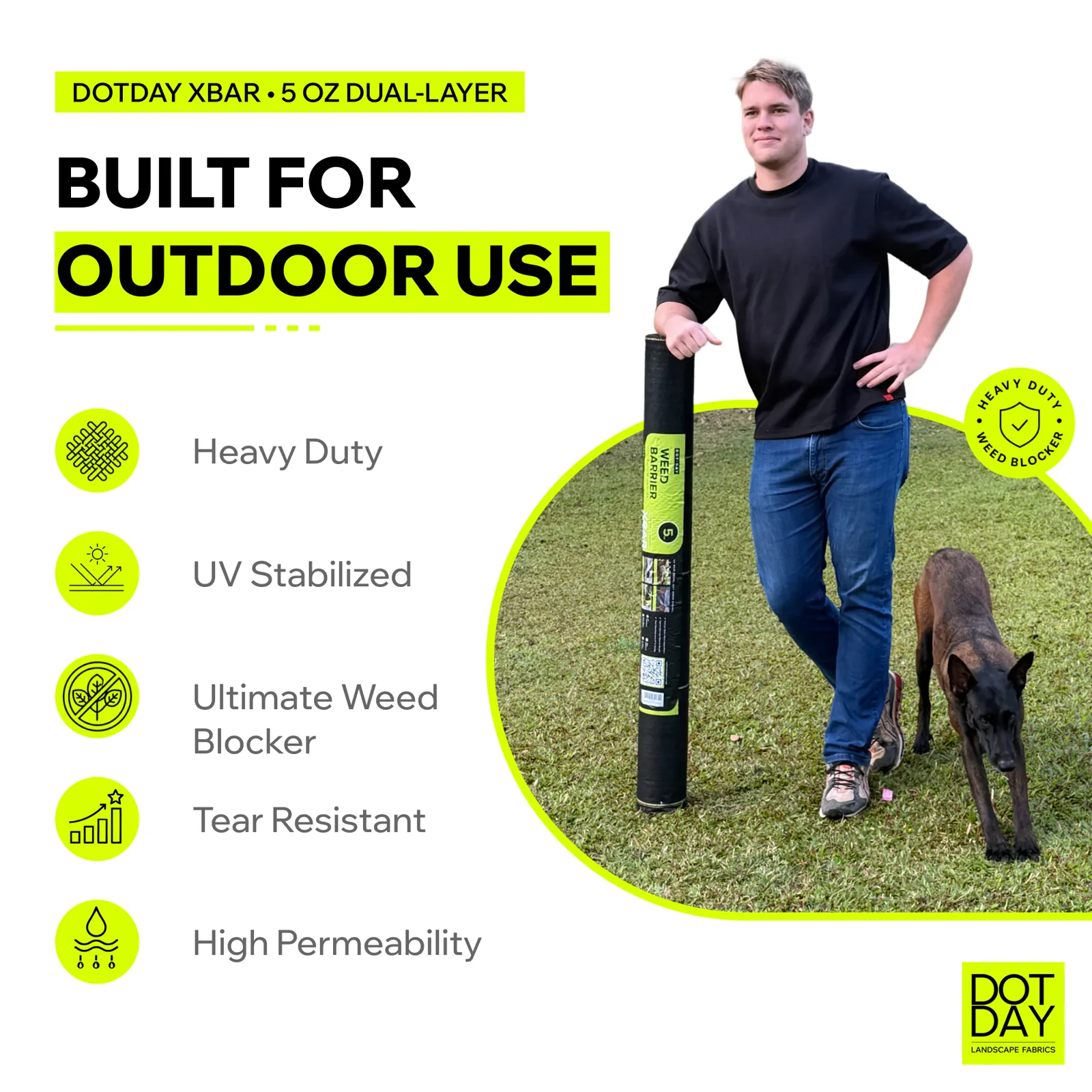
Read articleXBAR is the 5oz dual-layer woven fabric built for the load case under a driveway. It separates gravel from soil, spreads vehicle weight so the surface does not rut, and drains at 10.5 gal/min/sf instead of pooling. The right fabric for the right ground condition.
Free shipping on all orders · Professional-grade · 332 lb puncture resistance
A gravel driveway does not fail because of weeds. It fails because the aggregate sinks into the soil beneath it. Under vehicle weight on soft or wet subgrade, your stone migrates down and the soil pumps up, until the surface is rutted, uneven, and full of low spots that hold water. The fix is not more gravel. It is a separation and stabilization layer strong enough to take the load.
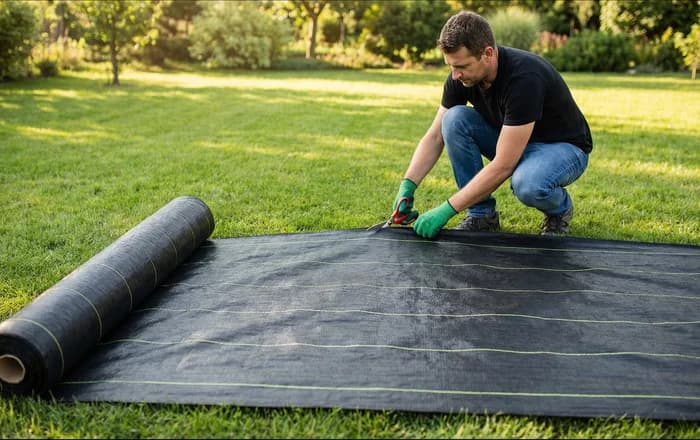
XBAR carries load like a stabilization fabric and drains like a filtration fabric. At 332 lb CBR puncture resistance it holds up to angular base stone and vehicle weight that would tear a standard weed barrier, and the capped edges stay clean when you cut so a run does not unravel where the fabric meets a border or transition.
XBAR pairs a woven structural face with a non-woven backing, so one fabric carries load like a stabilization layer and drains like a filtration layer.
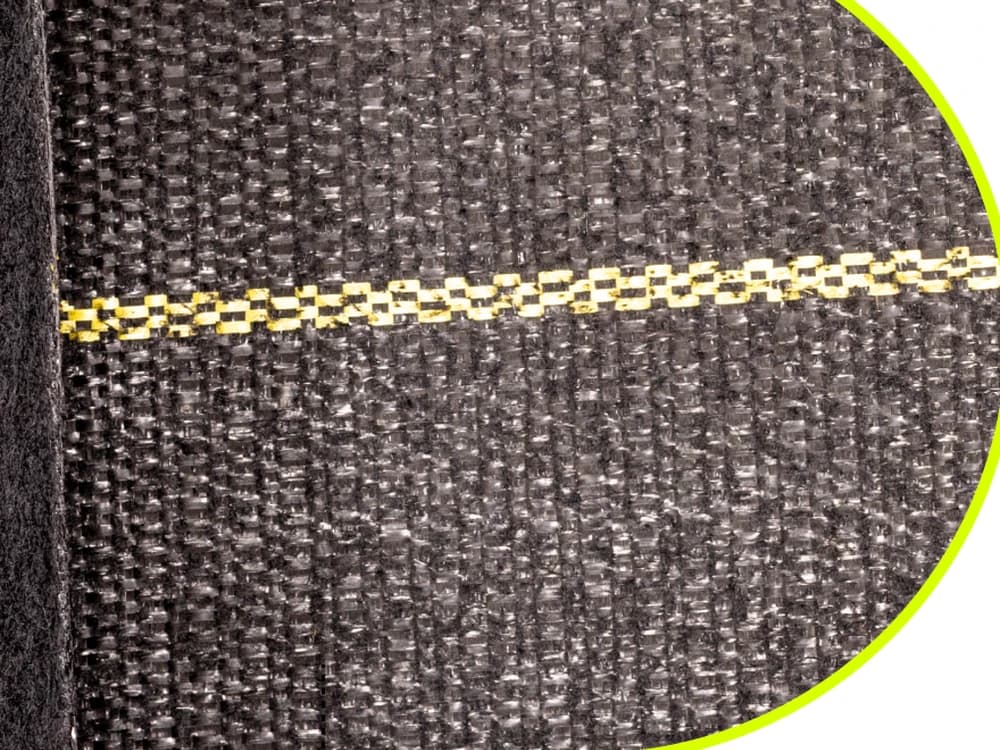
The upper woven layer gives tensile strength, puncture resistance, and built-in 12-inch guide lines for straight, clean installs. Water and irrigation pass straight through.
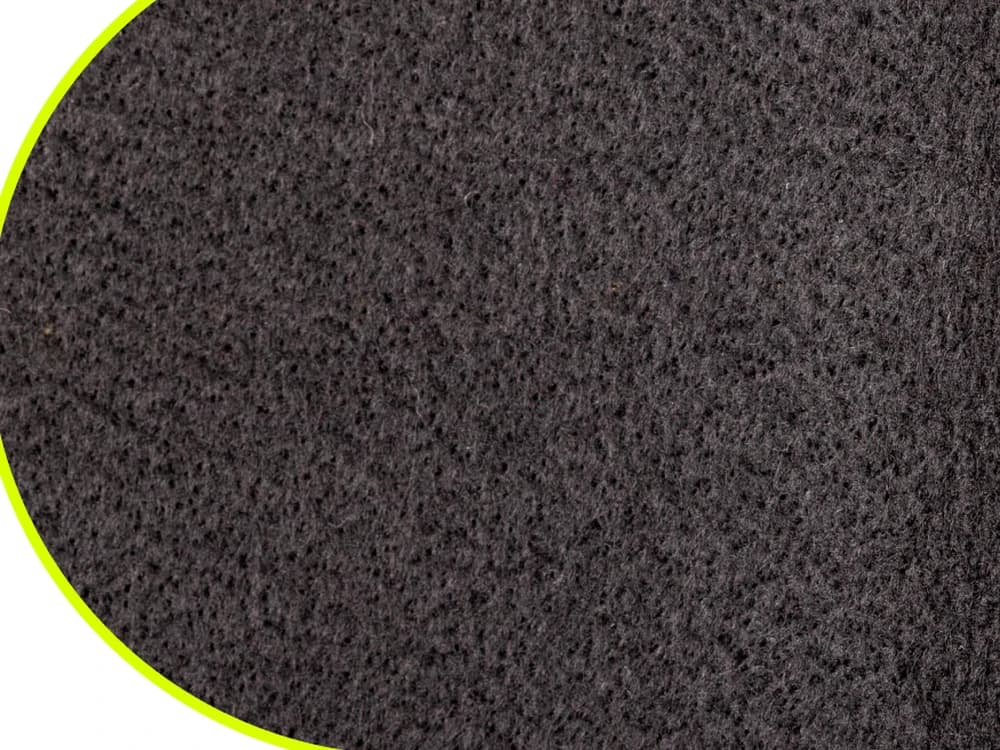
The bottom non-woven layer adds bulk and weed suppression by blocking sunlight while staying breathable. It improves ground coverage and durability for long-term, load-bearing installs.
Real, published specifications, not vague marketing claims. These are the numbers that decide whether a fabric survives under a driveway.
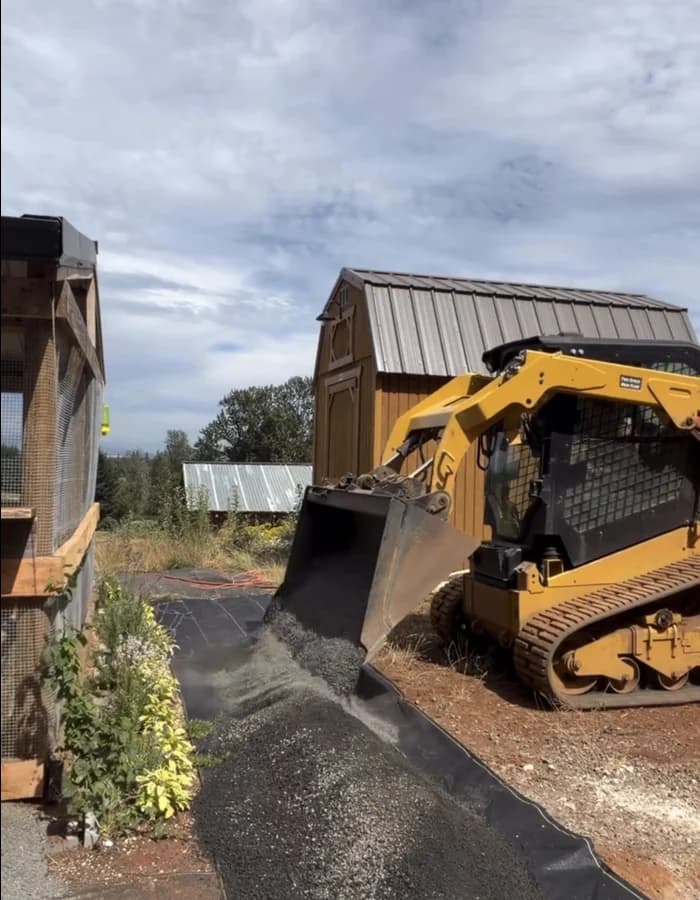
Use the right fabric for the right ground condition. For planting beds choose SHIELD; for pure drainage choose TERRA.
Engineered to prevent shifting and bunching under load, for a smooth, stable surface that does not rut.
Flows at 10.5 gal/min/sf, letting rainwater and irrigation pass through instead of pooling under the surface.
Holds 70% strength after 500 hours of UV, built to take years of sun without breaking down.
Holds stone and soil apart under vehicle load on soft or wet subgrade, so the surface stays level.
Use XBAR 5ozKeeps the setting layer separated from the soil. Place it beneath the compacted aggregate base, not under the sand bed.
Use XBAR 5ozA stable base under foot and equipment traffic, with 12-inch guides that make irregular runs easy to lay out.
Use XBAR 5oz| Property | Cheap single-layer weed barrier | DOTDAY XBAR 5oz | Non-woven geotextile (TERRA) |
|---|---|---|---|
| Built for | Blocking light in beds | Load-bearing hardscape | Drainage and filtration |
| Under a driveway | Punctures, gravel sinks, ruts form | Separates and stabilizes, still drains | Filters water, not load separation under traffic |
| Construction | Thin single layer | Dual-layer woven | Non-woven needle-punched |
| CBR puncture resistance | Low | 332 lb | Varies by weight |
| Water flow rate | Poor once clogged | 10.5 gal/min/sf | High |
| Right job | Garden beds, mulch | Gravel and paver driveways, patios, paths | French drains, retaining walls |
Absolutely love this weed barrier. It's durable, thicker, and a game changer for having to pull weeds. It doesn't shred like its competitors. Dot Day has gained a customer for life over here!
Marcus Halvorsen
Ground prep and overlaps decide whether a gravel driveway stays level for years or ruts in a season. Here is the step-by-step our installers follow.
Read the install guide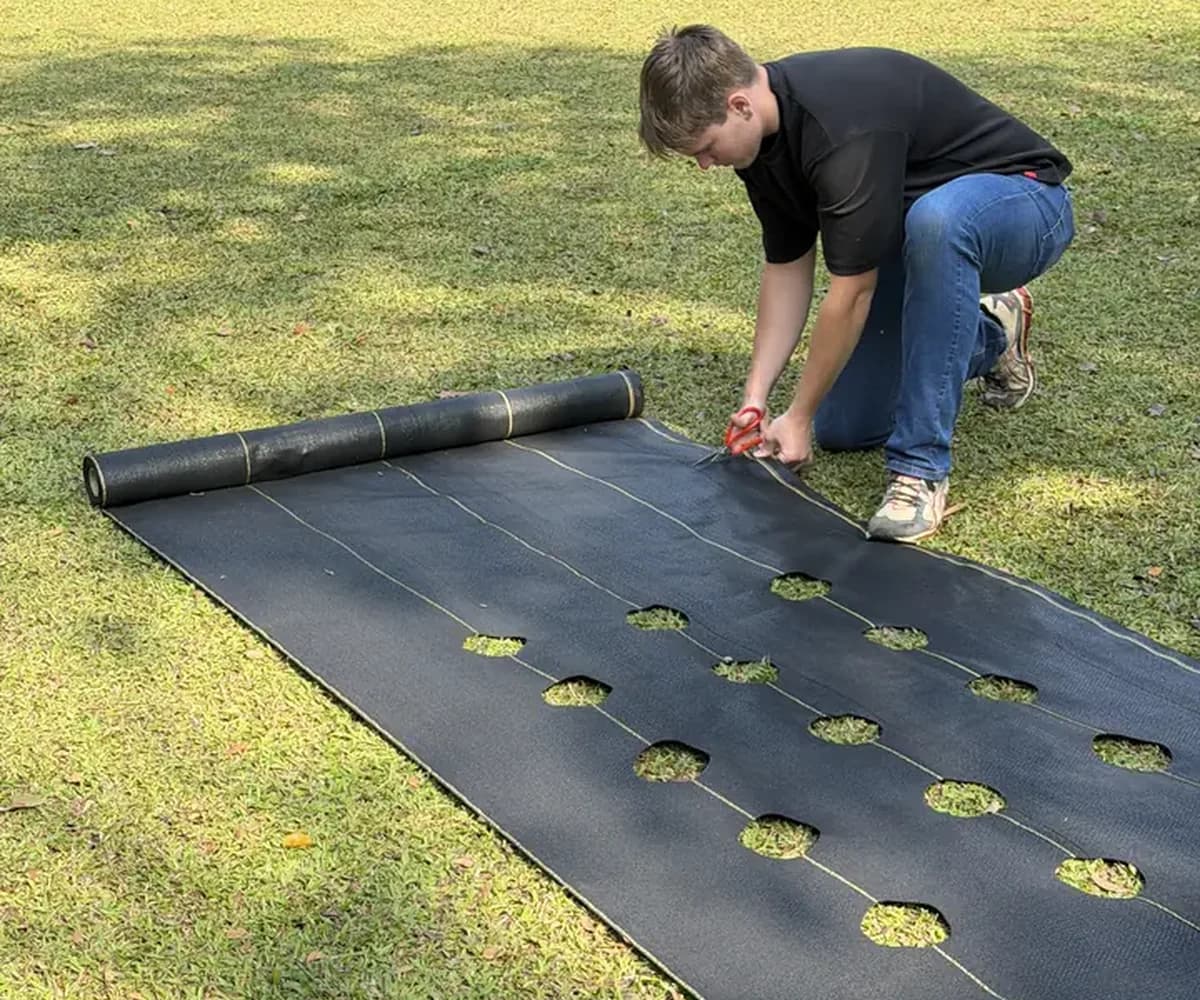
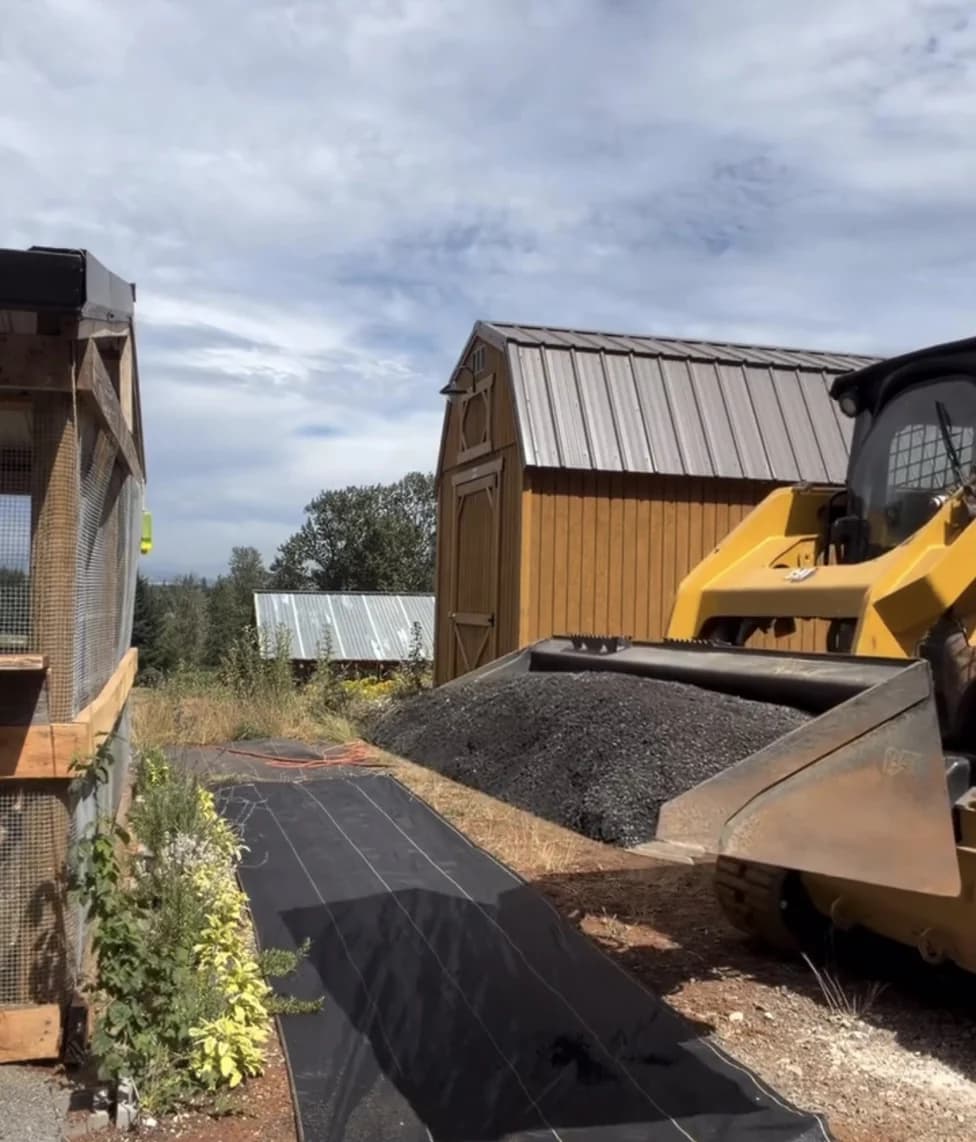
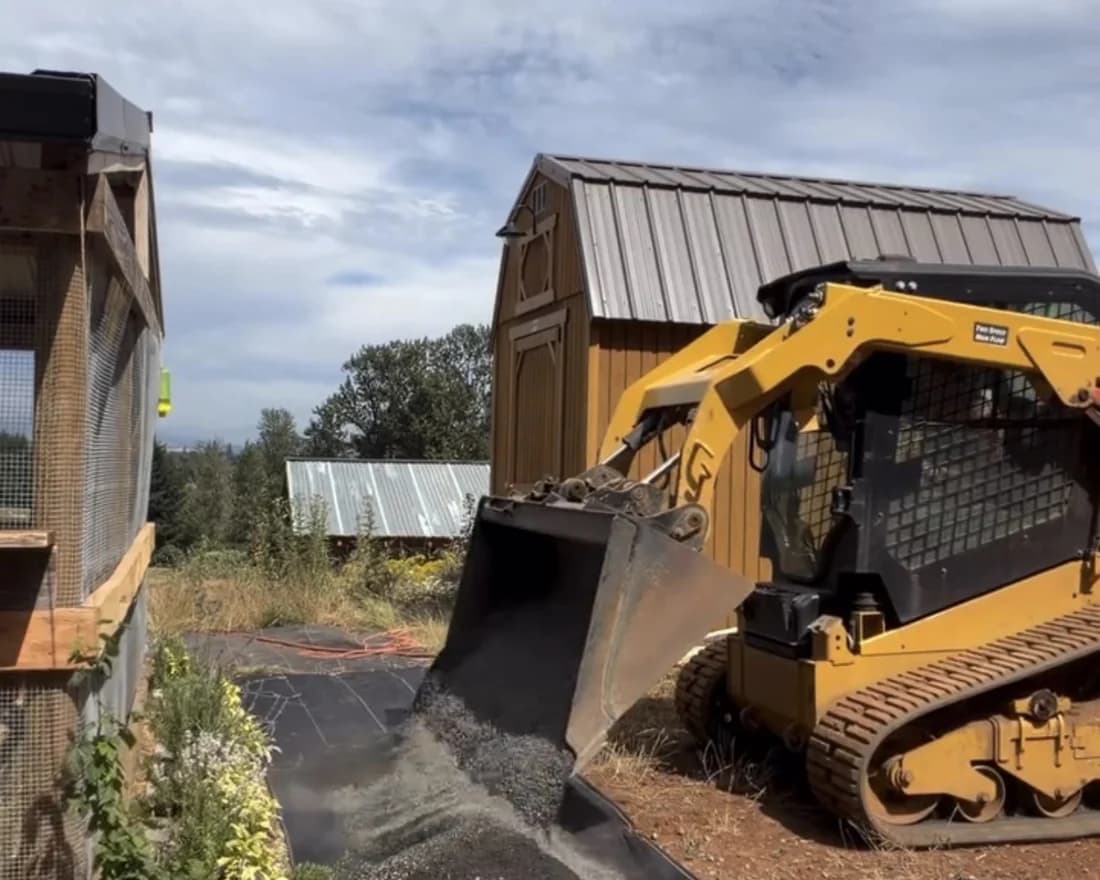
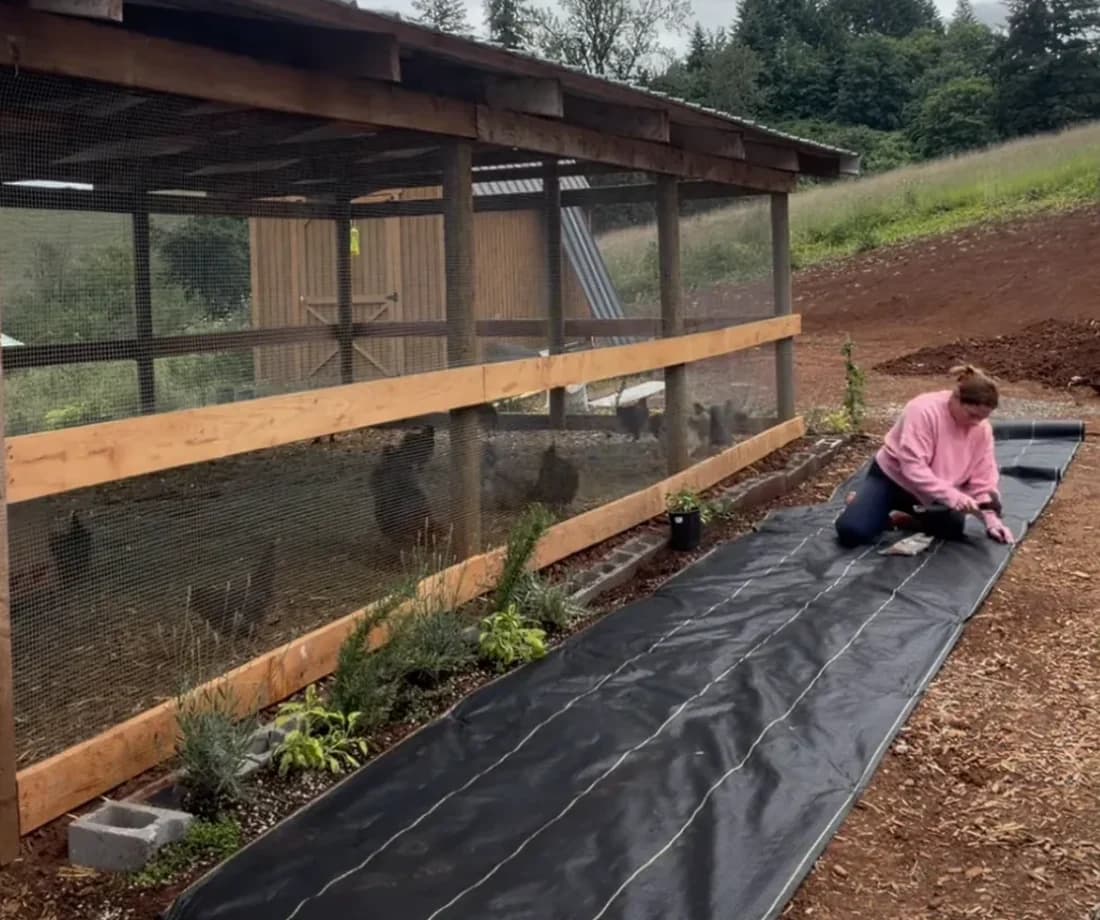
Bri runs Breezi Blooms, a homestead and flower farm in Oregon. Her crew rolled XBAR 5oz along the chicken-coop perimeter and run: high-traffic, weed-prone ground that gets daily bird and foot traffic, now stable and weed-free with water still draining through.
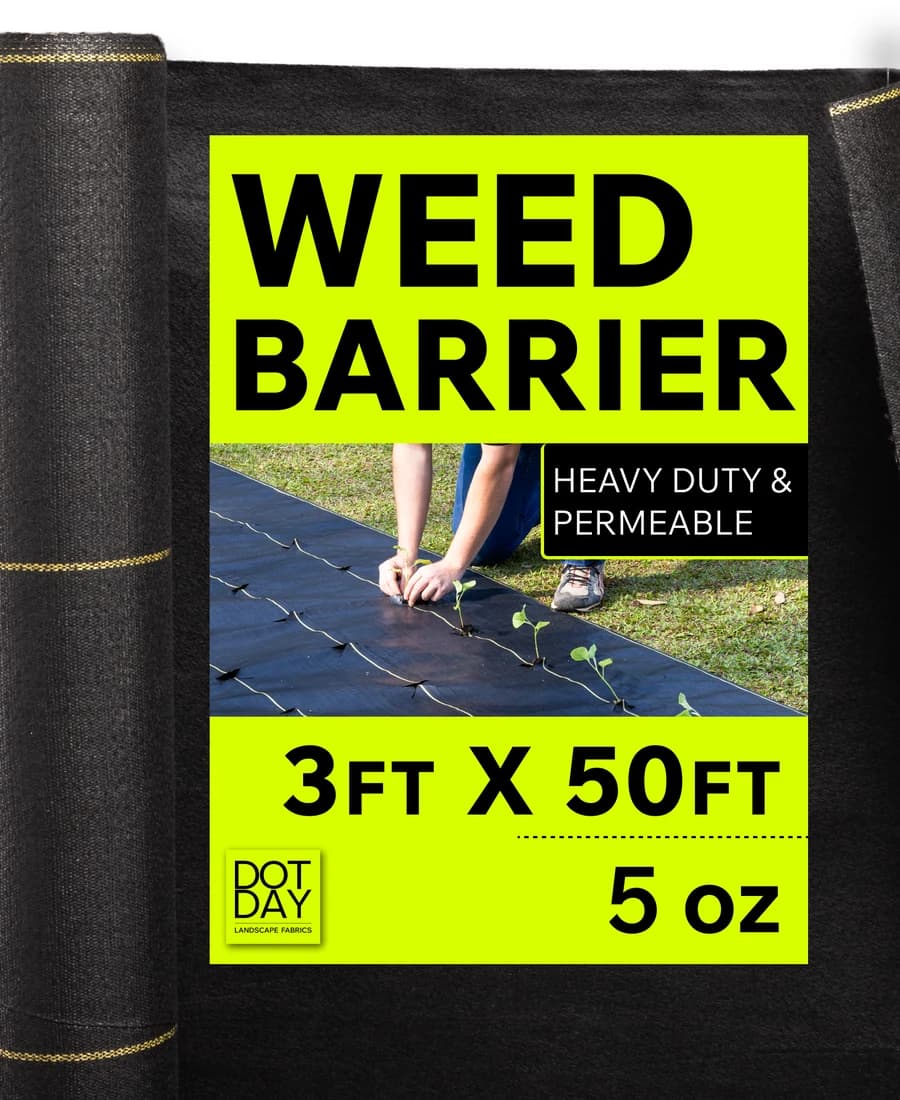
Match width to the job. Wider rolls mean fewer seams on a wide driveway, a stronger, faster base. Prices shown per roll; free shipping on all orders.
Which width fits: 3 ft rolls suit paths, edging, and narrow strips. 4 ft covers single-car and standard driveways. 6 ft and 8 ft span wide or double driveways and commercial lanes with the fewest seams. The 3 ft x 10 ft roll is a sample size to test before you scale. Not sure? The Pro team will spec the exact width and quantity for your job, free.
Enter your dimensions and the calculator recommends the right DOTDAY fabric plus exactly how many rolls, with overlap and waste built in.
A heavy-duty woven fabric of at least 5oz that can carry vehicle load without tearing or puncturing. XBAR is a 5oz dual-layer woven fabric built for exactly this, gravel, rock, and high-traffic ground, while still letting water drain through.
No. Light garden fabric punctures under sharp aggregate and vehicle weight, the gravel sinks into the soil, and the surface ruts. A dense, heavy-duty woven fabric like XBAR resists all three.
Yes. Place it beneath the compacted aggregate base, not directly under the sand setting bed. It separates the base from the subsoil and resists puncture under load.
Yes. It flows at 10.5 gal/min/sf, so rainwater and irrigation move through instead of pooling under the surface.
Overlap seams 6 to 12 inches, leaning toward the wider end for driveways, and keep the fabric fully covered with aggregate so there is no sun exposure.
Yellow 12-inch planting and guide lines face up. They help you keep rows, cuts, and overlaps straight.
Match width to the job, or use the DOTDAY Fabric Calculator. Enter your dimensions and it tells you exactly how many rolls, with overlap built in.
Yes. We supply XBAR direct by the roll or in bulk. Request a quote with your ground condition and quantity and we will spec coverage and pricing fast.
The right weight, overlap, and depth, plus the five mistakes that ruin gravel installs.
Read article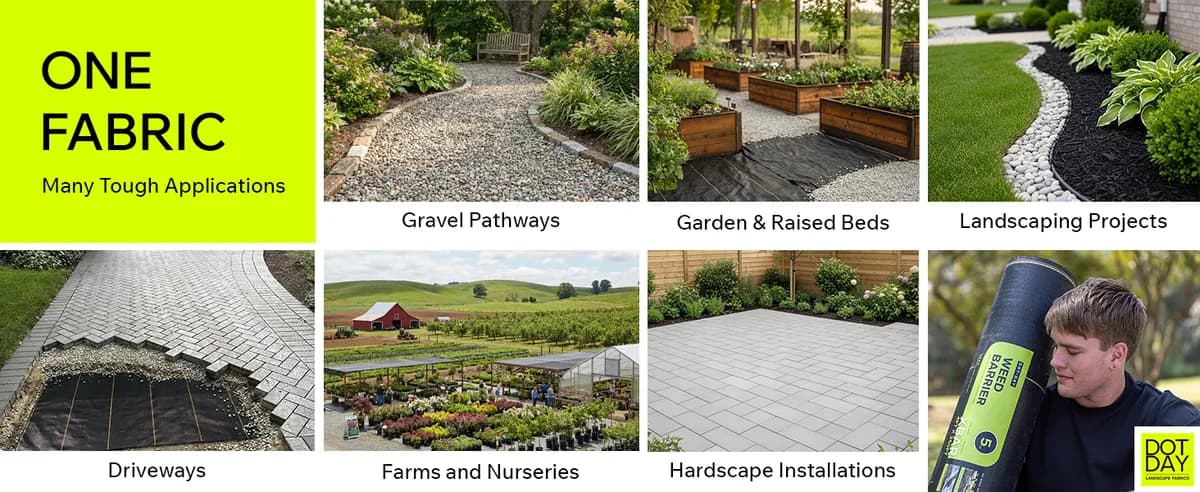
A light garden cloth under a paver base pumps and tears. Here is the weight that holds up under load.
Read article
They look similar on the roll but are built for completely different ground conditions. How pros tell them apart.
Read articleSend your driveway dimensions and we will size the rolls, quote volume pricing on XBAR, and ship direct from Miami Gardens, FL.
Tell us the ground condition, the load, and the area, and we will recommend the right fabric and the exact quantity. Request a quote or talk to us, practical answers from people who supply contractors.