top of page

How to Install Landscape Fabric Under Gravel (Without Future Weed Problems)

In This Guide You'll Learn:

  • Which fabric weight actually works under gravel (and what fails fast)

  • The correct overlap distance and staple spacing for paths vs driveways

  • Exactly how much gravel depth you need by project type

  • Time and cost estimates so you can plan and budget properly

  • The 5 mistakes that ruin installations - and how to avoid every one

  • Which DOTDAY fabric is right for your specific project

  • Answers to the 6 most-searched questions on this topic


Every gravel driveway or path that looks tired within two years has the same story: no fabric underneath, or the wrong fabric installed in a rush. Every gravel surface that stays firm, weed-free, and sharp-edged for a decade has one thing in common - the right woven landscape fabric, laid correctly, before a single stone went down.

This guide skips the vague advice. You get exact steps, correct fabric weights, the five fatal mistakes, time and cost estimates, and a clear product comparison. By the end you will know precisely what to buy, how to lay it, and what a 10-year result looks like.


Watch: landscape fabric being laid correctly before gravel installation - the step most DIYers skip that causes gravel surfaces to fail within two seasons.

Do You Really Need Landscape Fabric Under Gravel?

Yes - and here is exactly what happens when you skip it. Gravel sinks into the soil within two to three seasons. Weeds push through from below. Soil and gravel mix into a muddy layer that is expensive and time-consuming to fix. You end up adding fresh stone every year and still fighting weeds. The long-term cost of skipping fabric always exceeds the upfront cost of installing it correctly.

With the right woven fabric correctly installed, a gravel surface can last 10 to 15 years with almost zero upkeep. That is the difference one decision makes on day one.


What Happens If You Skip Landscape Fabric Under Gravel?

What Happens

Without Fabric

With Correct Fabric

Weed growth

Heavy - weeds push constantly from soil below

Minimal - sub-soil weed pressure blocked

Gravel migration

Gravel sinks and mixes into subgrade

Gravel stays separated and stable

Soil contamination

Soil works up through gravel after rain

Permanent separation maintained

Surface life

1-3 seasons before major topping-up needed

10-15 years with minimal maintenance

Maintenance cost

High - annual topping-up and constant weeding

Low - occasional surface treatment only

Step 0: Choose the Right Landscape Fabric Weight

This is where most projects fail before they begin. Standard weed barrier fabric sold at garden centres - typically 1.5oz to 2oz - is designed for mulched flower beds, not gravel. Under aggregate load and traffic it compresses, tears, and fails fast. For gravel sub-base separation and aggregate stabilisation you need woven landscape fabric, and weight specification is critical:

Project Type

Recommended Fabric

Minimum Weight

Why

Decorative bed / border

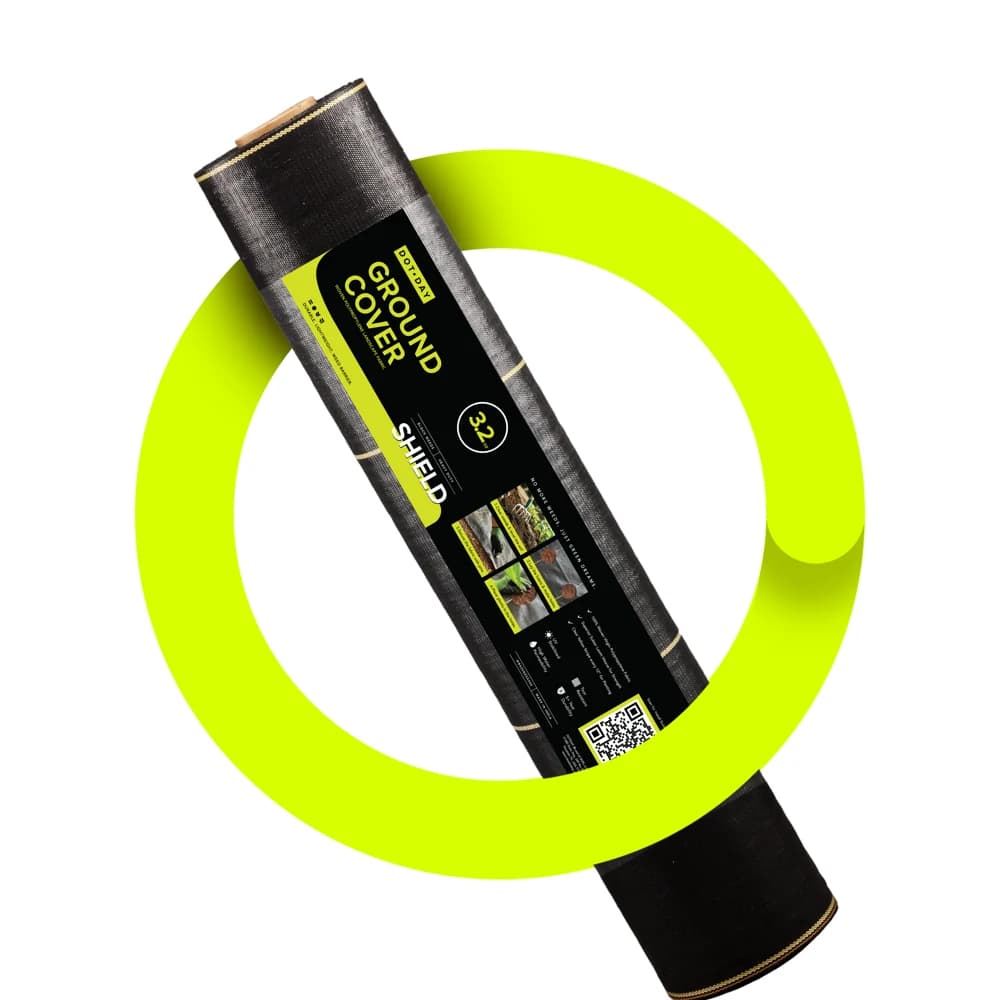
DOTDAY SHIELD

3.2oz

Light aggregate, no traffic - weed suppression only

Garden path (foot traffic)

DOTDAY SHIELD

3.2oz

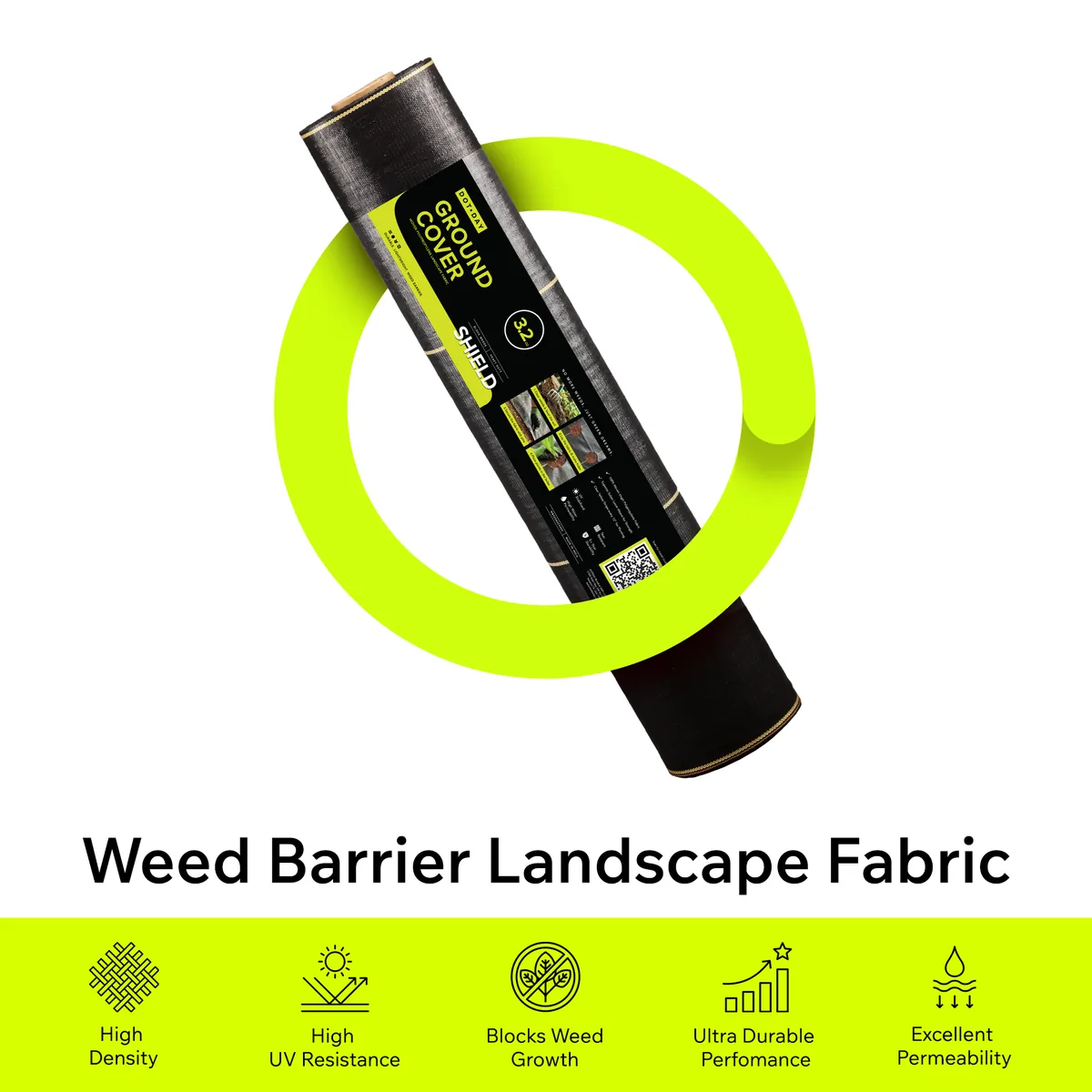
Permeable, durable, easy to handle and cut

High-traffic path

DOTDAY XBAR

5oz

Sustained load needs higher tensile strength

Gravel driveway (cars)

DOTDAY XBAR

5oz

Vehicle weight requires dual-layer puncture resistance

Heavy vehicle / commercial

DOTDAY XBAR

5oz+

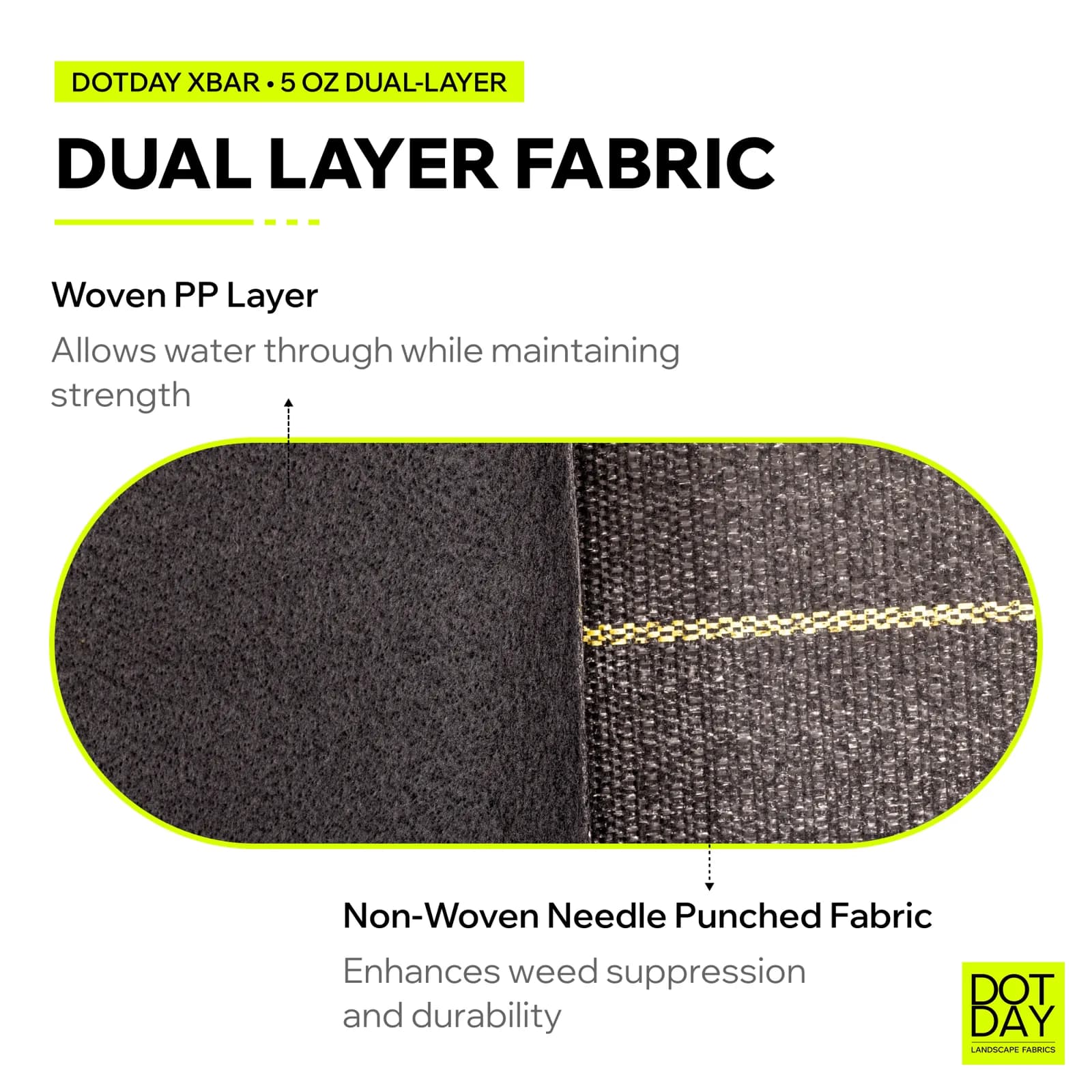
Max load - dual-layer woven + non-woven backing

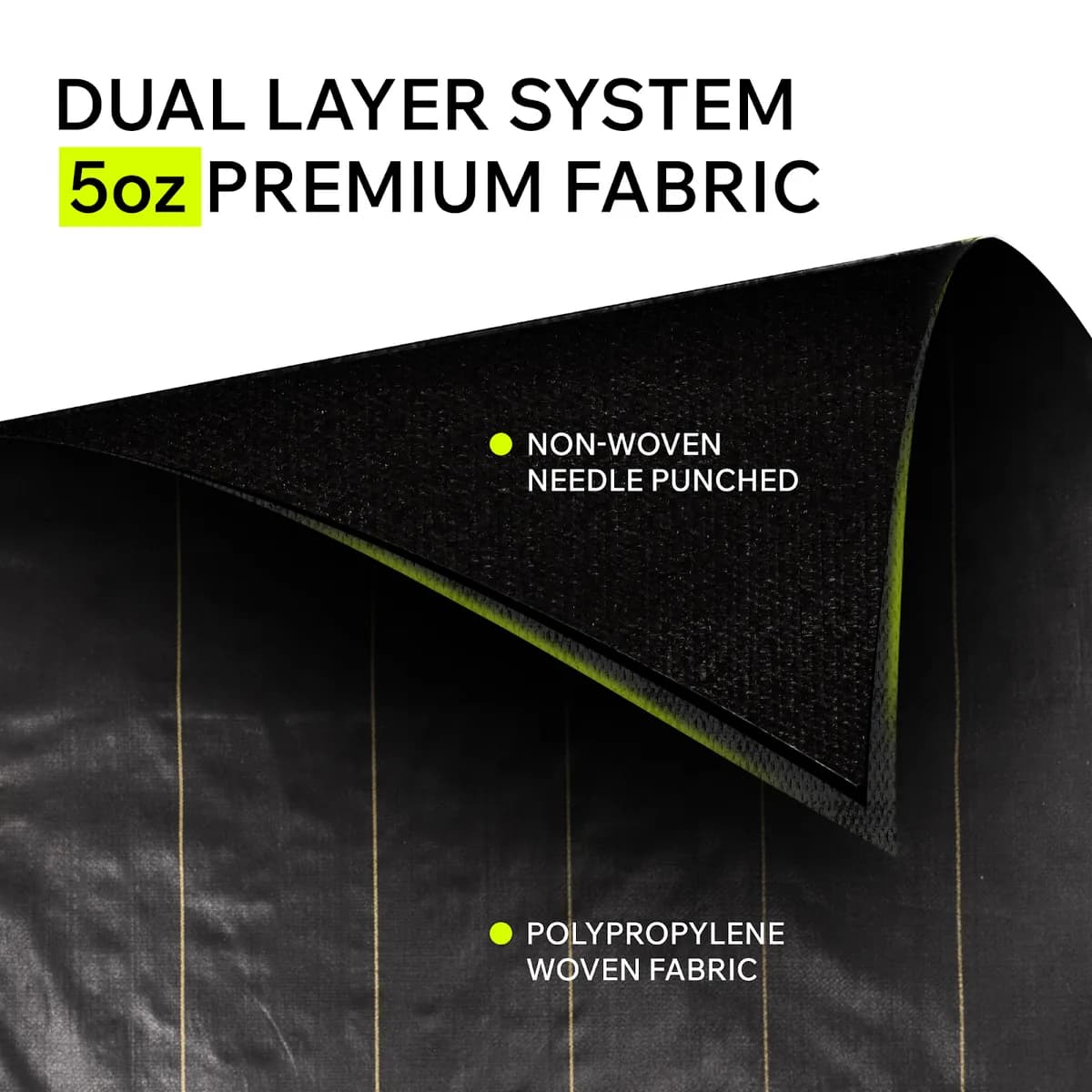
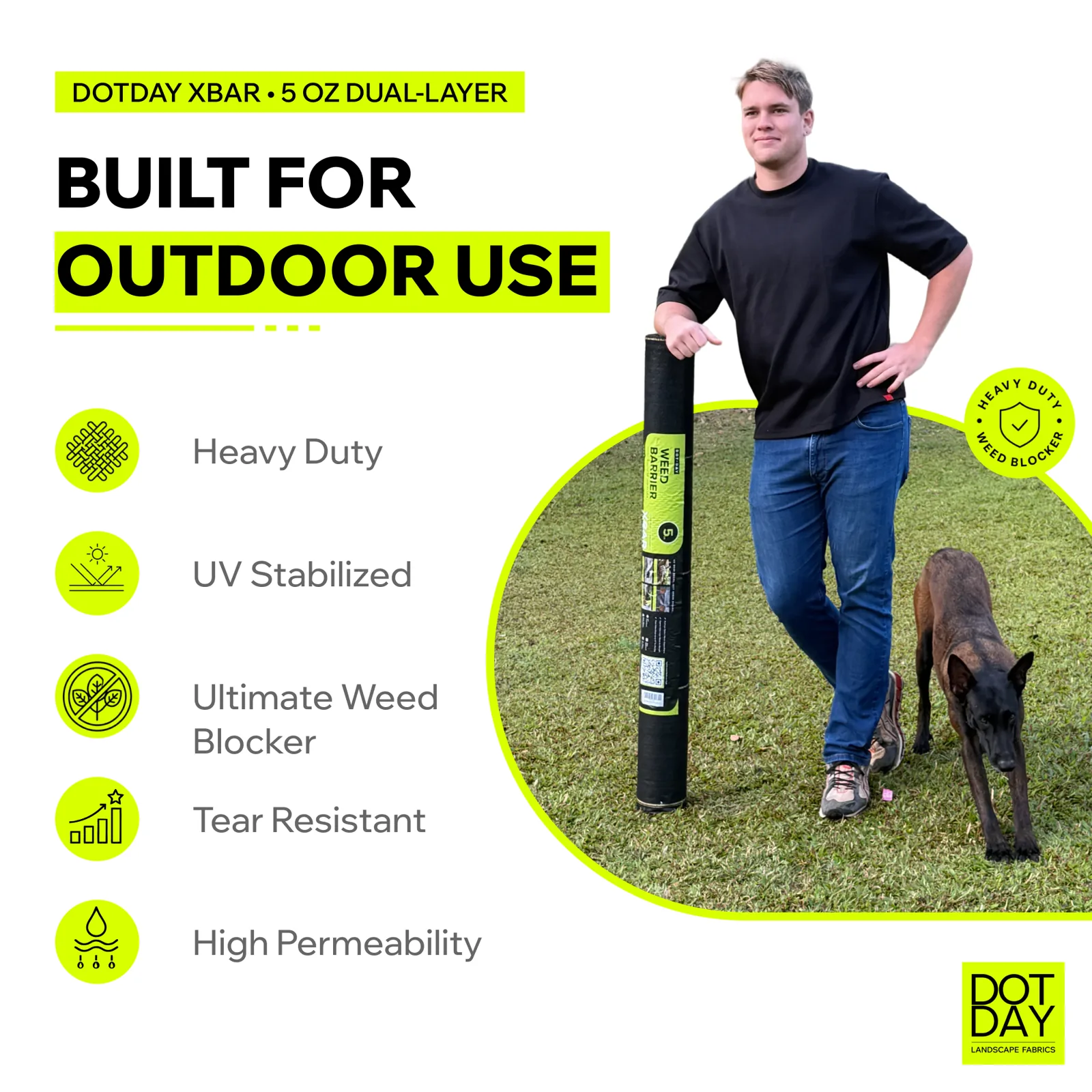
DOTDAY XBAR uses dual-layer woven construction; woven landscape fabric bonded to a non-woven backing - engineered for aggregate stabilisation under sustained vehicle load. It will not compress, will not fray when cut, and maintains its driveway underlayment performance for years. DOTDAY SHIELD delivers the same woven quality in a lighter specification perfectly suited to permeable weed barrier applications in paths and decorative beds.


Not sure which fits your project? Use the DOTDAY FabricFinder - three questions, specific recommendation, under two minutes.


What You Need: Full Materials and Tools Checklist


Gather everything before you begin. Stopping mid-install to find a staple gun or an extra roll turns a one-day job into a two-day one.


Materials:

  • Heavy-duty woven landscape fabric - correct weight for your project (see table above)

  • Gravel or aggregate - decorative stone, crushed limestone, pea gravel, slate chippings

  • Landscape staples or ground pins - minimum 6-inch length (9-inch for slopes or soft ground)

  • Landscape edging - metal, timber, or plastic (strongly recommended)


Tools:

  • Measuring tape and string line with pegs (for straight edges)

  • Utility knife or heavy-duty scissors

  • Rake and flat spade

  • Shovel (or mini excavator for driveways)

  • Mallet or hammer for driving staples into hard ground

  • Wheelbarrow


Optional but useful:

  • Systemic weed killer - apply 2 weeks before install if perennial weeds are present

  • Compacting plate or hand tamper (essential for driveways)

  • Garden hose - for marking curved path edges before cutting


How much fabric do you need? Use the DOTDAY Landscape Fabric Calculator - enter your dimensions and get an exact roll count including all overlaps. 60 seconds. No maths.


How Long Does Installation Take? Time and Cost Estimates


Two of the most searched questions before any gravel project - and most guides ignore both. Here are realistic figures:


DIY Installation Time Estimates:

Project Type

Area

Estimated DIY Time

Decorative garden bed

Up to 50 sq ft

1–2 hours

Garden path

Up to 100 sq ft

2–4 hours

Large decorative gravel area

100-300 sq ft

Half day (4-6 hours)

Small driveway

Up to 500 sq ft

Full day (6-8 hours)

Full residential driveway

500-1000 sq ft

1-2 days

Estimated Material Costs (US pricing guidance):

Item

Typical Cost Range

Notes

Landscape fabric (path)

$0.08-0.15 per sq ft

SHIELD 3.2oz - paths and beds

Landscape fabric (driveway)

$0.10-0.25 per sq ft

XBAR 5oz - driveways and traffic areas

Landscape staples (per 100)

$8-15

6-inch galvanised ground pins

Landscape edging (per 20ft)

$15-40

Metal or heavy plastic

Pea gravel (per ton)

$35-75

Covers approx. 100 sq ft at 3-inch depth

Crushed stone base (per ton)

$25-50

Driveway base layer

Labour costs if hiring a landscaper vary by region - typical rates run $50–120 per hour. The fabric itself is a small fraction of total project cost and the single decision that most affects how long the finished result lasts.


Step 1: Clear and Prepare the Ground (Do Not Skip This)

Ground preparation is the most skipped step and the most critical one. Laying landscape fabric over unprepared ground - existing weeds, uneven soil, hidden debris - guarantees problems within one season. The fabric cannot compensate for what is beneath it.

  1. Remove all grass, weeds, and vegetation - pull from the root. Cutting tops leaves the root system alive; it will regrow straight through the fabric from below.

  2. Clear any rocks, large debris, and protruding roots that create pressure points under the fabric.

  3. Level and compact the soil as evenly as possible. An uneven base creates uneven gravel depth and stress concentrations that split fabric over time.

  4. For driveways: excavate 4 to 6 inches deep. For garden paths: 2 to 3 inches. For decorative beds: clear to a flat, firm surface.

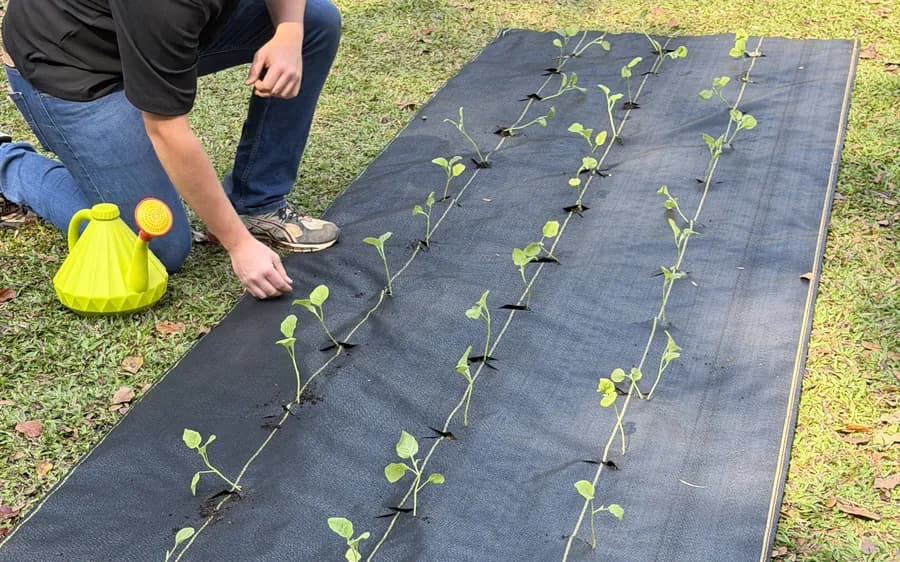
    Step 1 in action - clearing weeds and debris from the ground before laying landscape fabric. Pull from the root, not just the top. Anything left behind grows straight back through.

💡 Pro tip: If you have persistent perennial weeds - bindweed, horsetail, bramble root - apply a systemic weed killer at least two weeks before installation. The fabric suppresses new surface growth and weed seeds; it cannot kill an established root system already living in the soil below.


Step 2: Set Boundary Lines and Install Edging First

Most guides say add edging last. Do it first. Installing landscape edging before the fabric gives you a fixed perimeter to work to, keeps edges straight, and lets you tuck the fabric under the edging rather than cutting it flush. That tucked edge is one of the most effective failure-prevention moves in the whole installation.

  1. Use a string line to mark straight edges before hammering any edging in.

  2. For curved paths: lay a garden hose out first, step back, adjust until the curve looks right, then mark and cut. Worth the extra 20 minutes - once gravel is down, fixing a wonky edge means removing it all.

  3. Hammer edging firmly into the prepared ground around the full perimeter.


Step 3: How Far Should Landscape Fabric Overlap Under Gravel?

Start at one end and unroll fabric along the full length. Keep it smooth and taut - wrinkles and folds become permanent weak points once aggregate weight presses down on top.

  1. Overlap edges by minimum 6 inches for garden paths, minimum 12 inches for driveways. Never butt edges together without overlap - that seam is exactly where weeds find their way through, every time.

  2. Cut fabric with a utility knife along a straight edge. Quality woven landscape fabric like DOTDAY XBAR and SHIELD cuts cleanly without fraying.

  3. Tuck 2 to 3 inches of fabric under the edging along all boundaries. Do not cut it flush - the tucked edge held by the edging permanently prevents gravel migration under the fabric.

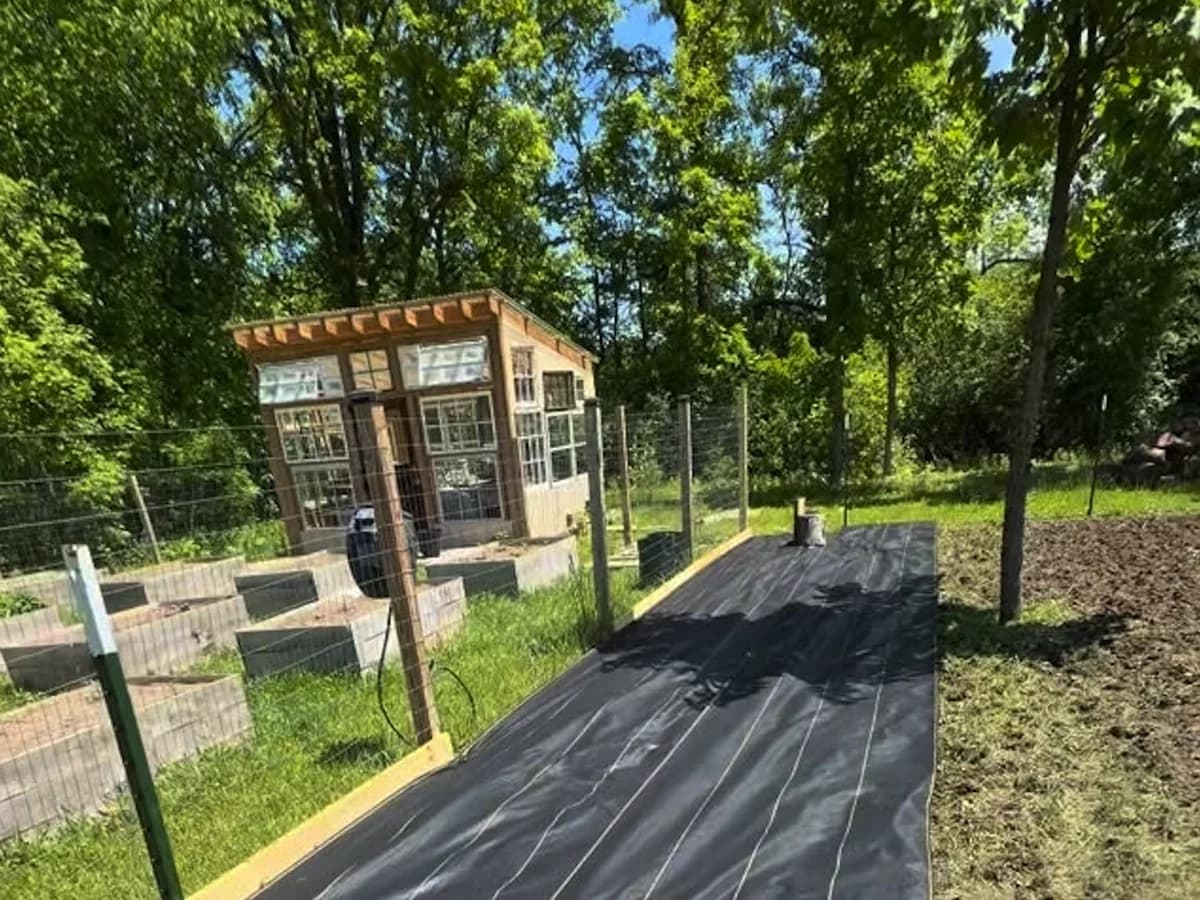
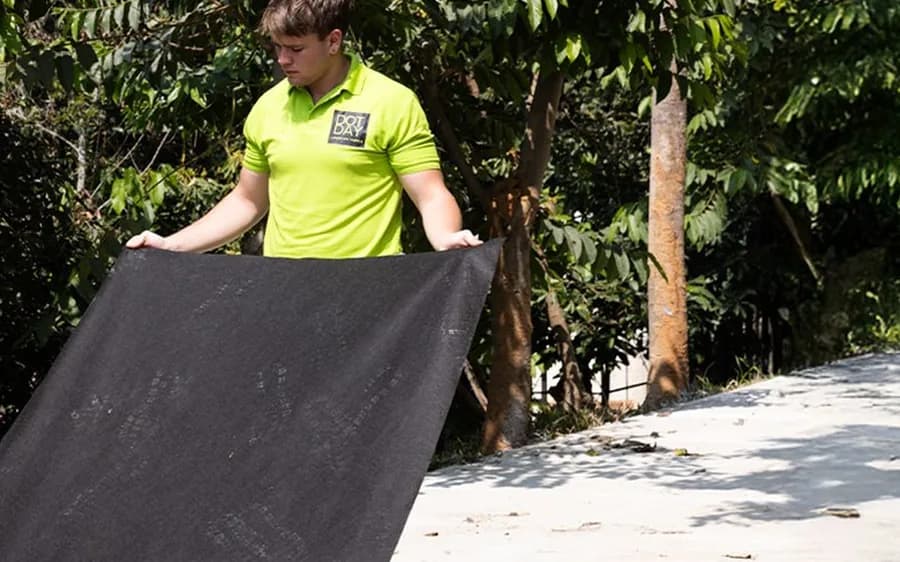
    DOTDAY XBAR 5oz dual-layer needle-punched woven fabric correctly laid along a narrow path before gravel installation
    DOTDAY XBAR 5 oz laid smooth and taut along a boundary path - tucked against the edging on both sides before gravel goes down. No wrinkles, no gaps, no shortcuts.

⚠️ Key rule: The wider the overlap, the better the weed barrier. 6 inches is the minimum. 12 inches on driveways. On slopes or areas with high water flow, go to 18 inches.


Step 4: How Many Landscape Fabric Staples Do You Need?

Unsecured fabric shifts. On slopes it slides overnight. In wind it lifts at the edges. Under repeated foot traffic it bunches into ridges you can feel through the gravel. Stapling is not a detail - it is what separates an installation that holds for a decade from one that fails by spring.

📖 Real-world note: The first time I laid fabric on a 1-in-5 slope and doubled the staple density at the edges but left the centre sparse, I came back the next morning to find the whole middle section had crept six inches downhill overnight — before a single piece of gravel went down. On slopes, staple the interior as densely as the edges. You won't regret the extra pins.

Staple placement rules:

  • Along every edge - one staple every 12 to 18 inches

  • Along every overlap seam - one staple every 12 inches

  • Across the interior on flat ground - one staple every 2 to 3 square feet

  • On slopes - double the interior staple density

  • On clay or compacted soil - always use a mallet, not hand pressure

    Stapling done right - push each pin completely flush with the fabric surface. Any staple left proud will snag, lift the surrounding area, and eventually expose the edge above the gravel.

⚠️ Important: Push every staple completely flush with the fabric surface. Any staple that protrudes creates a snag point that slowly lifts the surrounding area and eventually exposes fabric above the gravel.

Step 5: How Much Gravel Should Go Over Landscape Fabric?

Depth matters more than most people realise. Too shallow and the permeable weed barrier degrades from UV exposure. Too thin and the surface compresses unevenly under foot or vehicle weight.

Recommended gravel depths by project type:

  • Decorative garden bed or border - 1.5 to 2 inches of decorative aggregate

  • Garden path (foot traffic) - 2 to 3 inches of pea gravel, slate chippings, or similar

  • High-traffic path or utility area - 3 inches compacted hardcore base + 2 inches decorative gravel on top

  • Driveway (cars) - 4 inches compacted crushed stone base + 1 to 2 inches decorative top layer (5–6 inches total)

  • Driveway (heavy vehicles) - 6 inches compacted stone base + 2 inches top layer (8 inches total)

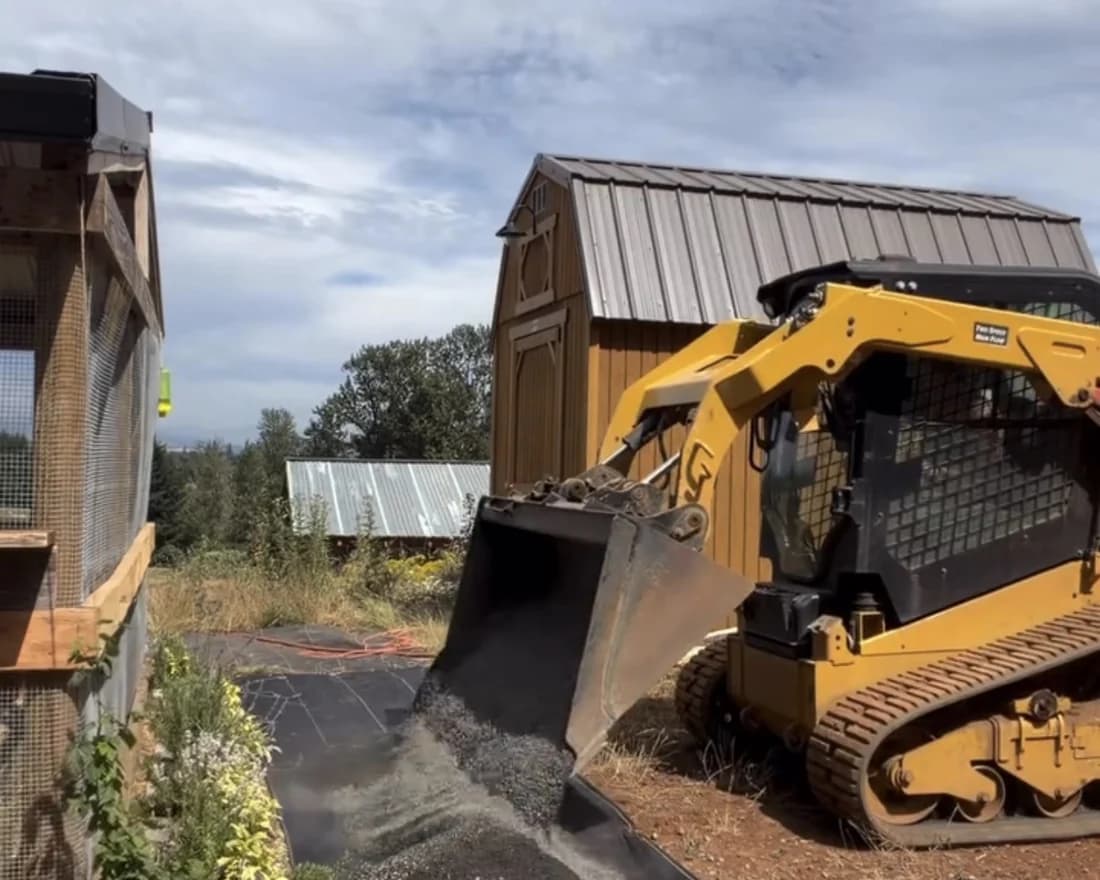
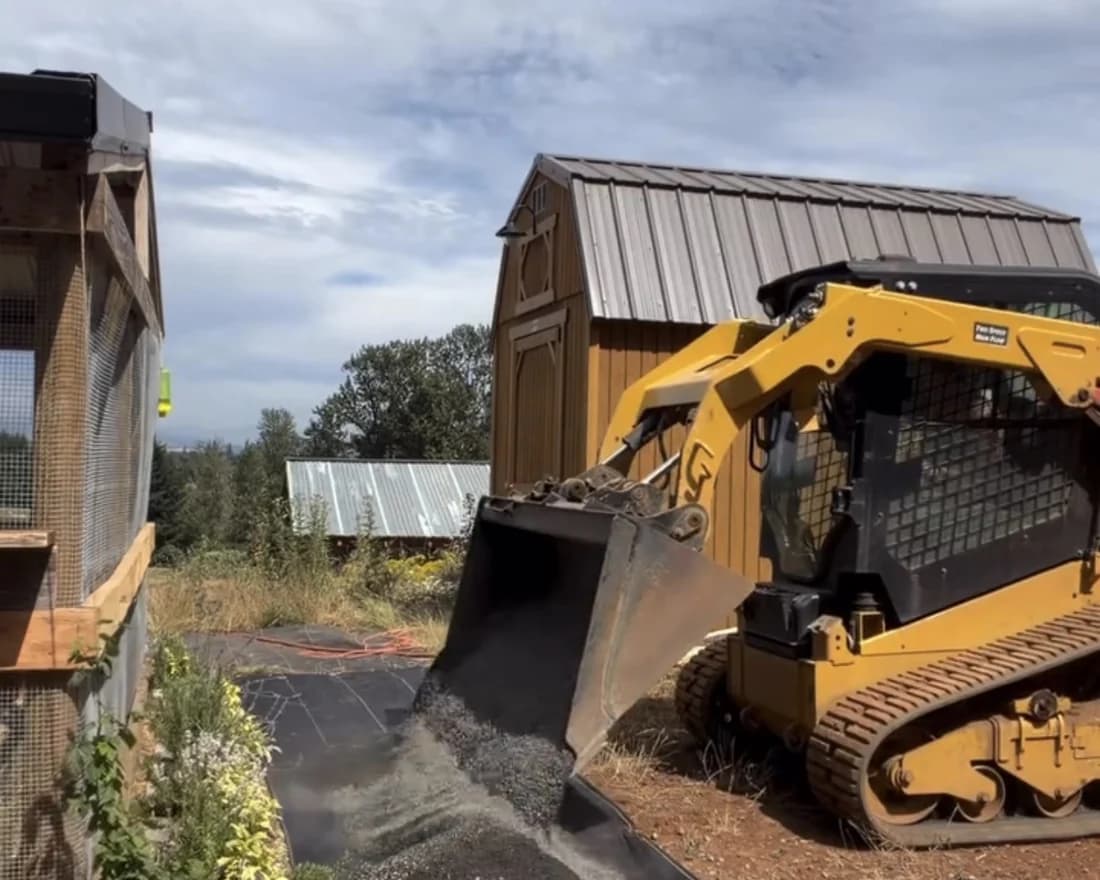
    Gravel being spread over DOTDAY XBAR 5oz dual-layer needle-punched woven fabric in a narrow garden path — landscape fabric installation step 5
    Gravel going down over correctly laid DOTDAY XBAR - the 5oz dual-layer needle-punched fabric holds its position as aggregate is spread from one end. Zero fabric should be visible when you're done.

Spread gravel evenly with a rake. Zero fabric should be visible anywhere - any exposed section degrades in one to two seasons regardless of UV-stabilisation rating. Walk the entire surface and check for soft spots or places where you can feel the fabric moving - these indicate insufficient stapling or a ground prep issue.

💡 Pro tip: For driveways, always compact the stone base first, then add the decorative top layer. Compacting aggregate directly on the landscape fabric without a base layer can stress the fabric and creates a surface that sinks unevenly under vehicle weight.


The 5 Mistakes That Ruin Gravel Installations (And Exactly How to Avoid Them)

❌ Mistake 1: Using lightweight garden fabric under gravel. The most common and most expensive error. Thin 1.5–2oz fabric compresses under aggregate load, tears under traffic, and becomes a shredded mess within one to two seasons — extremely difficult to remove with gravel on top. Always use minimum 3oz woven for paths, 5oz woven landscape fabric for driveways.

❌ Mistake 2: Not overlapping seams enough. A 2–3 inch overlap sounds reasonable. Weeds are patient — they find every gap. Minimum 6 inches for paths, 12 inches for driveways. On slopes, go wider still.

❌ Mistake 3: Skipping ground preparation. Laying fabric over existing weeds or uneven ground is wasted money and time. Weeds regrow from the root system below. The gravel settles unevenly. The fabric cannot fix bad ground.

❌ Mistake 4: Insufficient stapling. Gravel weight alone does not hold landscape fabric in position, particularly on slopes or in wet ground. Fabric that shifts even slightly bunches into ridges that push the gravel surface up and create visible lines across the finish.

❌ Mistake 5: Leaving fabric exposed above the gravel. Any visible section breaks down in one season from UV exposure. Tuck and pin any edge gaps before filling with additional gravel. Cover every inch - always.


DOTDAY SHIELD vs XBAR: Which Fabric Is Right for Your Project?

Both are woven, heavy-duty landscape fabrics built for real landscaping work. Here is the full comparison:

Feature

DOTDAY SHIELD 3.2oz

DOTDAY XBAR 5oz

Best for

Garden paths, decorative beds, borders

Driveways, parking, high-traffic paths

Weight

3.2oz per square yard

5oz per square yard

Construction

Heavy-duty woven polypropylene

Dual-layer woven + non-woven backing

Traffic rating

Foot traffic and light loads

Vehicle traffic and heavy commercial loads

Puncture resistance

High

Maximum — dual-layer reinforced

UV stabilised

Yes

Yes

Water permeable

Yes

Yes

Cuts cleanly

Yes — no fraying

Yes — no fraying

Primary function

Permeable weed barrier in garden beds

Aggregate stabilisation + sub-base separation


View DOTDAY SHIELD for paths and beds, or DOTDAY XBAR for driveways and high-traffic areas. Still deciding? If your project sits between categories, specify XBAR. Over-specifying costs marginally more upfront. Under-specifying and replacing in two years - with aggregate on top that all needs moving first - costs significantly more in every way.


Watch: How to Install Landscape Fabric Under Gravel

The complete DOTDAY installation walkthrough - every step from ground prep to gravel spreading, with the most common mistakes shown in real time. Watch before you start your project.

Prefer to watch rather than read? We walk through every step above in a short video - ground prep to gravel spreading, with the most common mistakes shown in real time so you know exactly what to avoid.


Frequently Asked Questions


How long does landscape fabric last under gravel?

High-quality woven landscape fabric installed correctly under adequate gravel cover lasts 10 to 15 years. Some commercial-grade woven landscape fabrics and geotextiles are rated for 25 to 50 years when fully buried under at least 3 inches of aggregate. The key factors are fabric weight, construction type, gravel depth, staple spacing, and proper seam overlaps. Cheap non-woven fabric may degrade in 3 to 5 years - which is exactly why specification matters before you start.


Should landscape fabric go under or over the gravel?

Always under. Fabric goes directly on the prepared soil surface. Gravel goes on top. The landscape fabric acts as a permanent sub-base separation layer - keeping soil below, gravel above, and blocking light to weed seeds. Placing it over gravel does nothing useful.


Will landscape fabric stop all weeds under gravel?

It stops weeds growing up from the soil below - the main source of weed pressure in any gravel surface. Over several years, windblown soil and organic material can accumulate on top of the gravel and allow some surface weeds to germinate above the fabric. This is normal, manageable with occasional light weeding or a pre-emergent treatment, and far less work than a bare gravel surface with no permeable weed barrier.


What weight landscape fabric should I use for a gravel driveway?

Minimum 4 to 5oz woven landscape fabric for residential car traffic. For driveways carrying delivery vehicles or regular heavy loads, 5oz or higher is required. Standard garden weed barrier fabric (1.5 to 2oz) is not rated for driveway underlayment - it will compress and fail under vehicle load. DOTDAY XBAR at 5oz dual-layer woven is the correct specification for most residential driveways.


How much gravel should go over landscape fabric?

Minimum 2 inches for decorative beds, 3 inches for foot-traffic paths, and a total depth of 5 to 8 inches (compacted base plus decorative layer) for driveways. Never leave fabric visible — any exposed section degrades from UV within one season. The deeper the gravel cover, the longer the fabric underneath lasts.


Can I install landscape fabric under existing gravel?

Technically yes, but it is rarely worth doing. You would need to rake all the gravel off, prepare the ground, lay and staple the landscape fabric, then replace the aggregate. At that point it is a full reinstall. If your surface is weed-free, maintain it with a pre-emergent treatment. If weeds are a persistent problem, a full reinstall with proper fabric is the only long-term solution.


📐 How Much Landscape Fabric Do I Need? — Use the DOTDAY Fabric Calculator. Enter your dimensions, get your exact roll count with overlaps. 60 seconds.


🤔 Does Landscape Fabric Actually Work? The Honest Answer — The evidence-based breakdown of when landscape fabric works, when it fails, and what makes the difference.


Your Gravel Project Deserves to Last a Decade. Start It Right.

The difference between a gravel surface that looks great for ten years and one that becomes a weedy, sunken mess by year two comes down almost entirely to preparation and fabric specification. The steps in this guide are not complicated. They just need doing in the right order, with the right materials, without the shortcuts that seem tempting on the day.

Spring and early summer are peak installation season — and the time when fabric goes out of stock fastest. If your project is coming up, order early.


Two things to do right now: Use the DOTDAY Landscape Fabric Calculator to get your exact roll quantity - dimensions in, answer out. Then use the DOTDAY FabricFinder for a specific product recommendation based on your project type and traffic load. Both take under two minutes. Your surface is one good decision away from a result that lasts.

Comments


bottom of page