DOTDAY Install Guide

How to Install Weed Barrier Fabric

A clean install is what separates a weed-free bed from a redo next season. This guide walks the whole job: measuring, ground prep, roll-out, overlaps, pinning, and what to lay on top. It works for SHIELD under mulch, XBAR under gravel and pavers, and TERRA in drainage work.

No special tools · Cuts clean, no fraying · Done in an afternoon

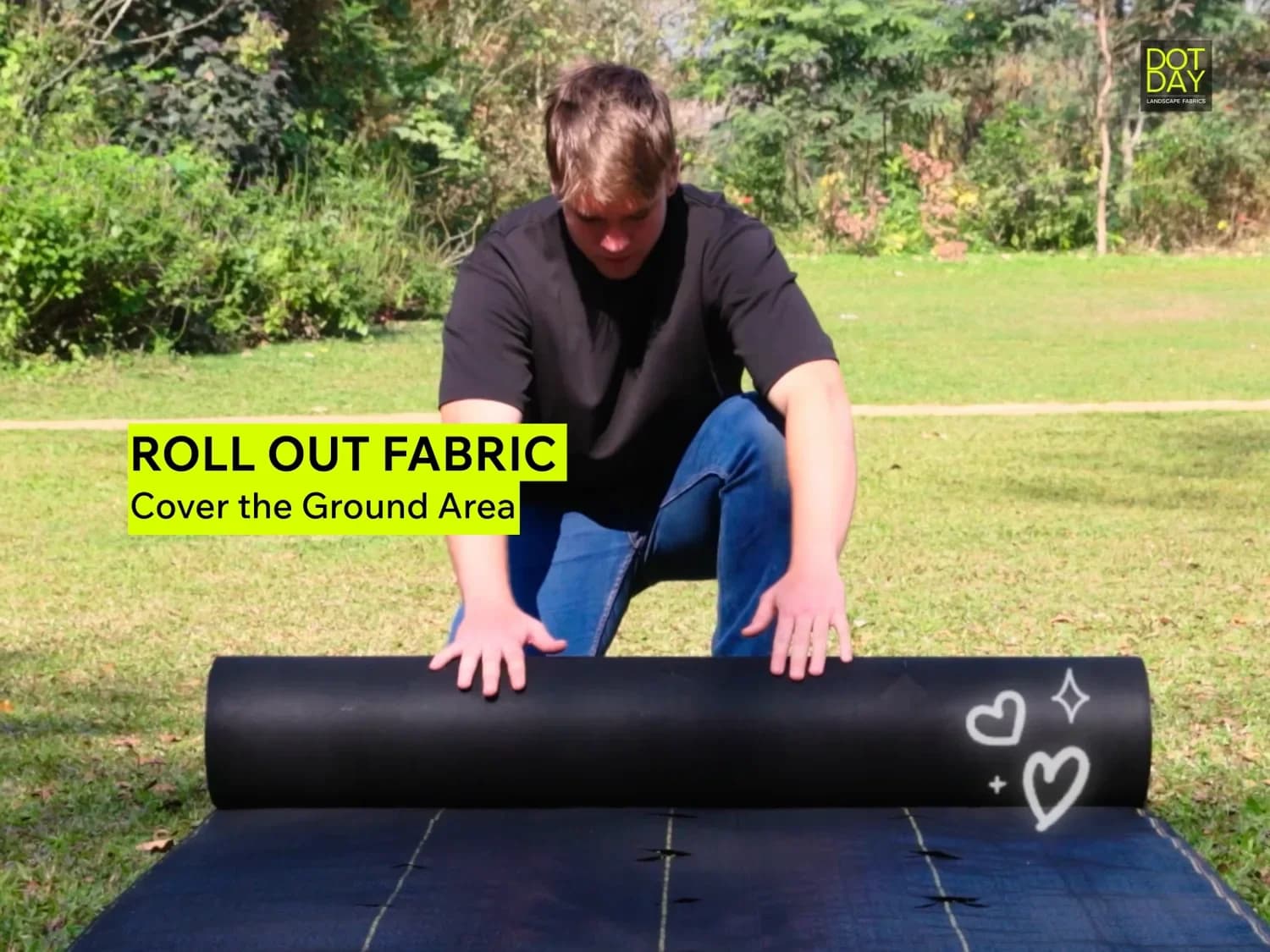
How to install weed barrier fabric: rolling DOTDAY SHIELD woven fabric across prepared ground
SHIELD 3.2oz rolling out on a prepared bed
Step by step

Install weed barrier fabric in six steps

Step 1

Measure and plan the area

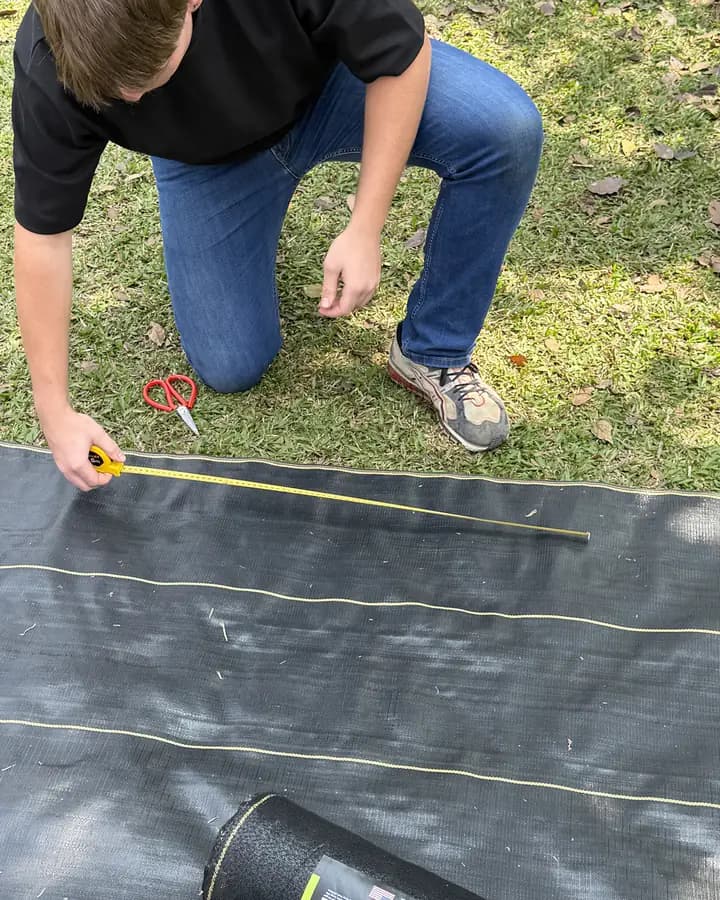
Measure the length and width of every bed, path, or pad you are covering. Add extra at the edges and count seams so you are not short a roll mid-job. The Fabric Calculator turns your square footage into a roll count with a 10% overlap buffer added automatically.

Measuring weed barrier fabric with a tape measure before cutting it to size
Step 2

Clear and level the ground

Remove existing weeds, roots, and sharp rocks, then rake the surface level. Fabric laid over living weeds or lumpy ground bridges and shifts instead of sitting flat. Clean ground now is what keeps seams tight later.

Step 3

Roll out the fabric

Unroll the fabric across the prepared area and let it relax flat. Line the printed 12-inch guides up for straight rows and square edges. Work one run at a time instead of unrolling the whole job at once.

Step 4

Cut to fit

Trim with sharp scissors or a utility knife. The heat-sealed edges do not fray, so cuts stay clean. Notch around plants, posts, and irrigation, keeping the fabric snug to each obstacle.

Step 5

Overlap seams and pin

Overlap every seam by at least 6 inches so weeds cannot find the gap. Anchor edges and seams with landscape staples every few feet, keeping the fabric snug but not stretched tight. Over-tensioned fabric tears at the pins.

Step 6

Cover and finish

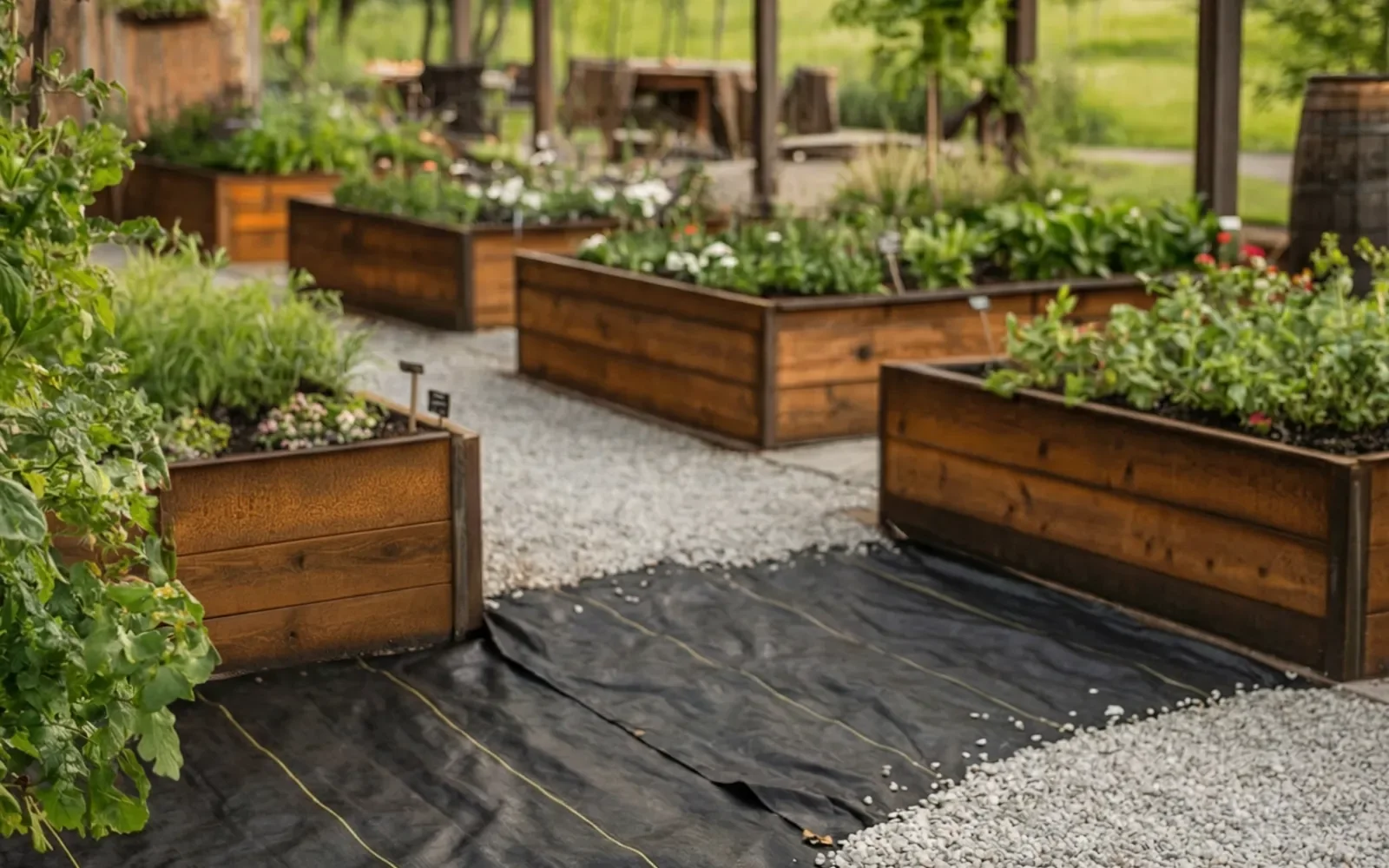
Cover the fabric promptly so sun exposure never becomes a factor. Mulch goes over SHIELD in beds and rows, gravel goes over XBAR on paths and pads, and backfill goes over TERRA in drainage work. A covered install is a finished install.

Gravel spread over installed weed barrier fabric between raised garden beds
The seam is where installs fail
Almost every failed install traces back to the same two shortcuts: seams overlapped less than 6 inches, and fabric left uncovered in the sun. Overlap generously, pin both edges of every seam, and get your mulch or gravel on the same day.
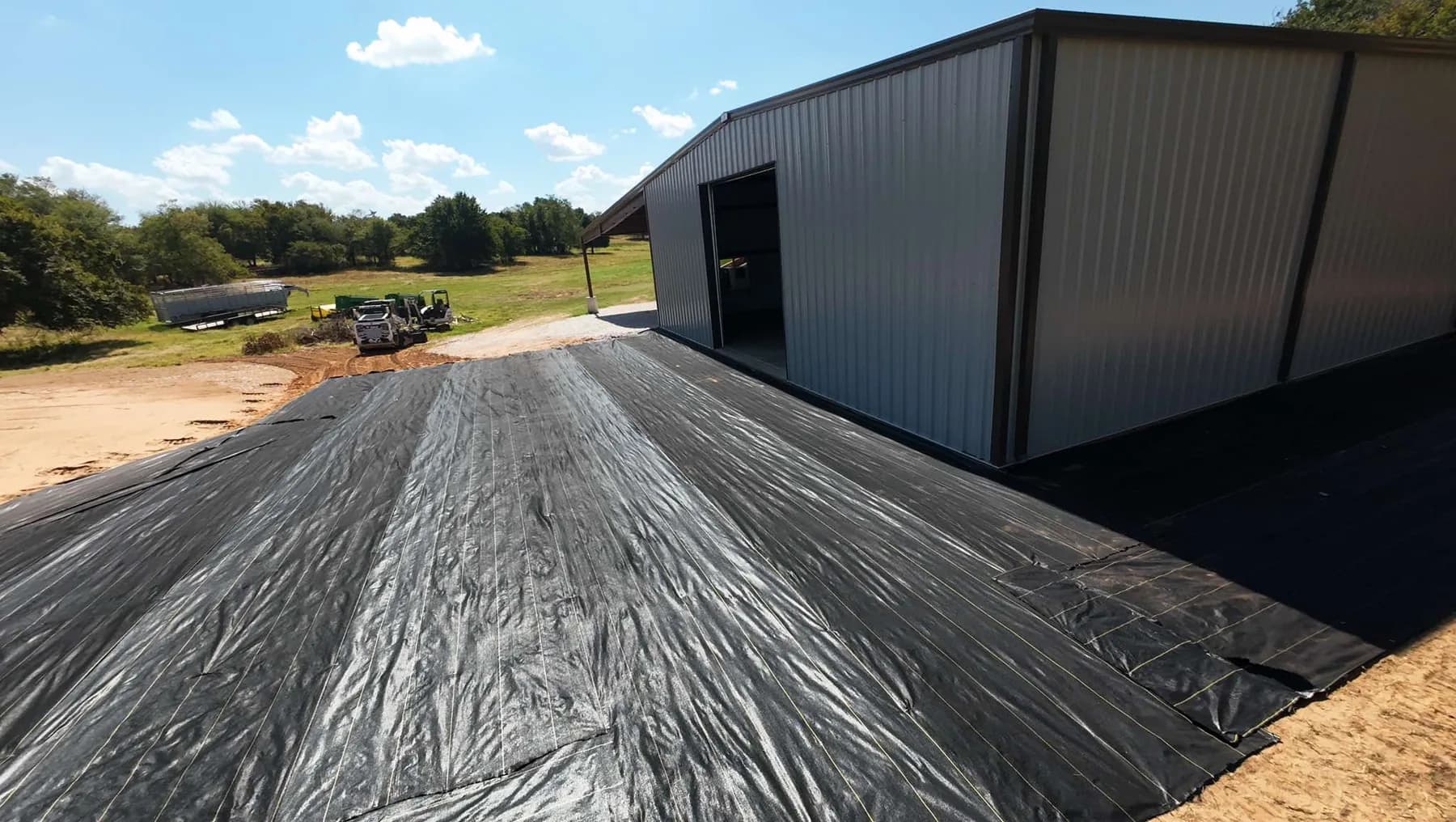
See it in action

Watch a real install from roll-out to finish.

See how the fabric goes down on a real job: unrolled, cut to fit, pinned, and covered. The same sequence in this guide, done at working speed on site.

  • Cuts clean without fraying at the seams.
  • Permeable build lets water and air reach the soil.
  • UV-stabilized to hold up under mulch, gravel, and sun.
Find Your Fabric

What goes on top decides the fabric

Mulch, soil & planting rows

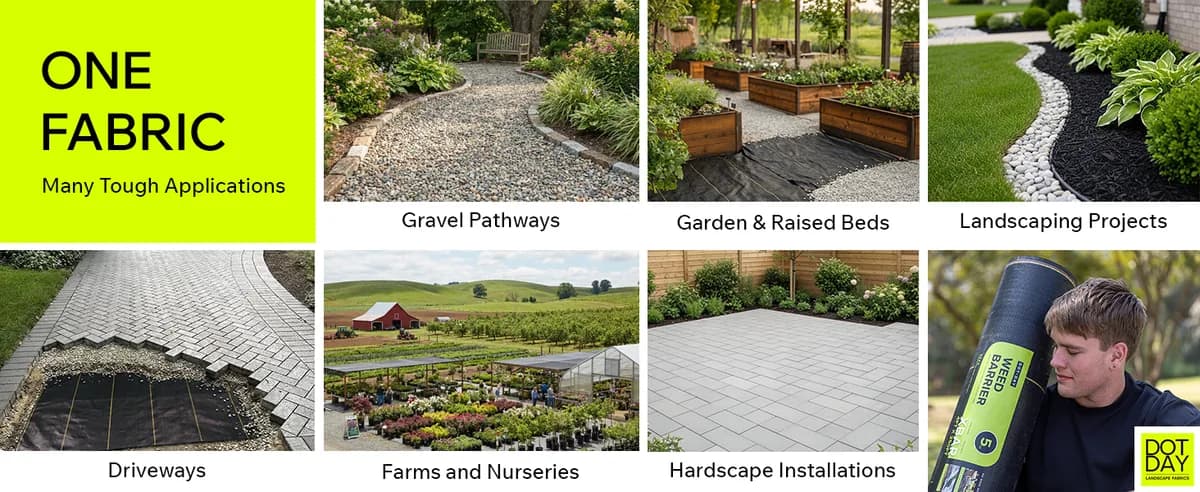
Gardens, raised beds, farms, and nurseries. Breathable weed control that lets water straight through to the soil.

Use SHIELD 3.2oz

Gravel, rock & pavers

Paths, pads, and high-traffic hardscape. A 5oz dual-layer woven built to take load without pushing stone into the subgrade.

Use XBAR 5oz

Drainage & French drains

French drains, retaining walls, and soil separation. Non-woven needle-punched geotextile that filters water and holds soil back.

Use TERRA 4/6/8oz
★★★★★
This stuff is really impressive, I should have tried this years ago. The plants have been in the ground for just under a month and the only weeds are at the outer edges, with the entire covered area absolutely weed free. Watering is a breeze: the water sits briefly on the surface but drains through to the dirt within a couple of minutes.
Patrick Quinn  ·  Verified Amazon Vine Review - SHIELD 3.2oz (4ft x 100ft)
Go deeper

Guides for specific installs

Browse all

Installing weed barrier fabric, common questions

Which side of the fabric goes up?

With DOTDAY woven fabric the weave works the same way through, so there is no wrong side. Lay it flat, line up the printed guides, and focus on full coverage and snug placement instead.

How much should seams overlap?

Overlap every seam by at least 6 inches. Under-sized overlap is the most common reason weeds appear in an otherwise good install, because seams are the only path through the fabric.

How many landscape staples do I need?

Pin edges and seams every few feet, keeping the fabric snug but not stretched tight. The Fabric Calculator includes an overlap buffer, so order staples to match your total edge and seam length.

Can I install over existing weeds?

No. Clear weeds and roots first and rake the ground level. Fabric laid over living weeds bridges instead of sitting flat, and vigorous weeds can push at seams and edges from below.

Can I plant through the fabric?

Yes. Cut a slit or notch where each plant goes, fit the fabric snug around the stem, and keep the flaps overlapped. The ground around every plant stays covered and weed free.

Do I have to cover the fabric?

Yes, cover it the same day you install. Mulch over SHIELD, gravel over XBAR, backfill over TERRA. Covering protects the fabric from direct sun and locks it in place, so the install lasts for seasons.

Ready to install

Lay it once, get it right

Match the fabric to your ground condition, size the order with the calculator, and follow the six steps above. One clean afternoon of work, seasons of weed-free ground.

Keep planning your install