Under deck weed barrier: what to put under a deck to prevent weeds
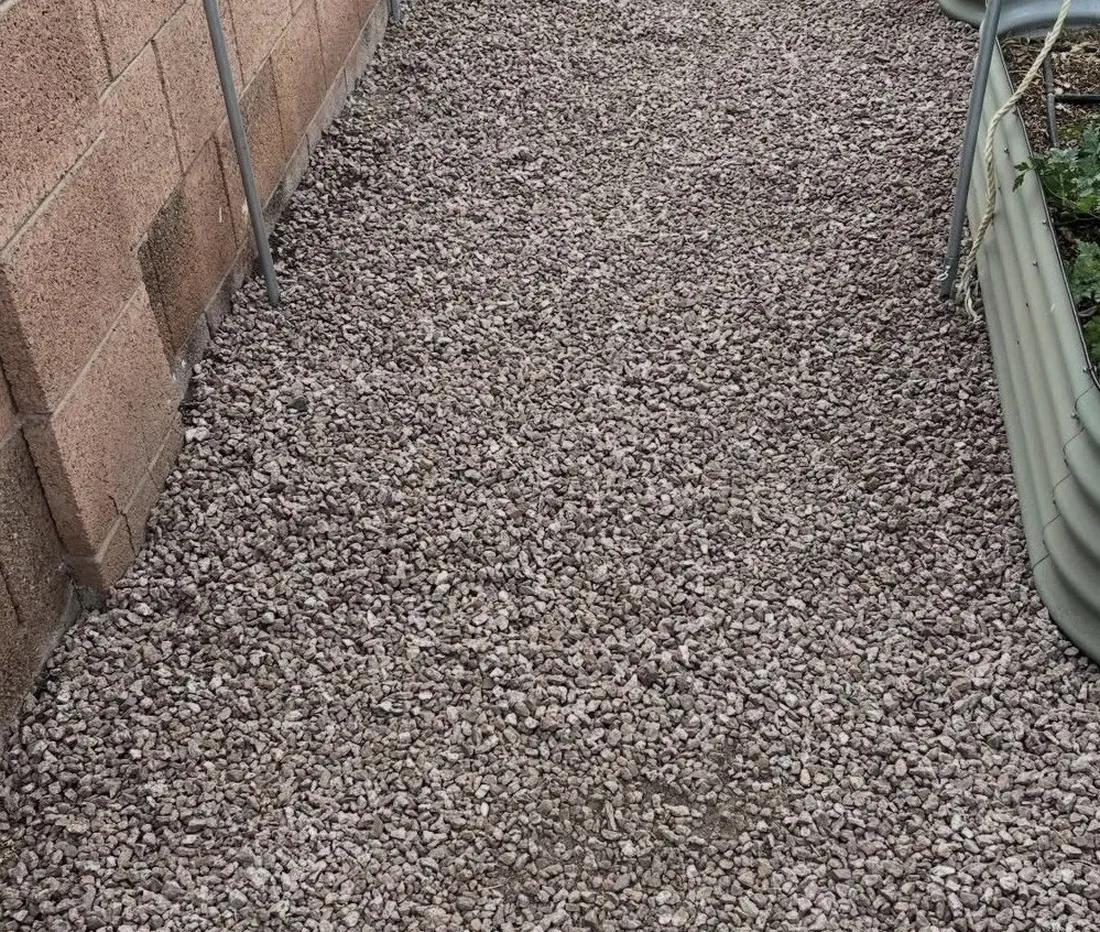
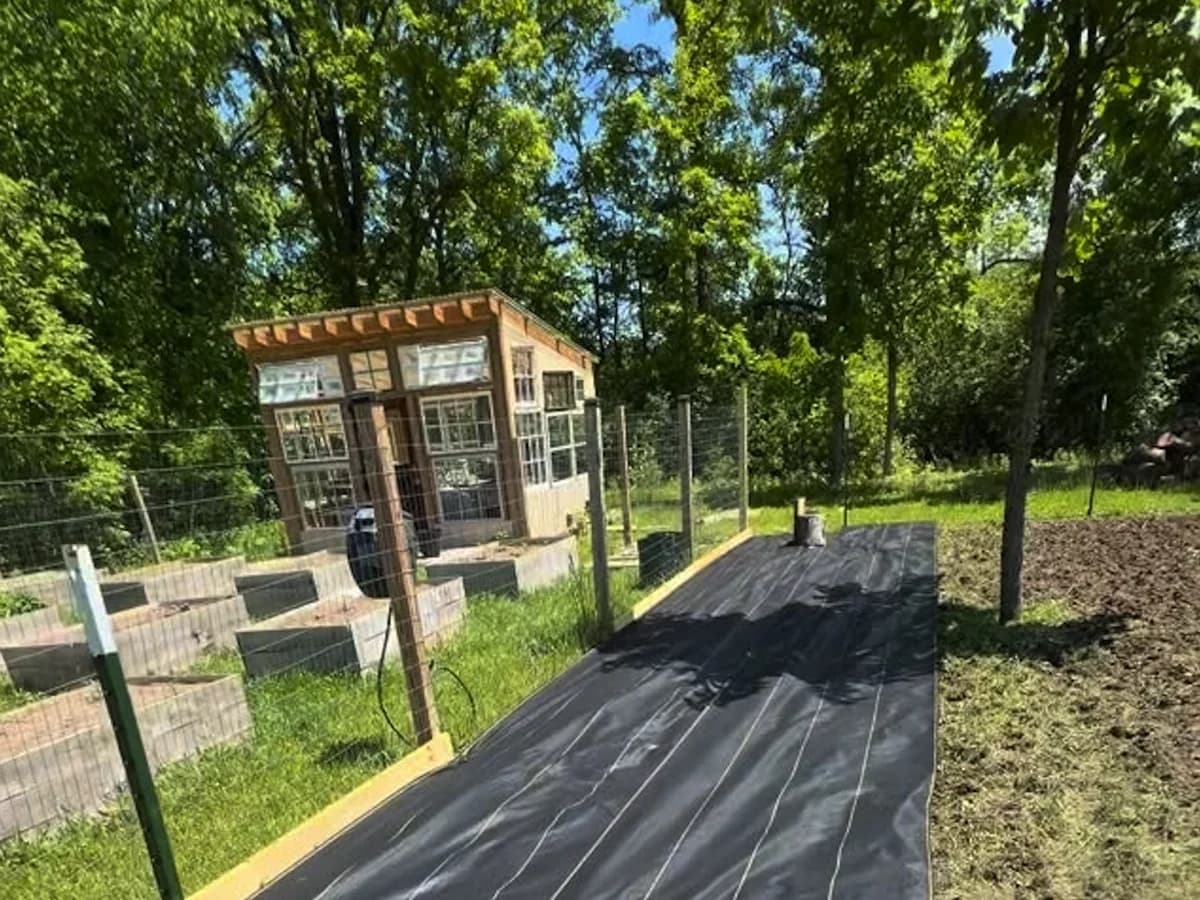
For an under deck weed barrier that works, put a woven landscape fabric over cleared, leveled soil under the deck, cut it snug around every post, and cover it with 2 to 3 inches of gravel. The fabric blocks the light weeds need, the gravel holds it down and shades it from the sun, and water still drains through. Under a deck nothing heavy sits on the fabric, so SHIELD 3.2oz is enough; step up to XBAR 5oz if the gravel will take foot traffic or storage. Skip plastic sheeting: it traps water and stays damp under the boards.
Weeds pushing up under a deck are the hardest kind to reach, so do it before the boards go down if you can. The same idea works under pavers and sheds, with a heavier fabric where there is load, covered below. Size the run with the DOTDAY Fabric Calculator. Free US shipping, no minimum.
The under-deck weed barrier layer stack
| Layer (top to bottom) | What to use | Why it matters |
|---|---|---|
| Deck boards and joists | Leave the sides ventilated | Airflow keeps the ground under the deck dry |
| Cover layer | 2 to 3 in of gravel or river rock | Holds the fabric down and keeps sun off it |
| Weed barrier | SHIELD 3.2oz woven (XBAR 5oz if you walk or store things on it) | Blocks light so weeds cannot establish; water passes through |
| Seams and posts | Overlap seams at least 6 in, X-cut around each post, pin every 12 to 18 in | Seams and post gaps are where weeds get back in |
| Ground | Cleared, leveled soil, roots removed | A flat base keeps the fabric in contact and stops pooling |
Which weight for which structure
| Structure | Recommended fabric | Why |
|---|---|---|
| Under a deck (weed control) | SHIELD 3.2oz | No load on the fabric, just weed suppression and airflow |
| Shed on piers over open ground | SHIELD 3.2oz | Light duty weed control under the floor, no load on the fabric |
| Shed gravel pad (skids or blocks on stone) | XBAR 5oz | Separates compacted stone from soil and carries the shed load |
| Paver patio or path | XBAR 5oz | Carries the compacted base and traffic without tearing |
| Drainage trench alongside | TERRA non-woven | Filters and flows water rather than bearing load |
The fabric that belongs under the structure
XBAR is the 5oz dual-layer for pavers and load. Use the tabs if the job is a deck or shed (SHIELD) or a drain (TERRA).
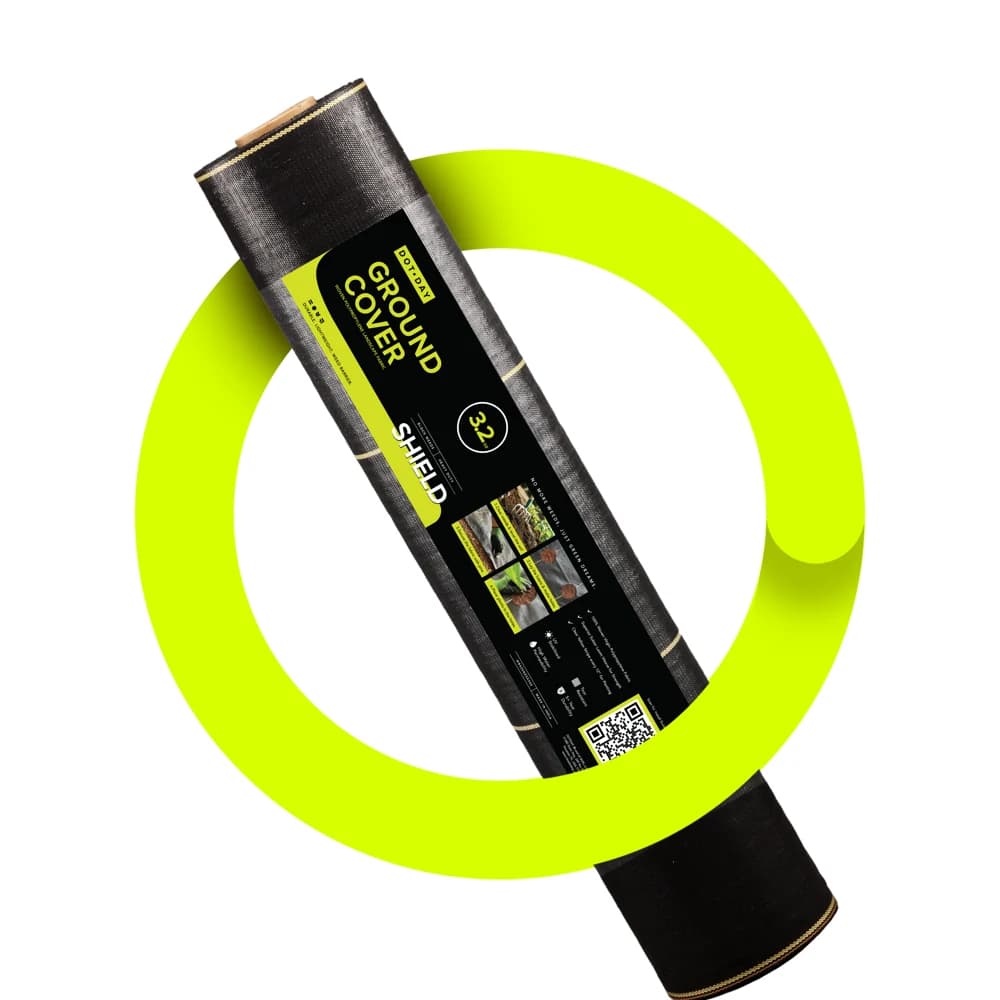
SHIELD
From $64.49 per roll, or $0.07 per sq ft.
3.2 oz woven polypropylene. Six roll sizes.
Flat-tape woven polypropylene.Strong in-plane, so a full run pulls across a bed without tearing.
Blocks light, not water.Rain and irrigation pass through to the roots while weeds stay denied.
Plant straight through it.X-cuts at your spacing let seedlings in; the surface between stays covered.
180/105 lb grab strength.ASTM D4632, so it survives being pulled, pinned, and planted.
70% UV retention at 500 hrs.ASTM G154. Cover promptly with mulch or soil to protect it.
- 3 x 10 ft
- 3 x 50 ft
- 4 x 50 ft Sold out
- 3 x 100 ft
- 4 x 100 ft Sold out
- 3 x 250 ft Sold out
- 8 x 100 ft Sold out
- 4 x 250 ft
- 6 x 200 ft Sold out
Available in 9 roll sizes
XBAR
From $44.99 per roll, or $0.17 per sq ft.
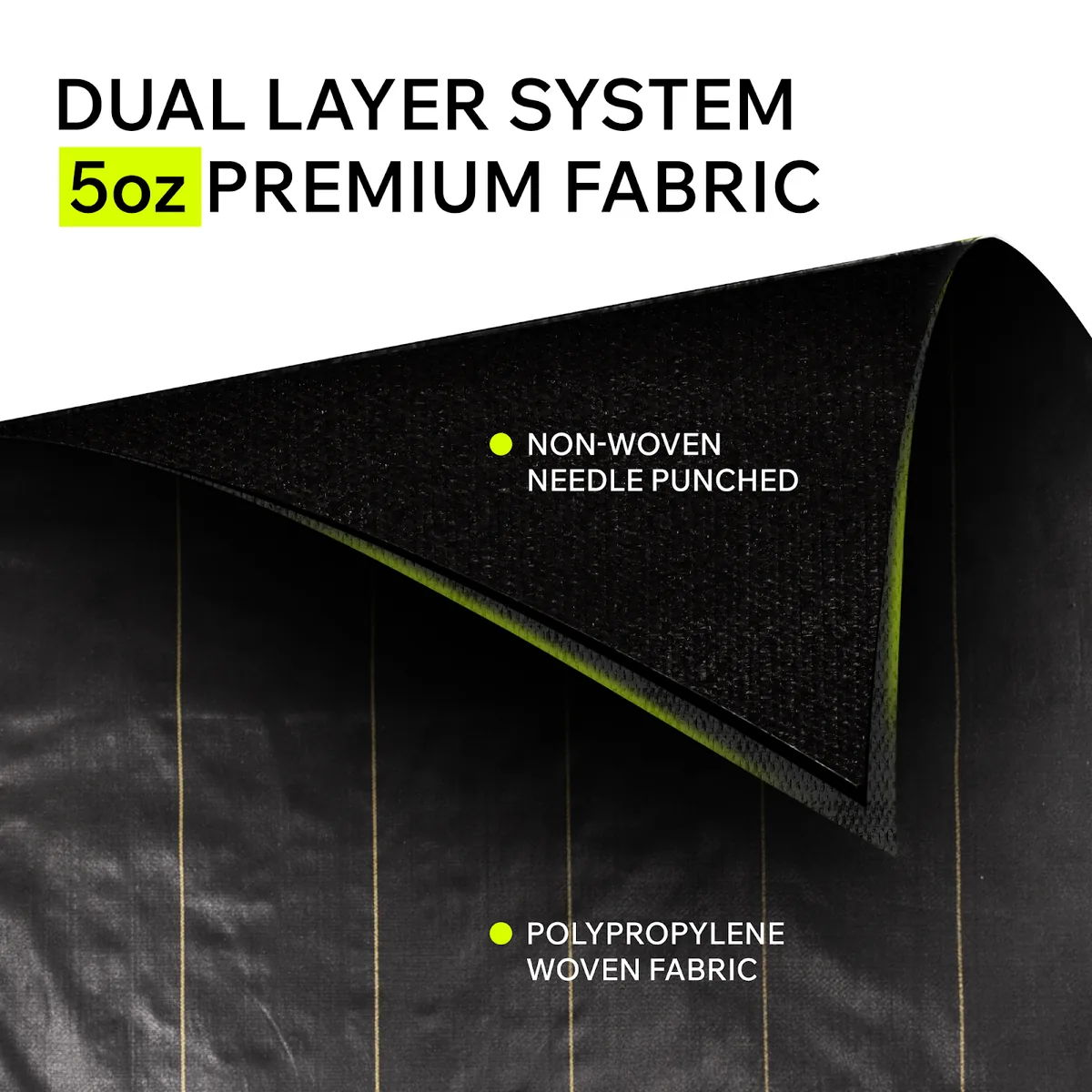
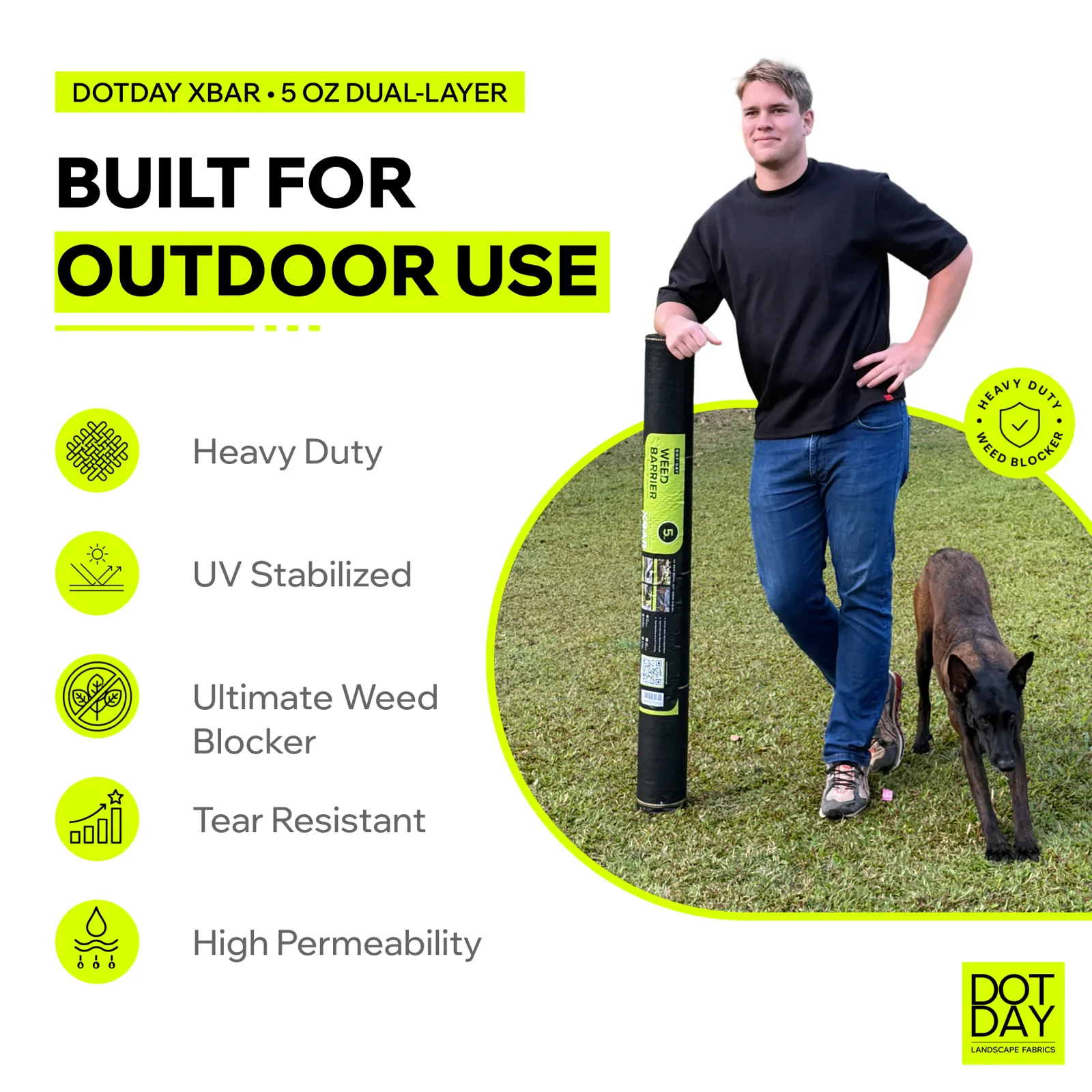
5 oz dual-layer woven. Nine roll sizes.
Two layers, one job each.The woven face carries the load; the needle-punched backing blocks light and stops pumping.
332 lb CBR puncture resistance.ASTM D6241, so angular stone and machine traffic do not open it up.
10.5 gal/min/sf water flow.ASTM D4491. Breathable under load instead of pooling beneath the surface.
12 inch guide stripes.Keeps rows, cuts, and overlaps straight across a long run.
29.5 mil thickness, sealed edges.Cuts clean with a knife and does not unravel.

TERRA
From $58.49 per roll, or $0.39 per sq ft.
Non-woven needle-punched. Three weights.
3,300 l/min/m² water flow at 8 oz.ASTM D4491. Water moves through the mat, not across it.
Filters the fines.Holds silt and soil out of your stone so water keeps moving through the drain.
500 lb CBR puncture at 8 oz.ASTM D6241, built for angular stone and compaction.
Three weights, one construction.4 oz for drainage, 6 oz for drains and walls, 8 oz for road base.
Conforms to the trench.The felt-like mat drapes around pipe instead of bridging and tenting.
Measured your build site? Get roll count and price
Enter the footprint of your deck, patio, or shed pad and get the right fabric, roll size, and quantity to order.
Step-by-step: installing fabric under hardscape
- 1Prepare the areaClear the zone for your deck, pavers, or shed. Remove vegetation, rocks, and debris, and aim for a level surface for stability.
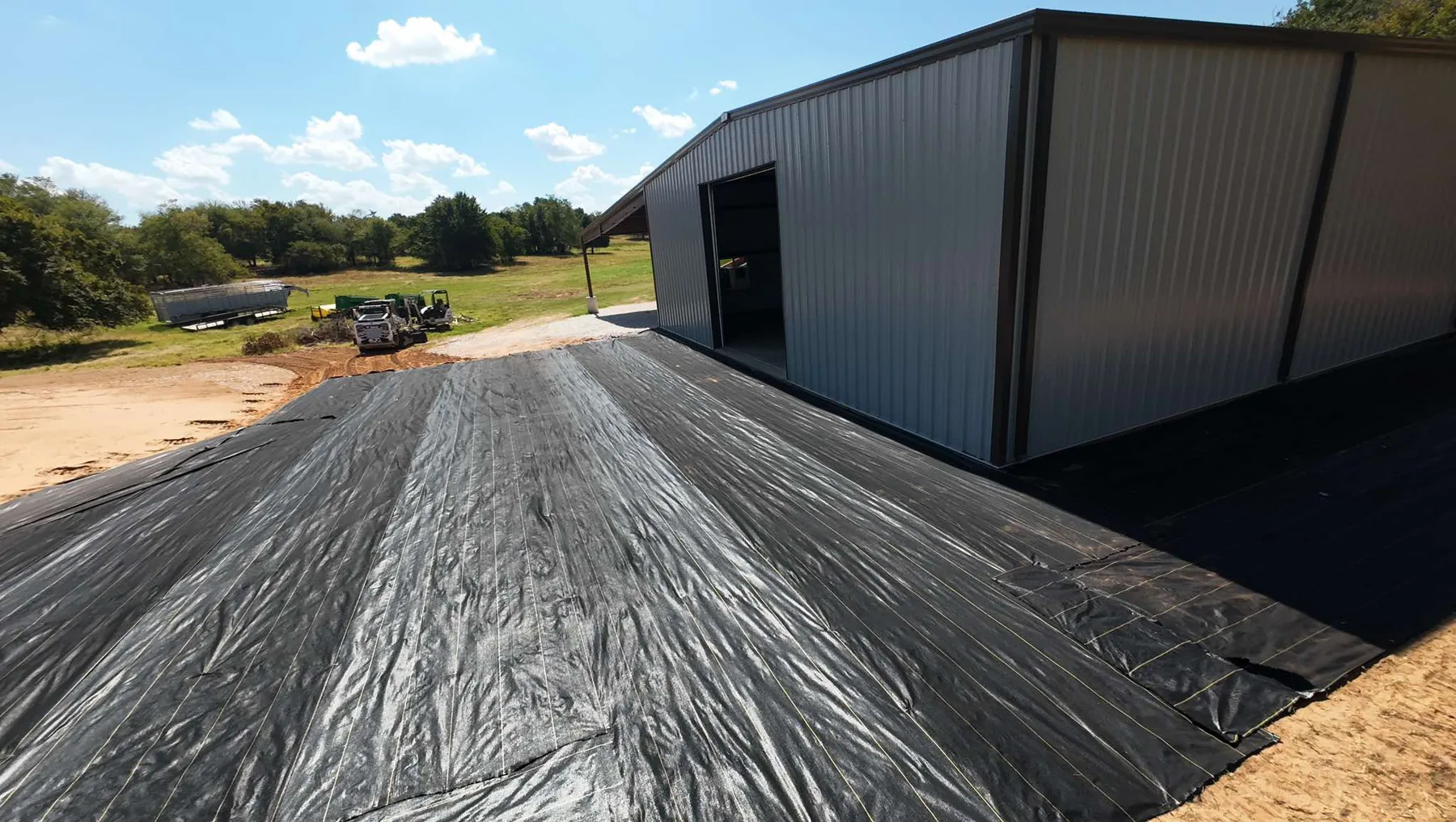
- 2Lay the fabricRoll out the fabric across the cleared area for complete coverage. On larger areas, overlap sheets by at least 6 inches so weeds cannot find the seams.
- 3Anchor itSecure the fabric with landscape pins every 12 to 18 inches along seams and edges so it stays put, especially in windy conditions.
- 4Excavate where neededFor pavers or deck footings, dig to depth carefully without tearing the fabric where it needs to stay intact. Around posts and supports, cut the fabric to fit snug against each footing and overlap the cut flaps a few inches so weeds cannot work through the gap.
- 5Layer and finishFor pavers, add crushed stone or gravel on top for drainage and a stable base. For sheds, follow the foundation guidelines, then secure any exposed fabric edges.
Building decks and patios across sites?
DOTDAY supplies SHIELD and XBAR to contractors direct, by the roll or in bulk, matched to each ground condition.
Get the weight right for the load
The most common mistake is using a light fabric under pavers. Under a compacted base and foot traffic it tears and lets aggregate sink, so paver areas need XBAR 5oz dual-layer. Decks and shed floors put no real load on the fabric, so SHIELD 3.2oz is the cost-effective choice there for weed control and airflow. For a drainage trench beside the structure, TERRA non-woven geotextile filters and flows water. For pavers specifically, see our guide on weed barrier under pavers, and for a gravel drive up to the shed, read landscape fabric for gravel driveways and our gravel driveway weed barrier guide.
Do you need weed block fabric under a shed foundation?
Yes for gravel pads and for blocks or skids that sit on grade. Not as a weed barrier under a poured slab. The fabric always goes at soil level, under whatever carries the shed, and it gets cut to fit around anything that goes down into the ground. Here is how that plays out by foundation type.
Gravel pad. Lay XBAR 5oz dual-layer over the compacted subgrade, then put all of the stone on top of it. The fabric separates stone from soil so the pad stays firm, and blocks weeds from coming up through the gravel.
Concrete blocks or deck blocks on grade. Fabric goes under the blocks, over leveled soil or a thin compacted base. The blocks sit on the fabric, never the other way around.
Skids. Skids rest on the gravel pad, so the fabric is under the stone, not under the skids directly. Build the pad first, then set the skids on the compacted gravel.
Posts, piers, or pillars set in the ground. Set the piers first. Then roll the fabric out, X-cut it at each pier, and lap the flaps back over each other so no soil shows at the base of the post. Never drape fabric over the top of a pillar. If the shed stands on piers over open, shaded ground and nothing sits on the fabric, SHIELD 3.2oz is the cost-effective choice. If stone goes on top, use XBAR.
Poured concrete slab. A slab blocks light on its own, so fabric is not needed as a weed barrier. Some installers spec a separation fabric under the gravel base of a slab. Follow that spec if it applies, and skip the fabric if it does not.
Where the fabric goes for each shed base
| Shed base | Where the fabric goes | Fabric to use |
|---|---|---|
| Gravel pad with skids or blocks on top | Over compacted soil, under all of the stone | XBAR 5oz dual-layer |
| Concrete or deck blocks set on grade | Under the blocks, over leveled soil or base | XBAR 5oz dual-layer |
| Posts or piers set in the ground | Around each pier, X-cut with the flaps overlapped | SHIELD 3.2oz on open ground, XBAR if stone goes on top |
| Poured concrete slab | Not needed as a weed barrier; the slab blocks light | Only under a gravel base if the installer spec calls for it |
Why the fabric never goes over the pillars, and the order of work
A shed pillar, pier, or block exists to carry the structure down to firm ground. Anything draped over the top of it sits between the load and the support, where it gets crushed, shifts, and does nothing for weeds. Weeds come up from the soil, so the barrier belongs at soil level, below whatever you put on top.
For a shed on a gravel pad, the order of work is: mark and square the footprint, extending the pad a little past the walls so roof runoff lands on stone. Strip grass, roots, and topsoil, then level and compact the subgrade. Set any in-ground piers now, so the fabric can be cut around them. Roll out XBAR, overlap seams at least 6 inches, pin every 12 to 18 inches along seams and edges, and X-cut around each pier. Spread the gravel without driving on bare fabric, then compact it in lifts to the depth your shed maker or local code calls for. Set the blocks or skids on the compacted stone and level the shed on top. Size the pad with the DOTDAY Fabric Calculator.
Find the right fabric in two minutes
Answer a few questions about your ground condition and get matched to SHIELD, XBAR, or TERRA for the job.
Find Your FabricThree fabrics. One simple rule.
Use the right fabric for the right ground condition.
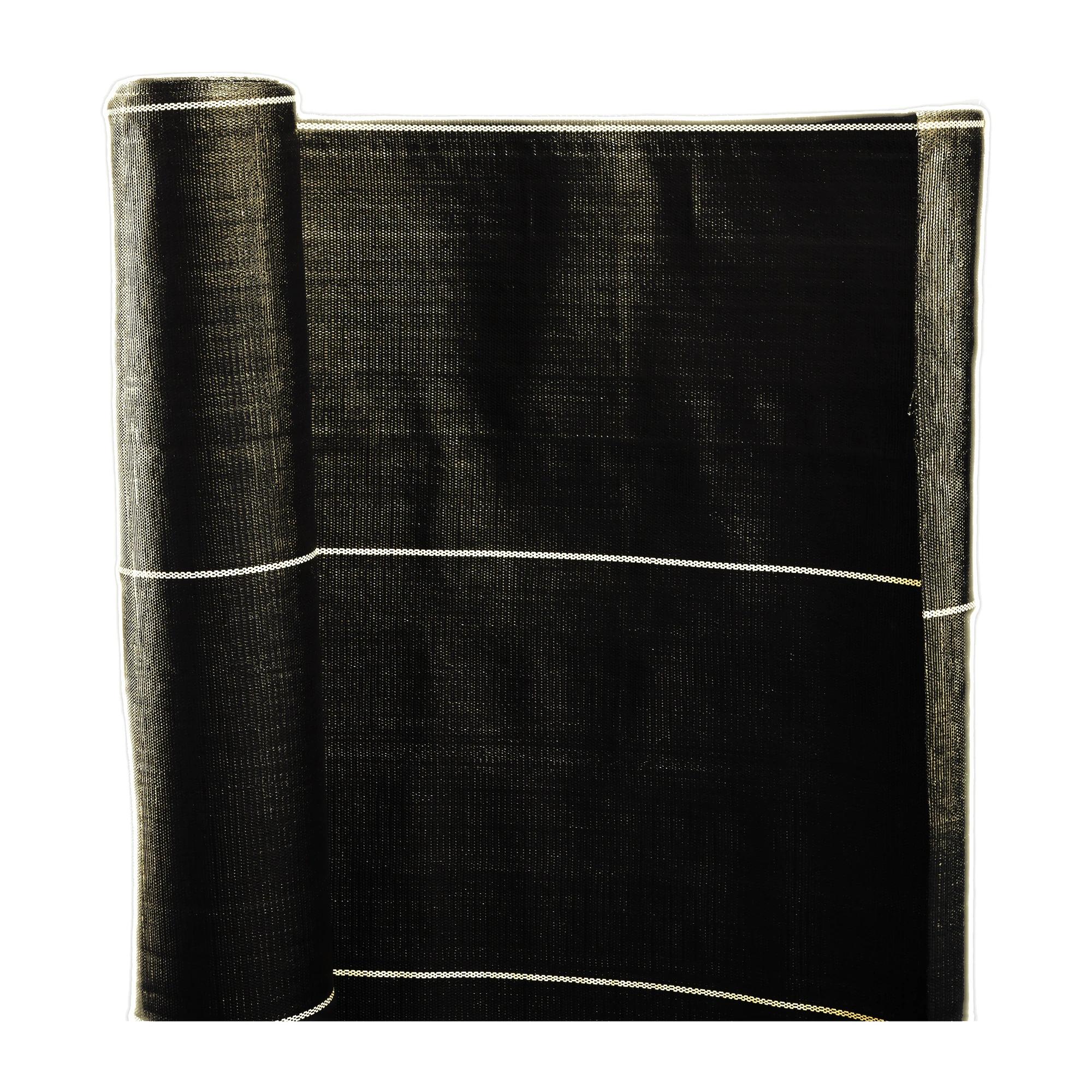
SHIELD
Woven polypropylene weed barrier built to suppress weeds while letting water and air through.
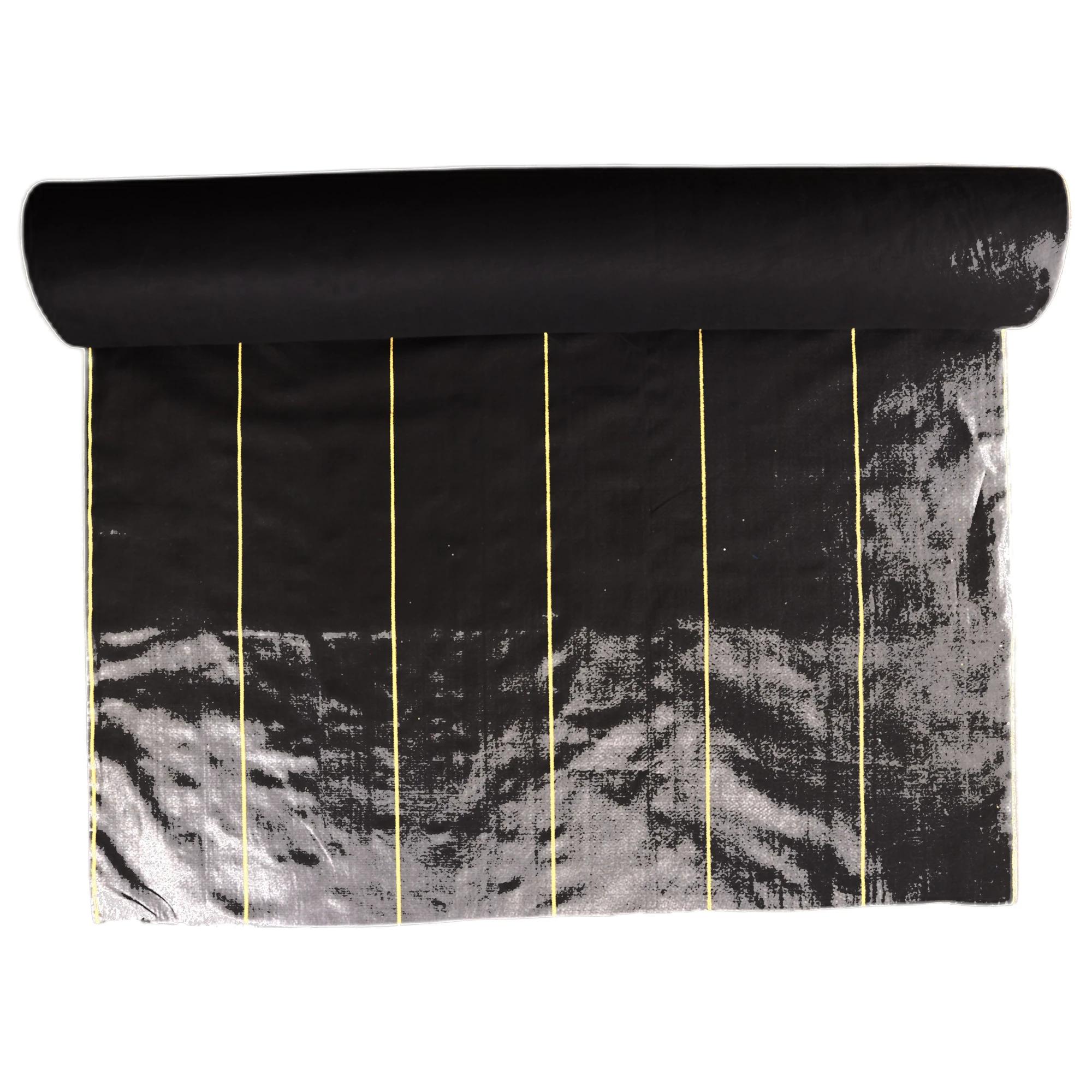
XBAR
Heavy-duty woven hybrid engineered for load and separation under hard surfaces.
TERRA
Non-woven geotextile designed for drainage, filtration, and soil separation.