Landscape fabric for contractors is a spec decision
Choosing landscape fabric for contractors is different from buying a single roll for a weekend bed. When you're speccing material across multiple sites, the wrong call doesn't cost you one afternoon, it costs callbacks, re-digs, and margin on every job that used it. A budget woven roll looks identical to a professional-grade one on the shelf. The difference shows up two seasons later when aggregate has migrated into subsoil or weeds have found the seams. DOTDAY is built around one rule: use the right fabric for the right ground condition. For crews, that translates directly into fewer callbacks.
Three weights cover almost every job
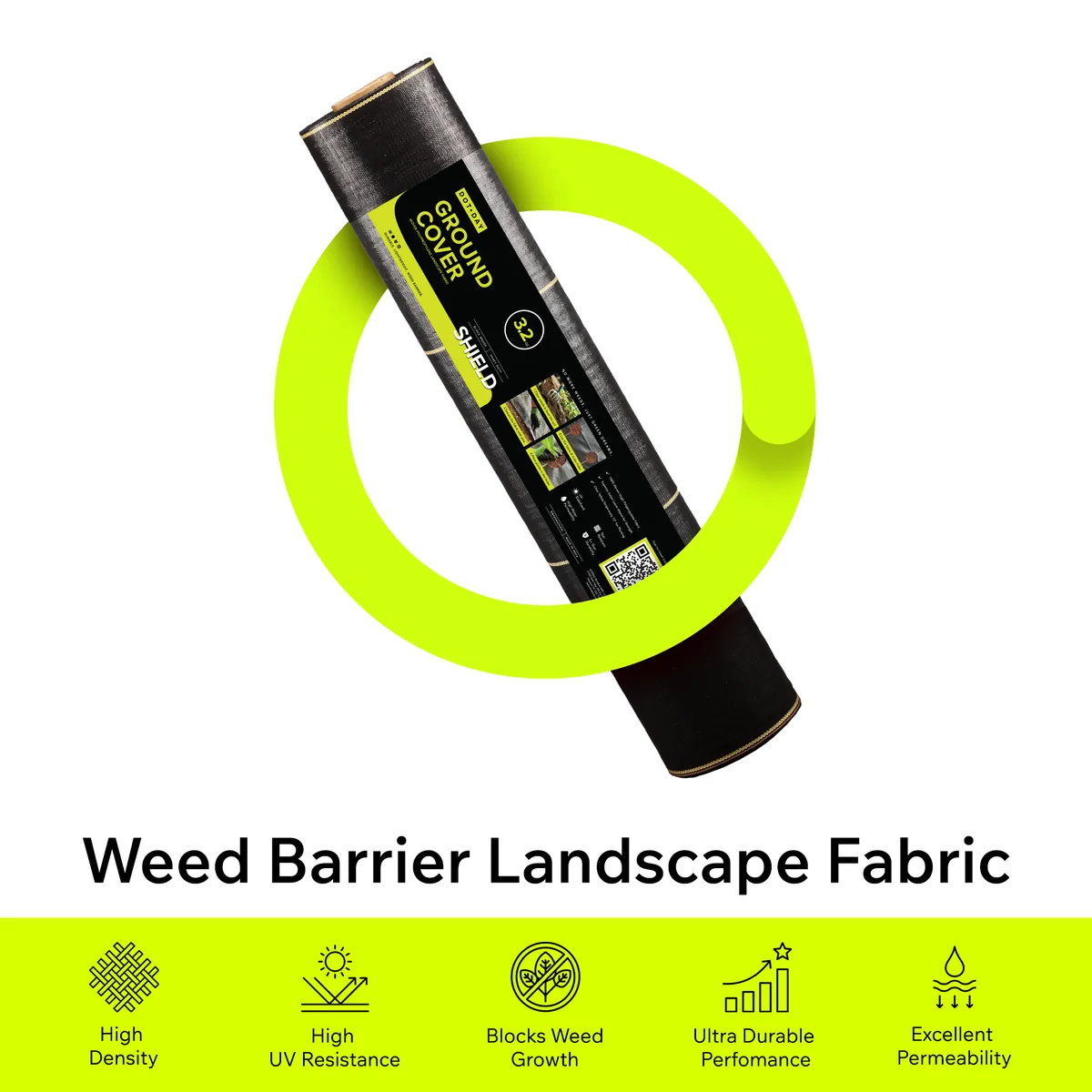
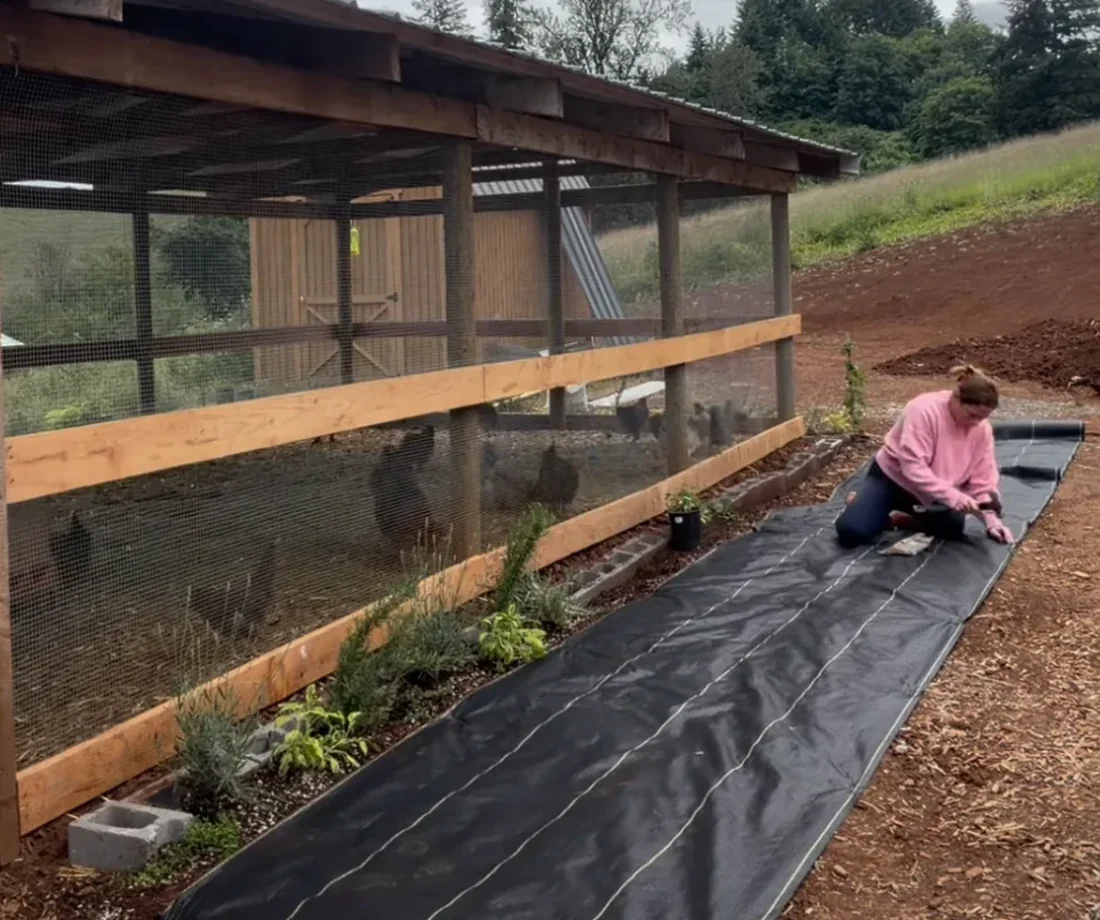
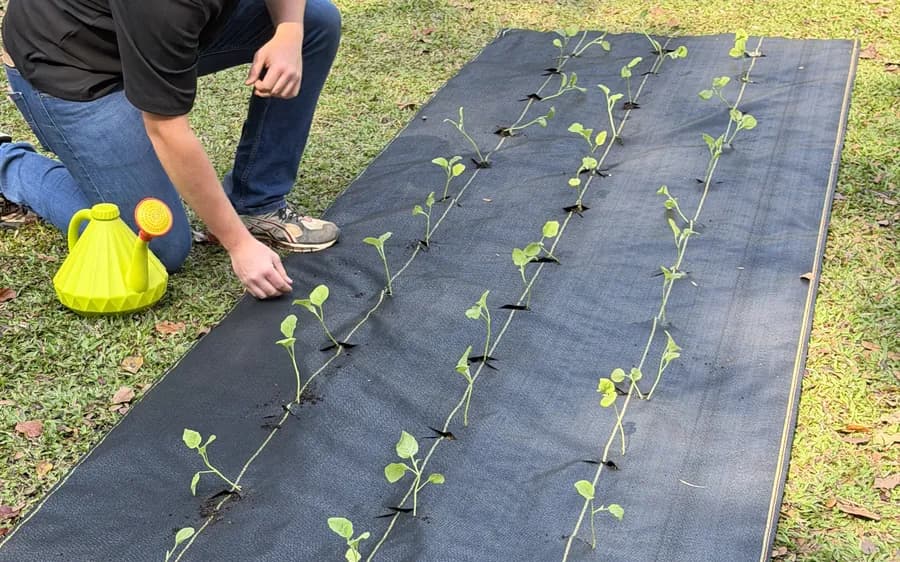
Most of what a contractor runs into maps to three fabrics. DOTDAY SHIELD 3.2oz is a woven weed barrier for garden beds, mulch, planting rows, farms, and nurseries - the volume workhorse for weed-control jobs. DOTDAY XBAR 5oz is a dual-layer woven built for gravel, pavers, driveways, and high-traffic ground where the fabric carries load. DOTDAY TERRA is a non-woven geotextile engineered for drainage, French drains, retaining walls, and soil separation.
The three questions that decide your spec
- 1What's going on top of the fabric?Mulch, soil, or straw points to SHIELD. Gravel, rock, or pavers points to XBAR. Standing water or a drain points to TERRA.
- 2Will it carry load?Foot and vehicle traffic demand a 5oz dual-layer fabric. Lightweight woven under gravel is the single most common reason a hardscape job fails early.
- 3How long does it need to hold?Weed-control beds under mulch last comfortably on SHIELD. Hardscape and drainage you don't want to revisit call for XBAR or TERRA.
When a job could go either way
If a job is borderline, run it through the DOTDAY Fabric Calculator. It matches ground condition and weed pressure to a fabric spec and gives you exact roll quantities with overlap factored in. For the full weight breakdown, our guide on 3.2oz vs 5oz weed barrier walks through where each one belongs.
Send us the application and square footage
The DOTDAY Pro team confirms the correct weight for each zone, recommends the most efficient roll configuration, and quotes bulk pricing direct - no middleman.
Buying in bulk: roll width matters
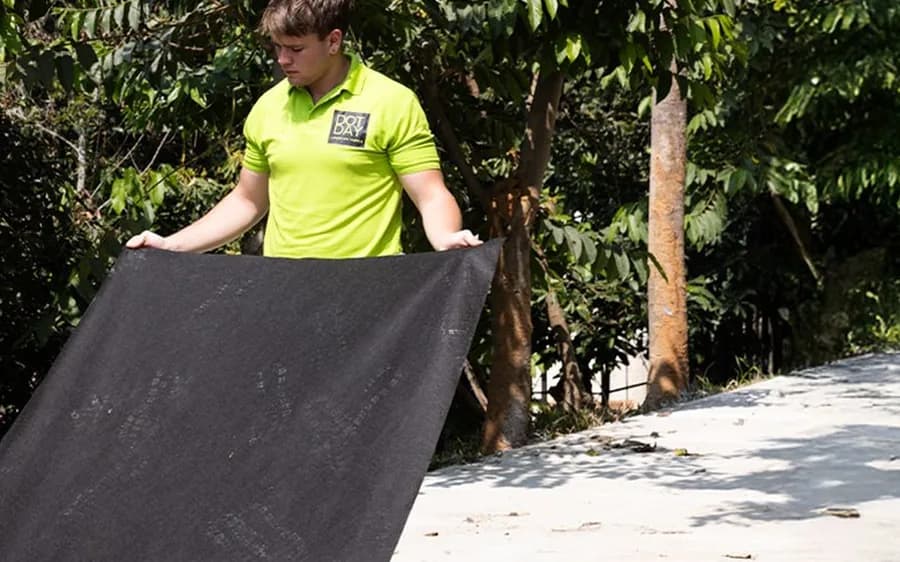
Two rolls can cover the same square footage and cost very different amounts in labor and waste. A 6ft-wide roll covers the same area as a 3ft roll with half the seams, fewer weed breakthrough points, and less overlap waste. On large open areas, fewer seams cut install time significantly across a crew. On tight or cut-up sites, narrower rolls can reduce off-cut waste. Match the roll to the site, not just the price per square foot. When you order volume through the DOTDAY Pro program, we help you pick widths that minimize both seams and waste for the sites you're running.
Reducing callbacks
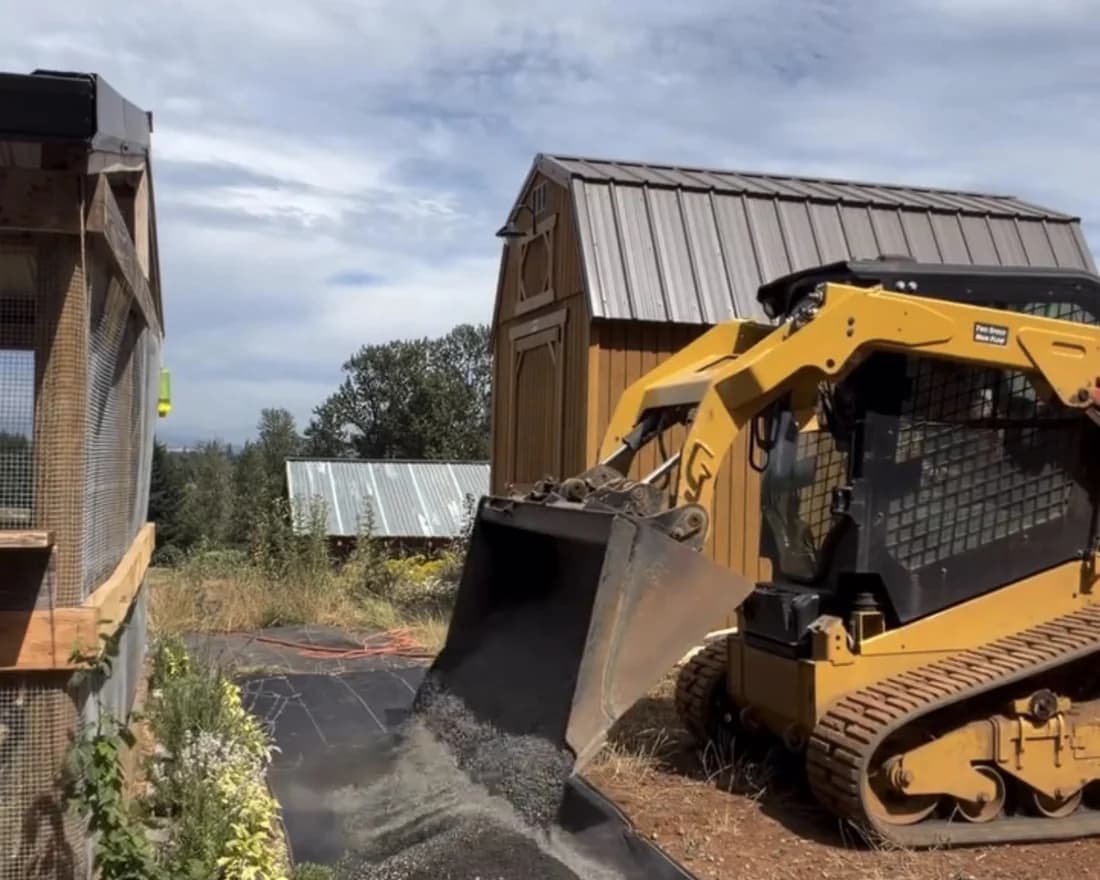
A warranty callback isn't just the replacement fabric, it's the crew time, the equipment, the re-excavation, and the client relationship. Most fabric-related callbacks trace back to two avoidable mistakes: using a lightweight woven fabric under load, which tears and lets aggregate sink, and skipping or under-sizing seam overlap. XBAR's dual-layer woven construction is built specifically to prevent the first, and a minimum 6-inch overlap at every seam is non-negotiable on professional installs. For hardscape and gravel work, our field guide on installing landscape fabric under gravel covers overlap, staple spacing, and gravel depth the way a crew actually runs it.
Why crews buy DOTDAY direct
Fabric is a margin decision
Landscape fabric for contractors is a margin decision disguised as a material purchase. Spec by ground condition, buy the right weight, and choose roll widths that cut labor, and the fabric stops being a callback risk and starts being a competitive advantage. DOTDAY builds for exactly that: SHIELD for weed control, XBAR for hardscape and load, TERRA for drainage. See how the trade press has covered the lineup on our press and media page.
Talk to the DOTDAY Pro team
Whether it's a single large site or a season of contracts, we'll confirm your specs, recommend roll configurations, and provide volume pricing built for crews.
Talk to an ExpertThree fabrics. One simple rule.
Use the right fabric for the right ground condition.
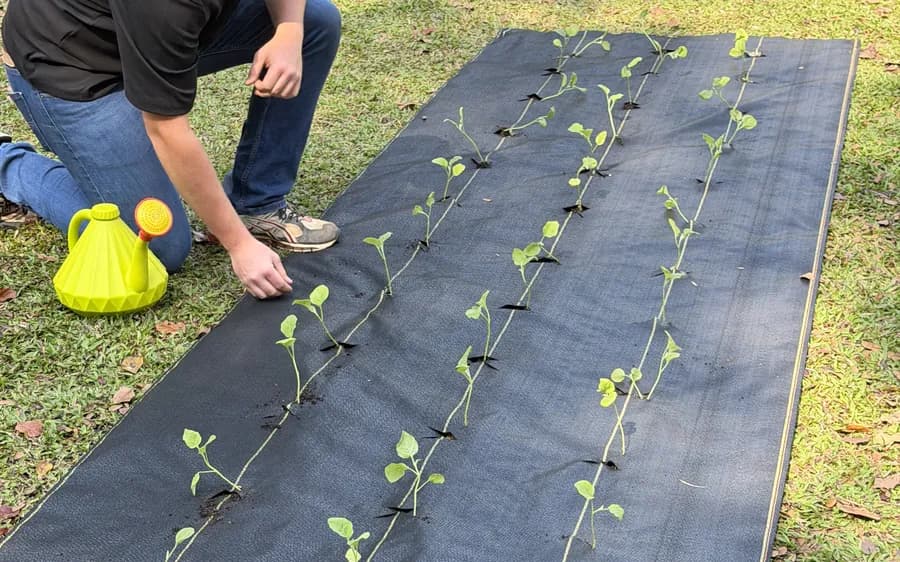
SHIELD
Woven polypropylene weed barrier built to suppress weeds while letting water and air through.
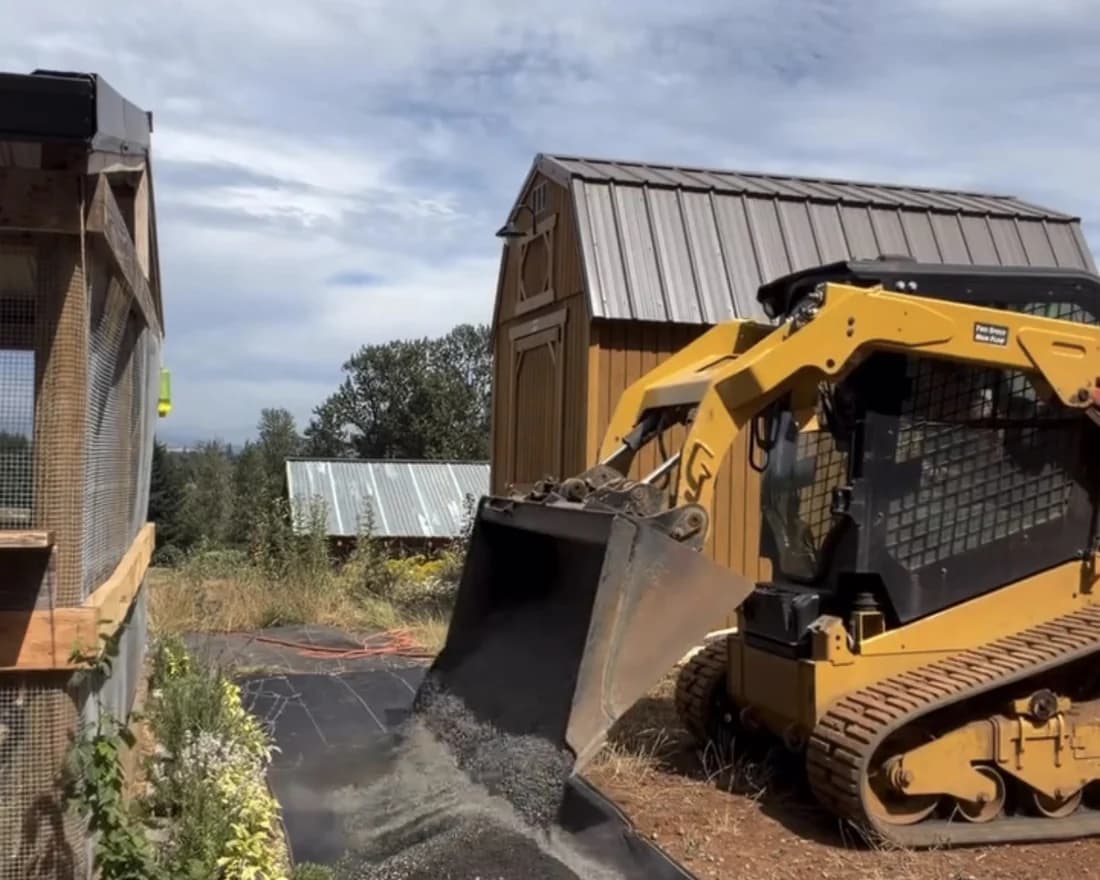
XBAR
Heavy-duty woven hybrid engineered for load and separation under hard surfaces.
TERRA
Non-woven geotextile designed for drainage, filtration, and soil separation.