
What retaining wall fabric actually does
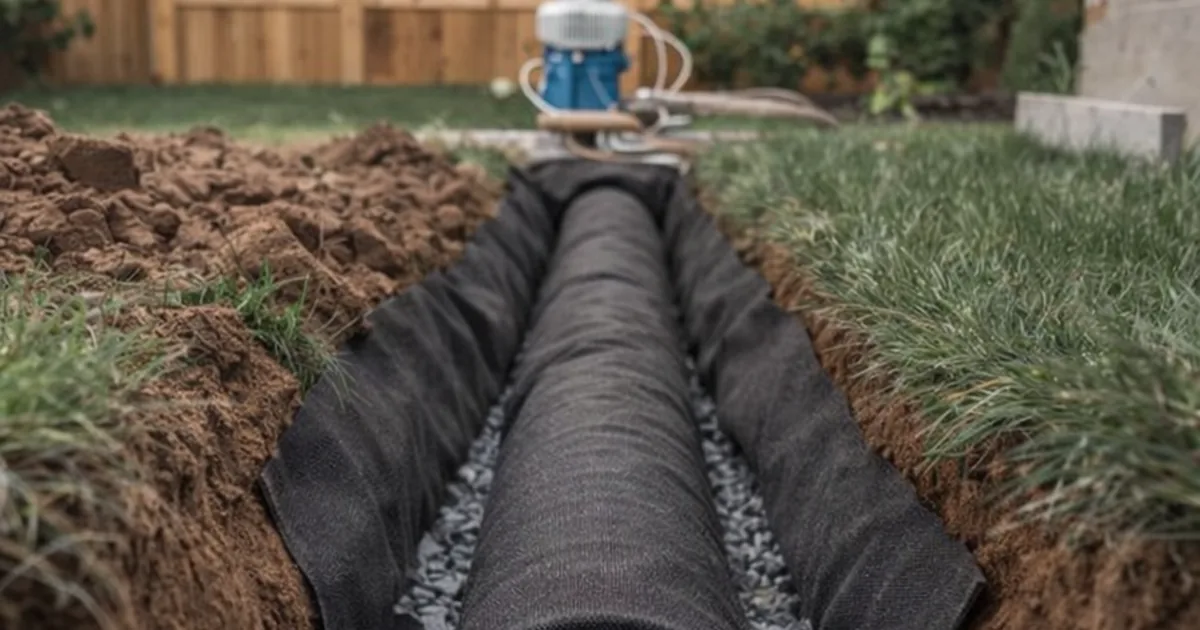
Most retaining walls that fail don't fail because the block was weak. They fail because of water. Rain soaks the soil behind the wall, the drainage stone slowly fills with silt, water has nowhere to go, and the pressure pushes the wall out of line. Retaining wall fabric is the layer that stops that slow clog. It keeps soil out of your drainage stone so water can keep moving down and out.
A retaining wall holds back soil. Behind a well-built wall there are usually three zones:
- The wall itself: block, stone, timber, or boulders.
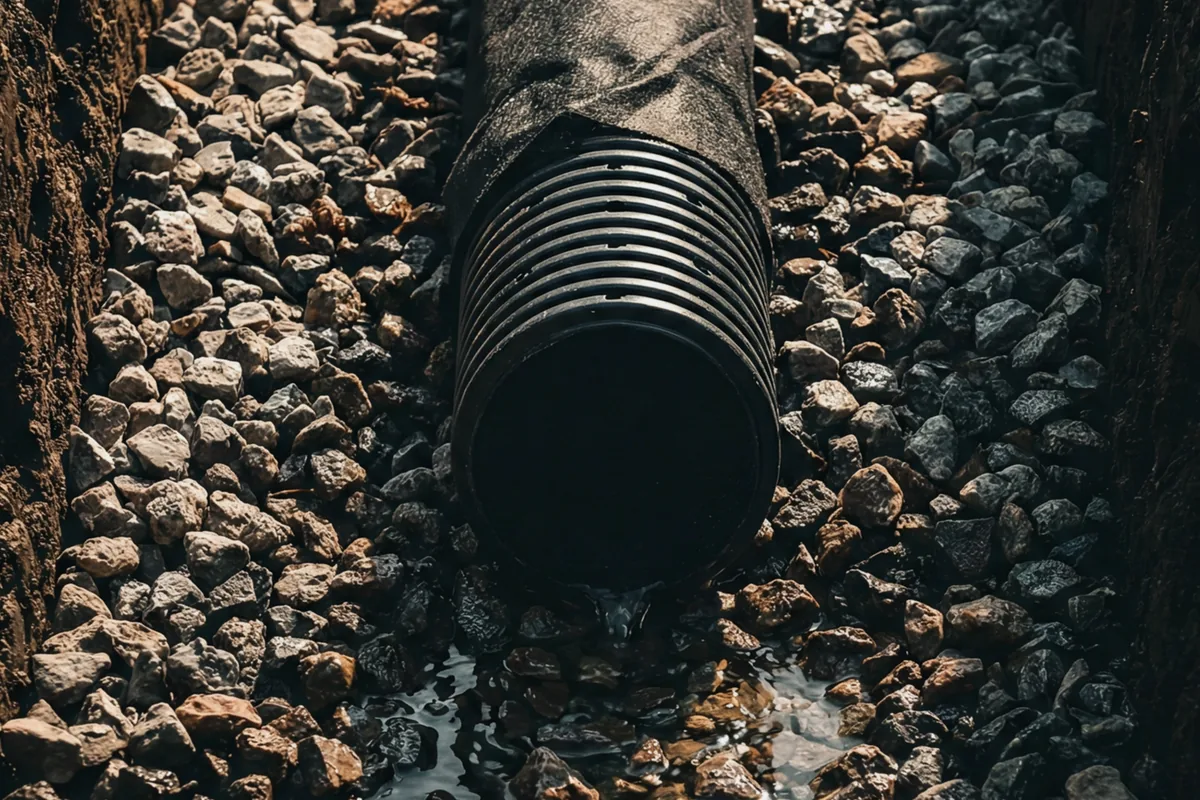
- A drainage zone: clean, angular gravel directly behind the wall, often with a perforated pipe at the bottom.
- The retained soil: the native or backfilled dirt the wall is holding up.
The drainage zone is what lets water escape instead of building up behind the wall. The problem is that soil particles want to wash into that gravel every time it rains. Over a few seasons, fines fill the gaps between the stones, the drainage zone turns into a dense mix of soil and rock, and it stops draining.
Retaining wall fabric sits between the soil and the drainage stone. Water passes through it; soil doesn't. That's the whole job: separation and filtration.
Which type of fabric belongs behind a retaining wall
This is where a lot of DIY walls go wrong. Not every "landscape fabric" works here.
Fabric types behind a retaining wall
| Fabric type | Built for | Behind a retaining wall? |
|---|---|---|
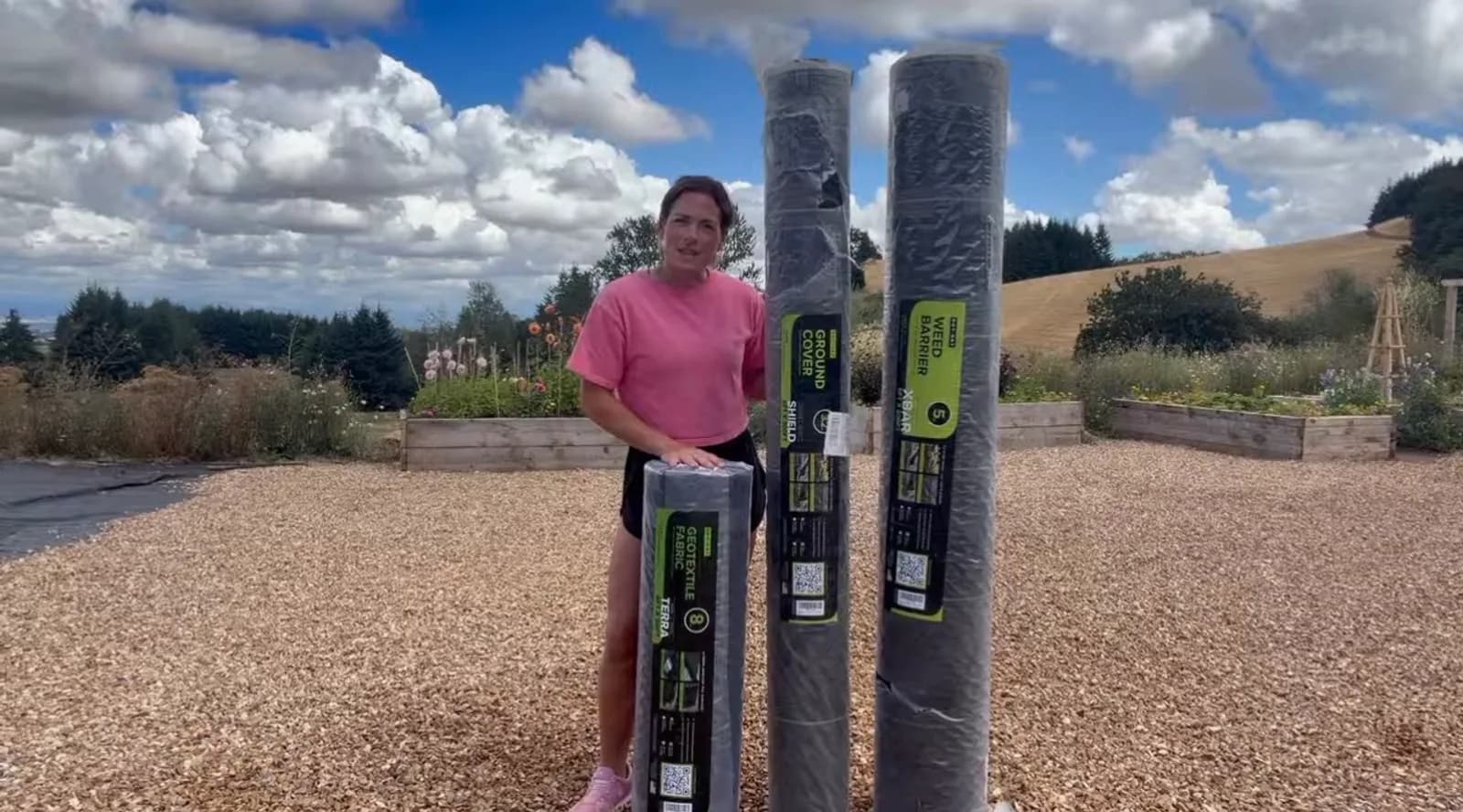
| Non-woven needle-punched geotextile (DOTDAY TERRA) | Drainage, filtration, soil separation | Yes. This is the right layer. |
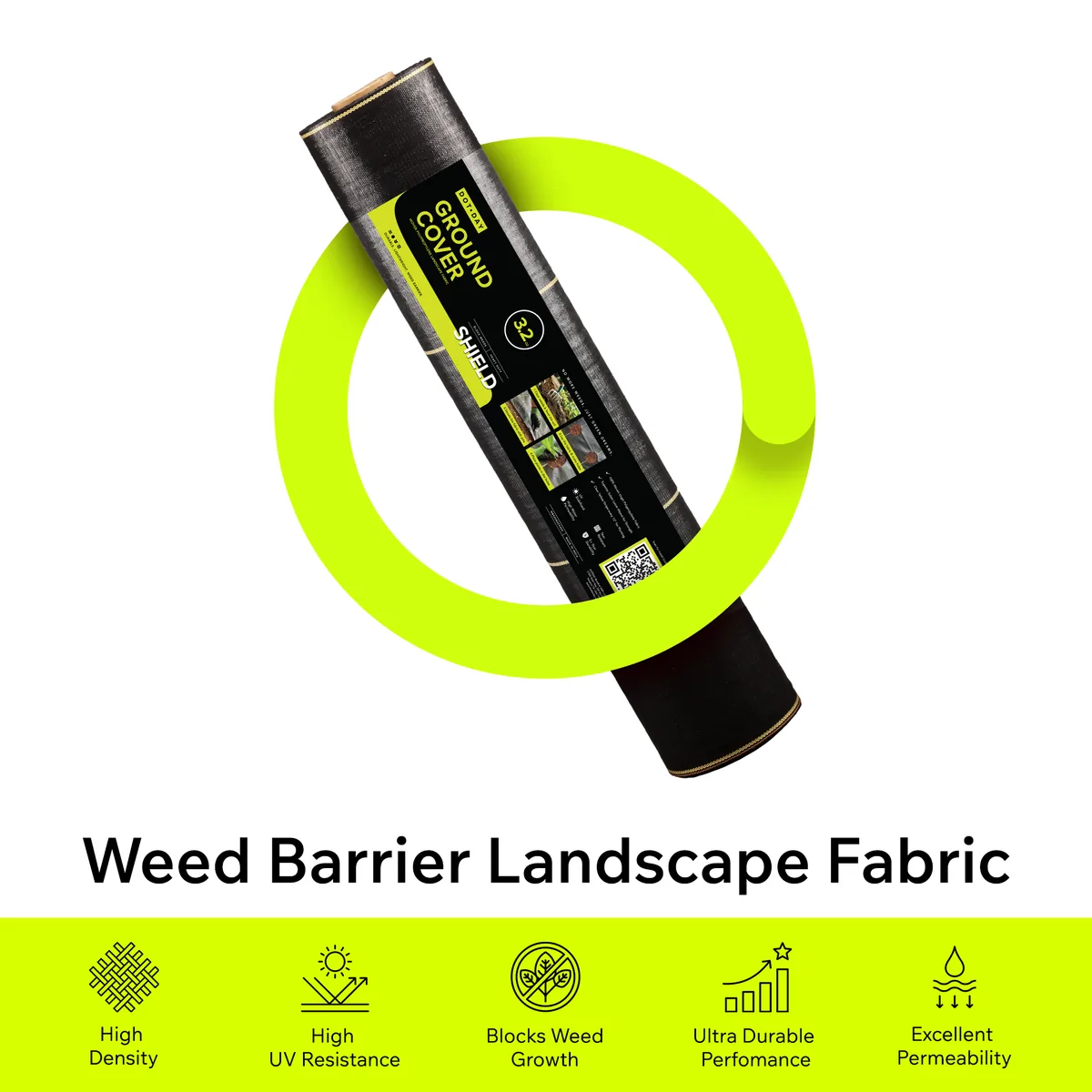
| Woven weed barrier (DOTDAY SHIELD) | Weed control under mulch and soil | No. Built for beds, not filtration behind a wall. |
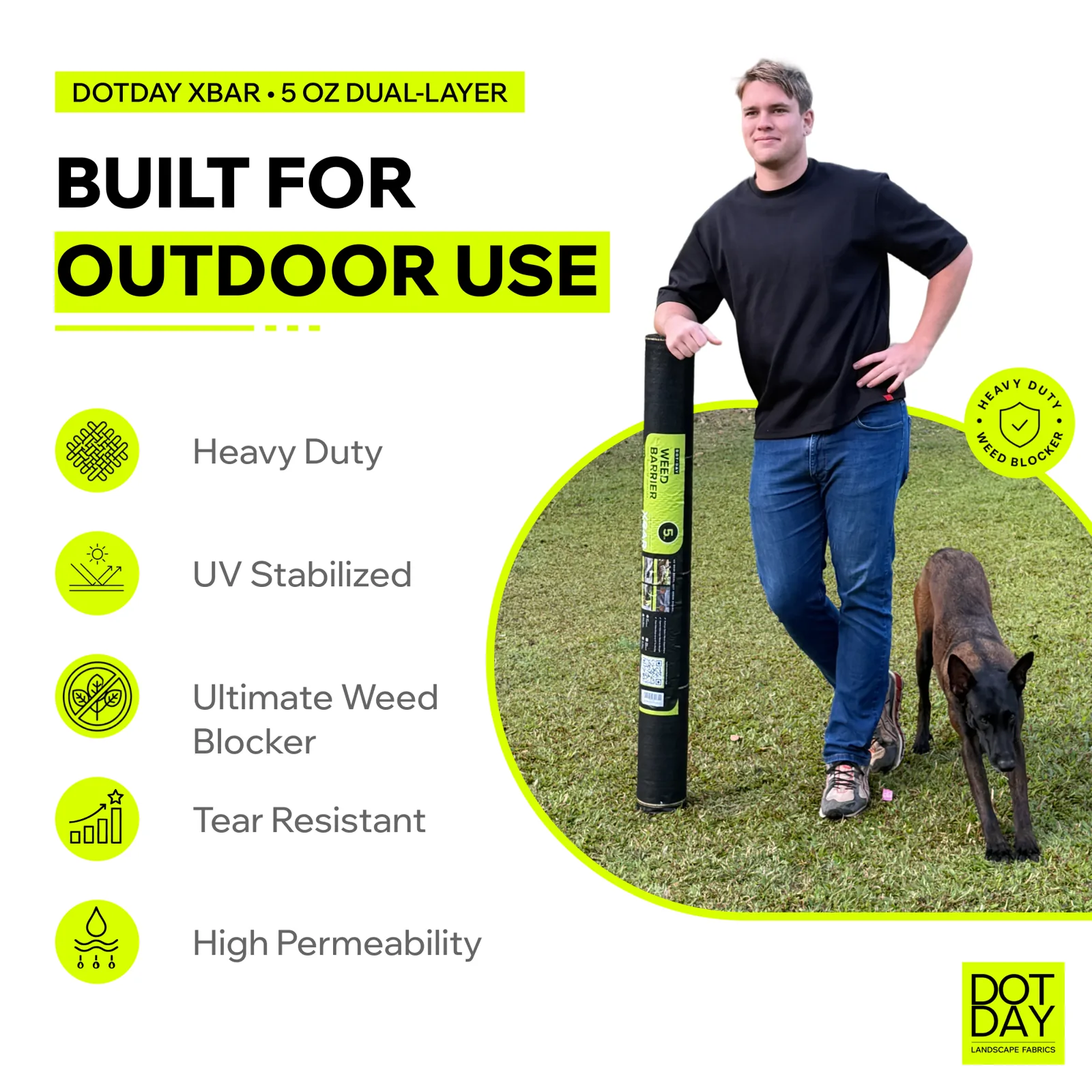
| Dual-layer woven (DOTDAY XBAR) | Load and separation under gravel, pavers, hardscape | Not as the filter layer. Use it for a gravel path or patio at the top of the wall. |
The reason is how each fabric is made. A non-woven needle-punched geotextile is a felt-like mat of fibers. Water moves through it in every direction, and the tangled fibers hold back fine soil. It also drapes and conforms to an uneven excavation instead of bridging across gaps.
A woven fabric is made of flat tapes woven tight. That's great for blocking light and weeds in a garden bed, but it's the wrong tool for the job of passing water from soil into stone all day, every day. If you want the full breakdown, see our guide to woven vs non-woven landscape fabric.
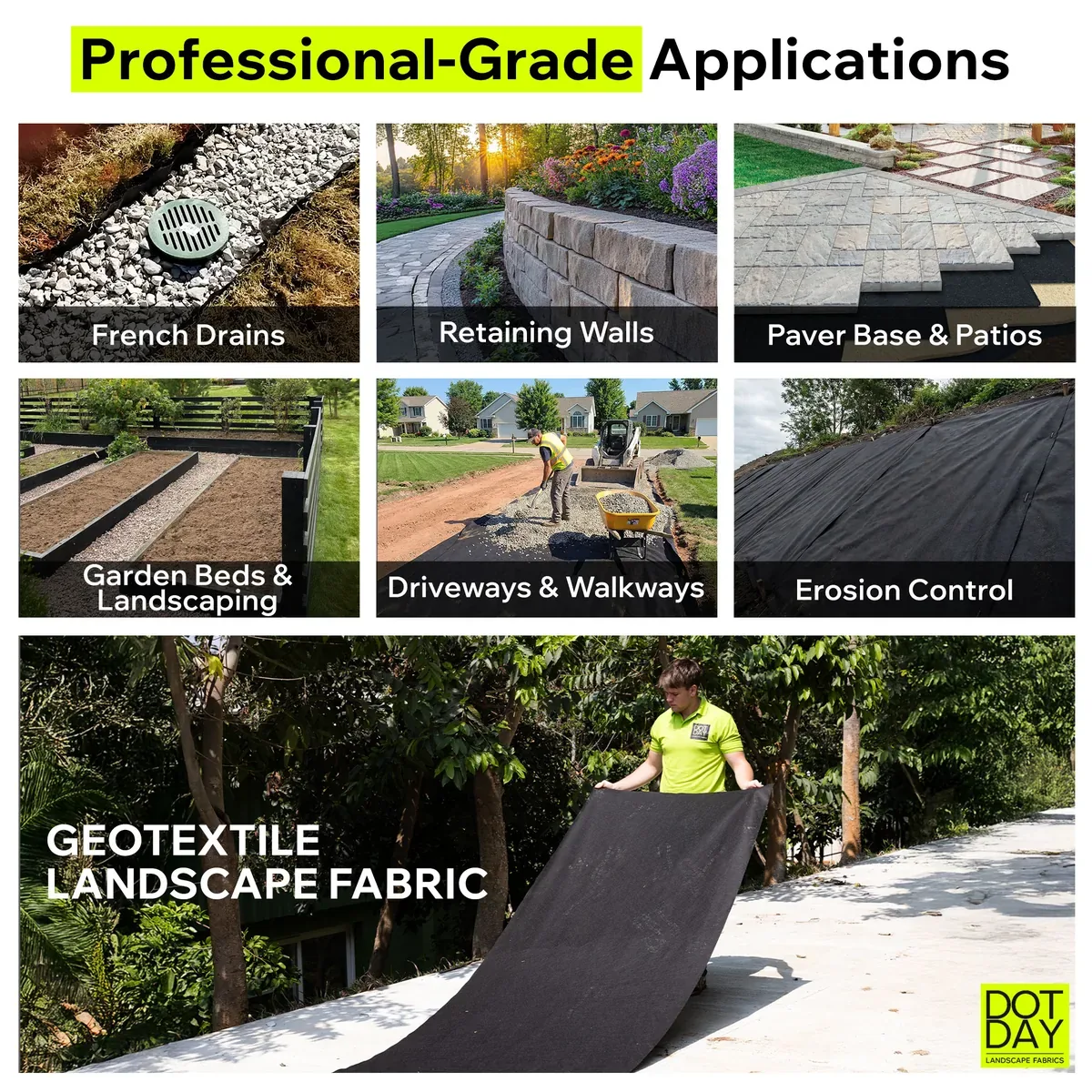
For retaining walls, DOTDAY recommends TERRA non-woven geotextile. It's the same fabric we spec for French drains, and for the same reason: water has to move, and soil has to stay put.
4 oz, 6 oz, or 8 oz?
TERRA comes in three weights. Here's how we match them to wall work:
- 4 oz: light drainage and filtration, like a short garden wall with clean, rounded stone and easy handling.
- 6 oz: our standard choice for retaining walls and French drains. A good balance of flow, filtration, and toughness for most residential walls.
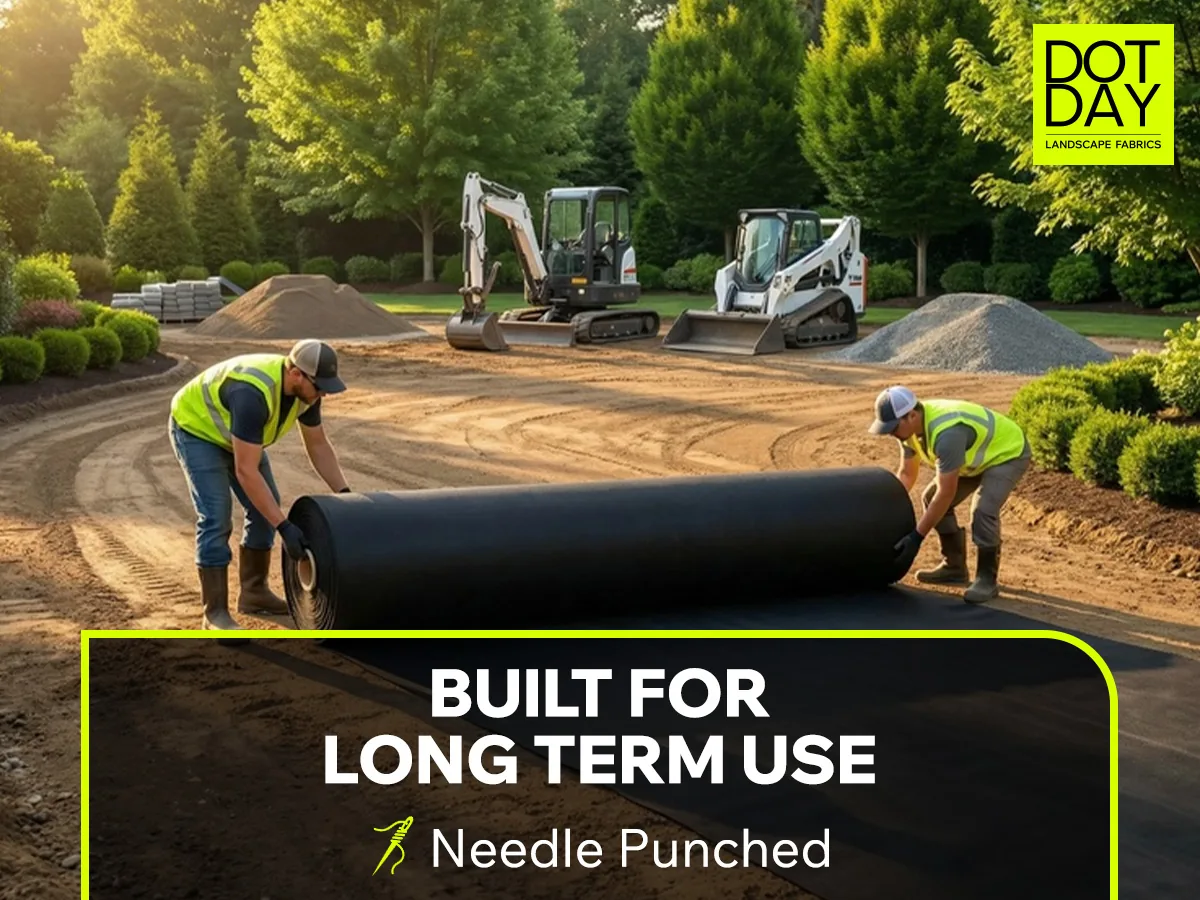
- 8 oz: choose this when the backfill is sharp, angular stone, when you're compacting hard with equipment, or when the fabric will take rough handling during the build. It's also the weight we use for road base.
Heavier isn't automatically better. Pick the weight for the conditions on your job. The landscape fabric thickness chart walks through how weights line up with jobs, and the full numbers for each weight are on our technical data sheets.
Where the fabric goes in a retaining wall
Placement matters as much as the fabric you choose. Here's the typical layout for a segmental block wall with a drainage zone.
- 1Lining the back of the excavationThe main layer goes against the retained soil, lining the back and bottom of the area that will hold your drainage stone. Think of it as a sleeve: soil on the outside, clean gravel on the inside. For most block walls, the fabric sits between the drainage stone and the soil, not pressed against the back of the block. The gravel directly behind the block is there to drain freely.
- 2Folded over the top of the drainage stoneOnce the drainage zone is filled, fold the fabric back over the top of the stone before you add your final soil cap. This stops topsoil from washing down into the gravel from above, which is one of the most common ways a drainage zone clogs.
- 3Around the drain pipe (when conditions call for it)A perforated pipe at the base of the drainage zone carries water out to daylight or to a drain. In fine soils like silt or clay, installers often protect the pipe from clogging. You can do that by keeping the pipe fully inside the fabric-wrapped gravel zone, or by using a socked pipe.
For a deeper look at drain layouts, see our French drain fabric page.
Timber, boulder, and dry-stacked stone walls. Walls with open gaps between stones or timbers leak soil right through the face. On these builds, many installers also run fabric behind the face of the wall so soil can't wash out through the joints. The principle doesn't change: fabric goes wherever soil would otherwise migrate into stone or out through the wall.
How to install retaining wall fabric, step by step
Always follow your block manufacturer's installation guide for base depth, setback, and drainage details. This is how the fabric fits into a typical build.
- 1Excavate with room for drainage.Dig out enough behind the wall line for a drainage zone of clean stone. Many block manufacturers call for around 12 inches behind the block. Check your manufacturer's guide.
- 2Build and compact the base.Set your compacted gravel base and level the first course. On soft or wet subgrade, some installers add a separation layer of geotextile under the base as well.
- 3Line the excavation.Unroll TERRA against the back and bottom of the excavation, leaving enough extra at the top to fold back over the drainage stone later. Where runs meet, overlap them 12 to 18 inches so soil can't slip through the seams.
- 4Set the pipe.Lay the perforated drain pipe at the base of the drainage zone, sloped to its outlet.
- 5Build up in lifts.As each course of block goes on, fill behind it with clean drainage stone and compact in lifts. Keep the fabric pulled back against the soil so it doesn't bunch.
- 6Fold and cap.At the top, fold the fabric over the drainage stone, overlap it, then cap with several inches of soil. A cap of less permeable soil helps shed surface water away from the drainage zone.
Common retaining wall fabric mistakes
- Using a woven weed barrier as the filter. It's built for beds. Behind a wall, water needs to move freely through the fabric.
- Skipping the fold-over at the top. Topsoil washes straight down into the gravel and clogs it from above.
- Short seams. A few inches of overlap opens up as the backfill settles. Give seams 12 to 18 inches.
- Backfilling with the dirt you dug out. The drainage zone needs clean, angular stone. Native soil directly behind the block holds water against the wall.
- Treating fabric as reinforcement. If your wall design calls for geogrid, fabric doesn't replace it.
How much fabric do you need?
For a lined drainage zone, measure the length of the wall, then add up the height of the back cut, the width across the bottom of the drainage zone, and the extra you'll fold over the top. Multiply length by that total width, then add extra for seam overlaps.
Our Fabric Calculator handles the overlap math for you. Check roll sizes and weights on the TERRA product page before you order.
Not sure how much fabric your wall needs?
Enter the wall length and the lined width, and the calculator handles the overlap and roll count for you.
Use the right fabric for each part of the project
A retaining wall is rarely the only thing going in. Match each ground condition to its own fabric:
- Behind the wall: TERRA non-woven geotextile for drainage and filtration.
- Planting bed on top of the wall: SHIELD woven weed barrier under mulch.
- Gravel path or patio beside it: XBAR 5 oz dual-layer under the stone.
That's the DOTDAY approach: the right fabric for every ground condition. Building walls across several properties? Request bulk pricing for contractor volumes.
TERRA is the fabric for behind the wall
Non-woven needle-punched geotextile in 4, 6, and 8 oz. Check roll sizes and pick the weight for your job.
Shop TERRAThree fabrics. One simple rule.
Use the right fabric for the right ground condition.
SHIELD
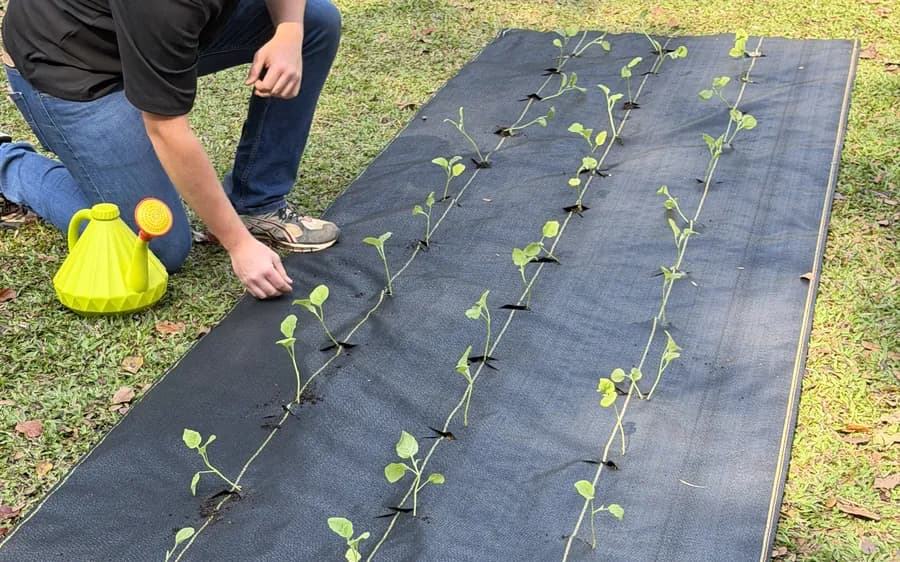
Woven polypropylene weed barrier built to suppress weeds while letting water and air through.
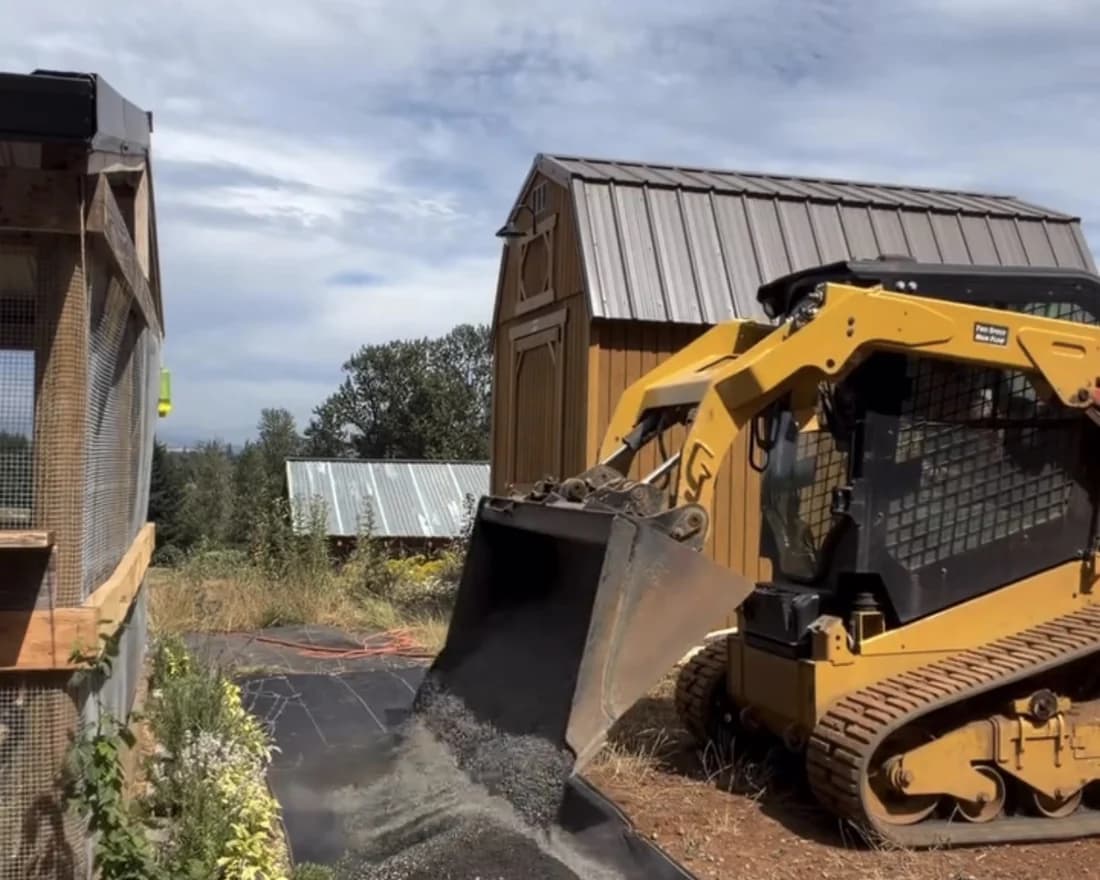
XBAR
Heavy-duty woven hybrid engineered for load and separation under hard surfaces.
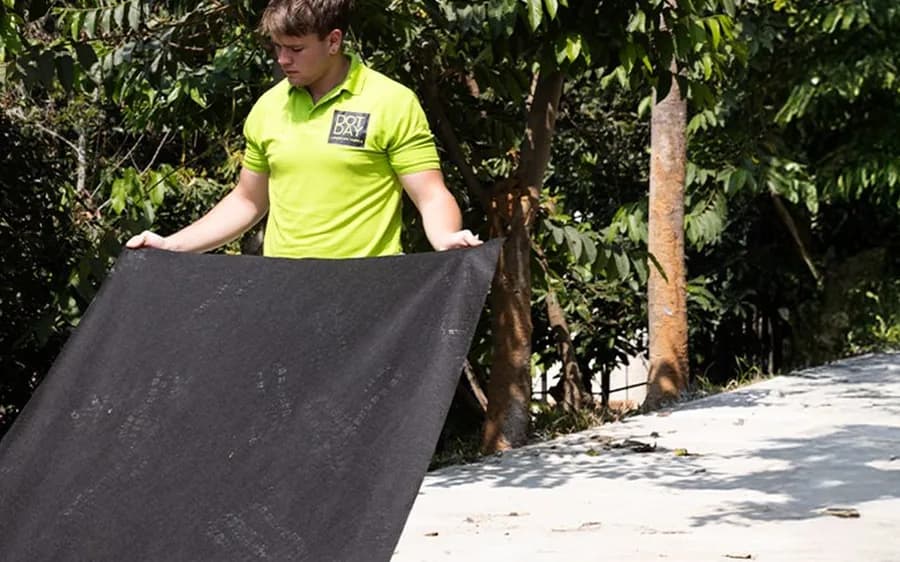
TERRA
Non-woven geotextile designed for drainage, filtration, and soil separation.