
Non-woven geotextile is sold by weight, usually in ounces per square yard. Walk into any supplier or browse online and you'll see 4 oz, 6 oz, 8 oz, and sometimes heavier. The natural assumption is that heavier is better. Sometimes it is. Often it's just more fabric than the job needs.
This guide explains what geotextile fabric weight tells you, what it doesn't, and how to match 4, 6, and 8 oz to the job in front of you.
At DOTDAY, TERRA comes in 4, 6, and 8 oz, so choosing a weight is a question we answer often.
What geotextile fabric weight means
The weight is the mass of the fabric per square yard. A heavier non-woven geotextile has more fiber packed into each square yard. In general, that means:
- Thicker fabric.
- Higher puncture resistance against sharp stone.
- Higher strength when pulled and stretched during installation.
- Better durability under rough handling and compaction.
What weight doesn't tell you
Weight is a useful shorthand, but it isn't the whole story.
- Construction matters. A needle-punched non-woven and a heat-bonded non-woven of the same weight behave differently.
- Flow and filtration don't simply rise with weight. Each fabric has its own published values for how quickly water passes through and what size particles it holds back.
- Brands differ. Two 6 oz fabrics from different makers can have different published values.
When you compare fabrics, look at the published values on the spec sheet, not just the ounces. DOTDAY publishes ours on the technical data sheets page.
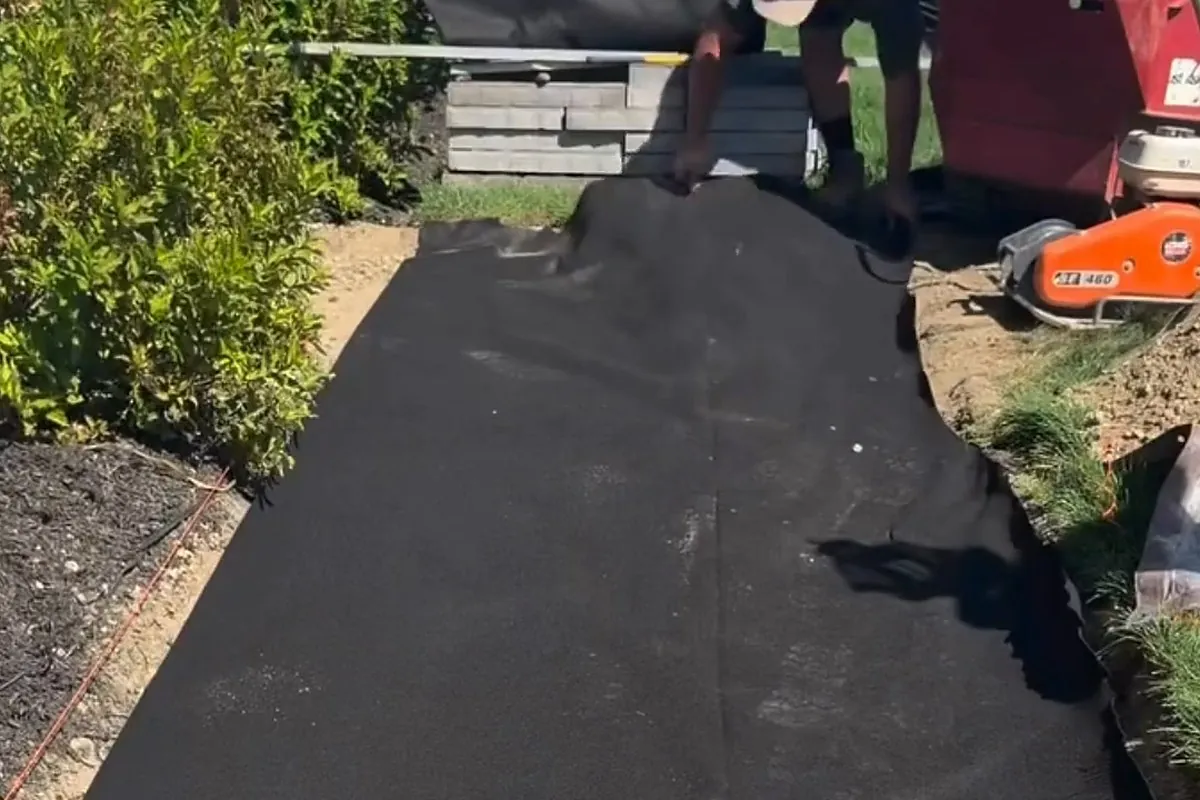
TERRA under pavers: DOTDAY geotextile install
- Lay the fabric flat on prepared soil with no wrinkles.
- Overlap the seams so soil and base stay separated.
- Place stone or base gently so the fabric is not torn.
How much geotextile does your job need?
Use the DOTDAY Fabric Calculator to handle the overlap and roll math for your trench or wall.
What we recommend
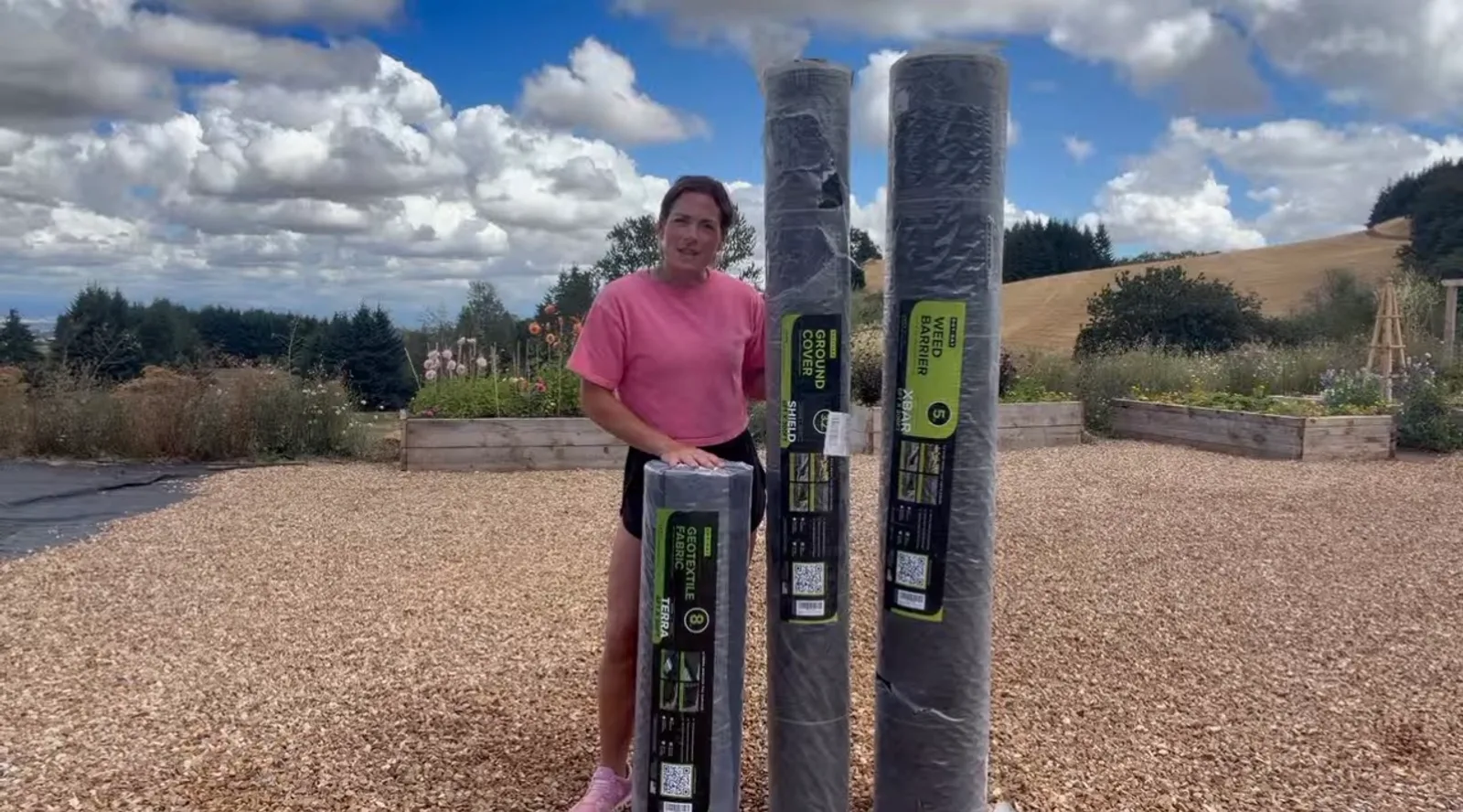
DOTDAY TERRA is a non-woven needle-punched geotextile in three weights. All three share the same construction, so the choice is about how tough the fabric needs to be for your conditions.
| Weight | Built for | Choose it when |
|---|---|---|
| 4 oz | Light drainage and filtration | Rounded stone, hand placement, easy conditions |
| 6 oz | French drains and retaining walls | Most residential drainage and wall jobs |
| 8 oz | Road base, heavy stone | Angular stone, equipment, heavy compaction, farm lanes |
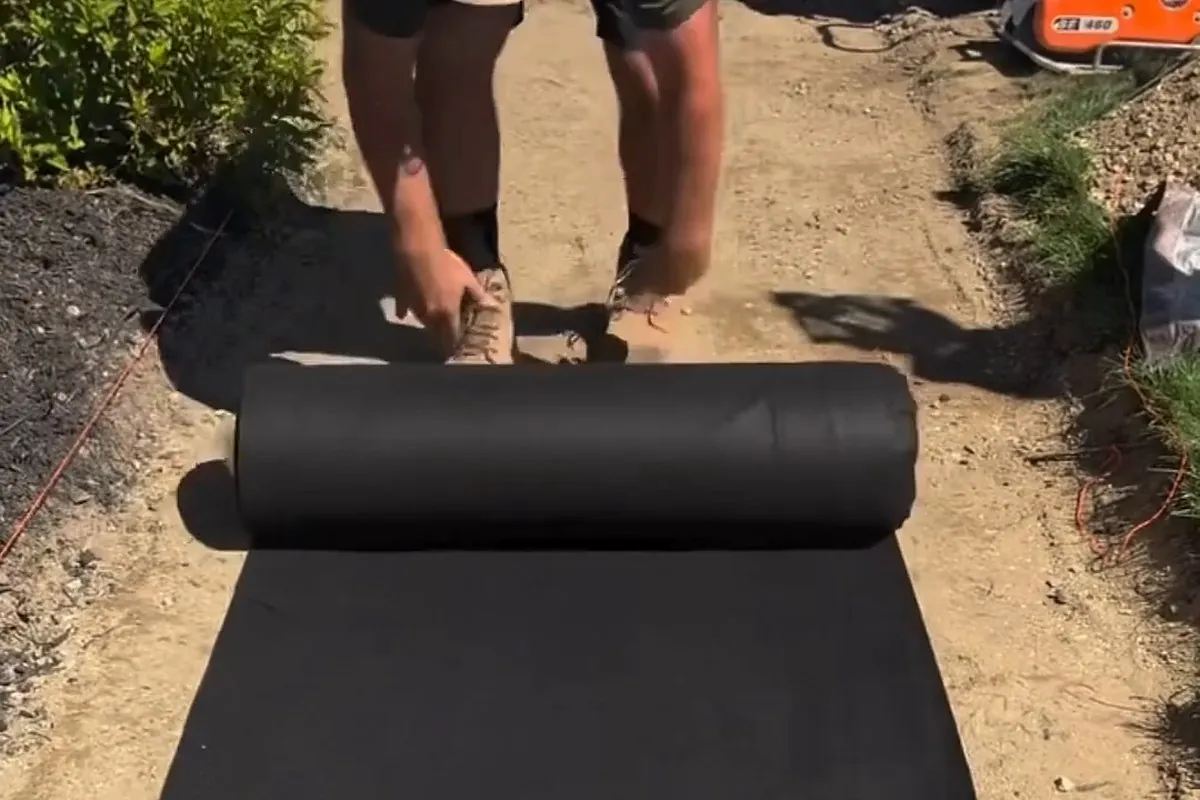
4 oz: light drainage
Choose 4 oz for jobs where the fabric won't face much stress:
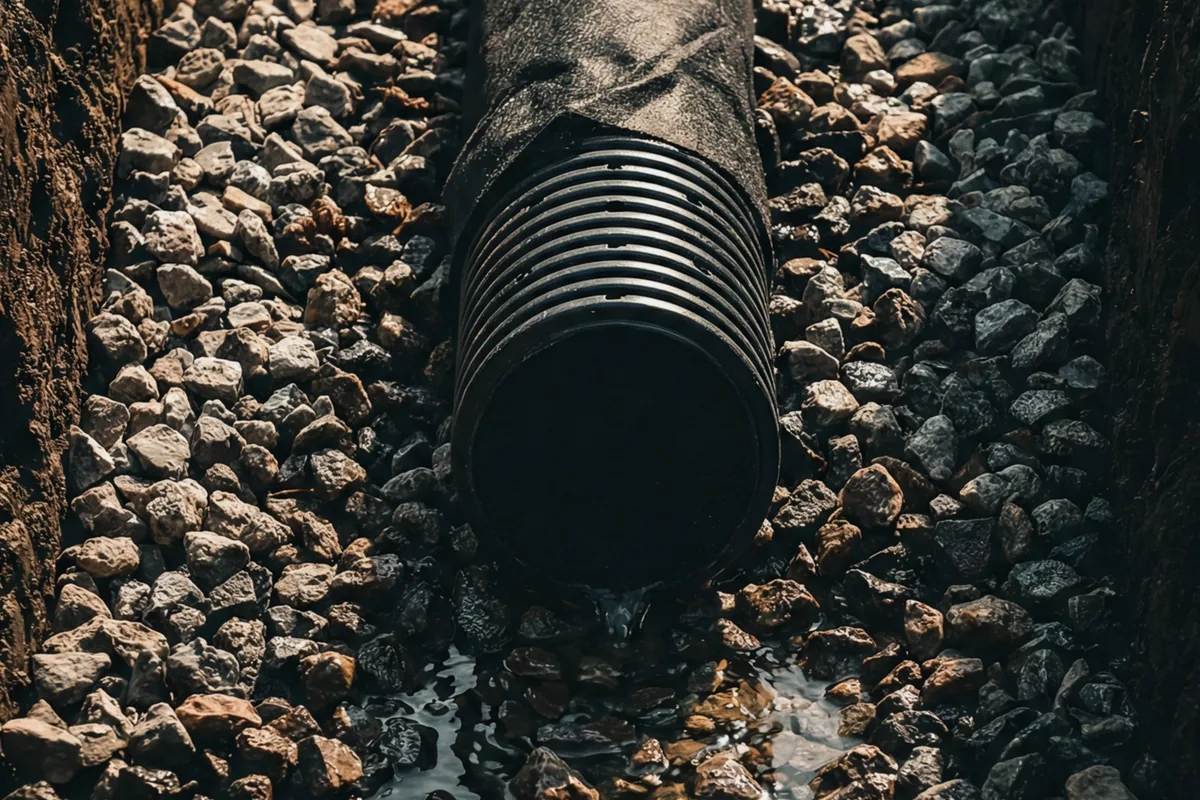
- Small drainage trenches with rounded, washed stone.
- Wrapping stone in a small dry well or planter drain.
- Light separation under a garden feature placed by hand.
It's lighter and easier to handle, and it does the filtration job well in gentle conditions.
6 oz: the all-around choice
6 oz is our standard recommendation for:
- French drains. See our French drain fabric page.
- Retaining walls. See our guide to retaining wall fabric.
- Dry creek beds and dry wells.
- Swales and outlets under moderate stone.
It balances flow, filtration, and toughness for most residential drainage work, including crushed stone placed with a shovel or small equipment.
8 oz: road base and rough conditions
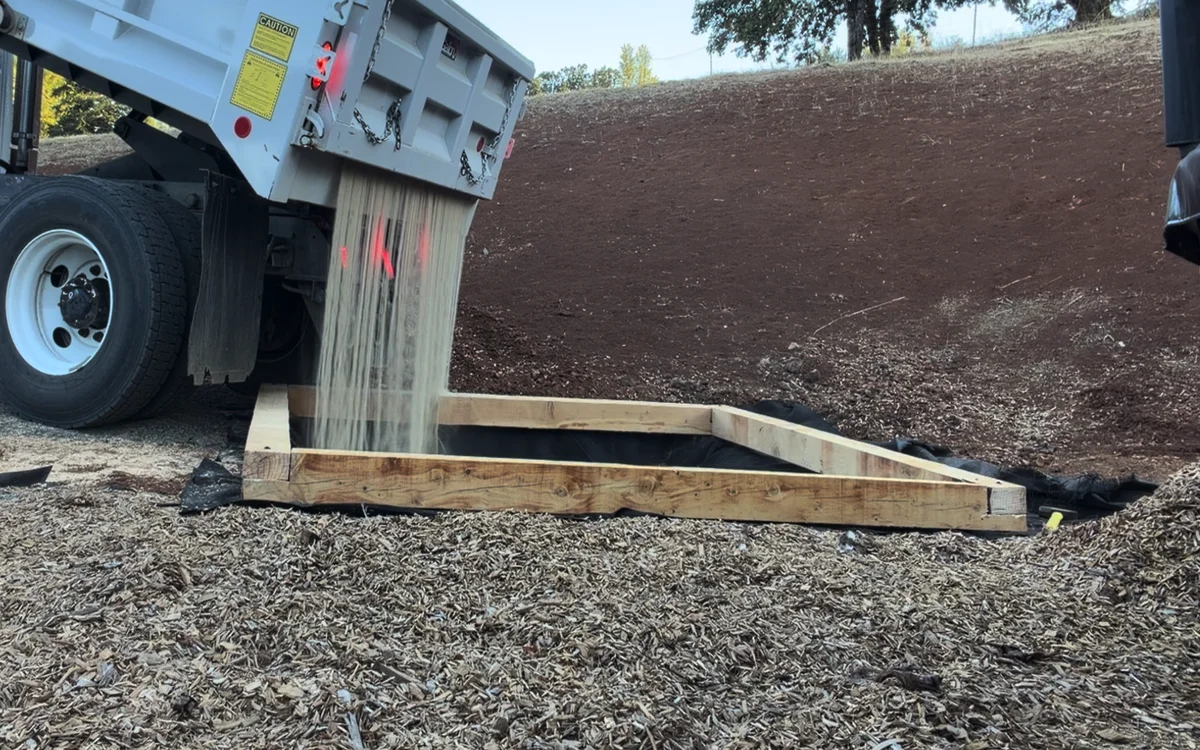
Choose 8 oz when the fabric will take a beating:
- Road base, farm lanes, and equipment yards.
- Sharp, angular stone, especially larger sizes.
- Stone dropped or pushed by machine rather than placed by hand.
- Heavy compaction over the fabric.
- Riprap and heavy rock on banks and outlets.
The extra puncture resistance matters most at installation, when stone is dumped and compacted over the fabric. A torn fabric stops separating right where it matters.
How to choose, in three questions
- What's going on top? Rounded, small stone placed by hand points toward 4 or 6 oz. Large, angular stone points toward 8 oz.
- How will it be placed? By hand, 4 or 6 oz. By truck, loader, or heavy compaction, 8 oz.
- What's the job? Drains and walls, 6 oz. Road base and farm lanes, 8 oz. Light drainage, 4 oz.
If you're between two weights and the conditions are rough, go up. If conditions are gentle, the lighter weight often does the job.
Our landscape fabric thickness chart puts all DOTDAY fabrics, including SHIELD and XBAR, on one page by job.
Non-woven vs woven for these jobs
For drainage and filtration, non-woven needle-punched geotextile is the standard choice because water moves through it freely in every direction while soil is held back. Woven fabrics are strong in tension and good for weed control and load under gravel, but they're built for different jobs. See woven vs non-woven landscape fabric for the full comparison.
Installation habits that protect any weight
The right weight gives you a margin of safety, but how the fabric goes in matters just as much. These habits help any geotextile do its job:
- Prepare the surface. Remove sharp rocks, roots, and debris before the fabric goes down. A smooth base reduces the chance of punctures from below.
- Keep it snug. Fabric should sit in full contact with the soil, without large wrinkles or bridged gaps, especially in trench corners.
- Overlap seams generously. Soil finds its way through short overlaps as the stone settles.
- Place stone, don't drop it. Dropping heavy rock from height is the most common cause of tears. Lower the bucket or place by hand where possible.
- Don't drive on exposed fabric. Push stone forward from material that's already spread.
- Cover it promptly. Geotextile breaks down in sunlight, so don't leave it exposed for long.
A 6 oz fabric installed carefully often outperforms an 8 oz fabric that was dragged over sharp rock and left in the sun.
Common mistakes
- Buying on weight alone. Compare spec sheets.
- Too light for angular stone. Tears at installation defeat the purpose.
- Too heavy for a simple job. More cost and harder handling without added benefit.
- Using woven weed barrier for drainage. Use a non-woven for filtration.
Buying for multiple jobs
Contractors often keep two weights on hand: 6 oz for drains and walls, and 8 oz for road base and heavy stone. Request bulk pricing for contractor volumes.
Wrapping up
Choose the weight by the job, the stone, and how it's installed, and check the published values on the spec sheet. Whatever you're building, DOTDAY's goal is to help you pick the right layer the first time.
TERRA nonwoven geotextile for drainage and separation
Needle-punched nonwoven geotextile for French drains, walls, and base separation. Check the product page for the sizes in stock today.
Shop TERRAThree fabrics. One simple rule.
Use the right fabric for the right ground condition.
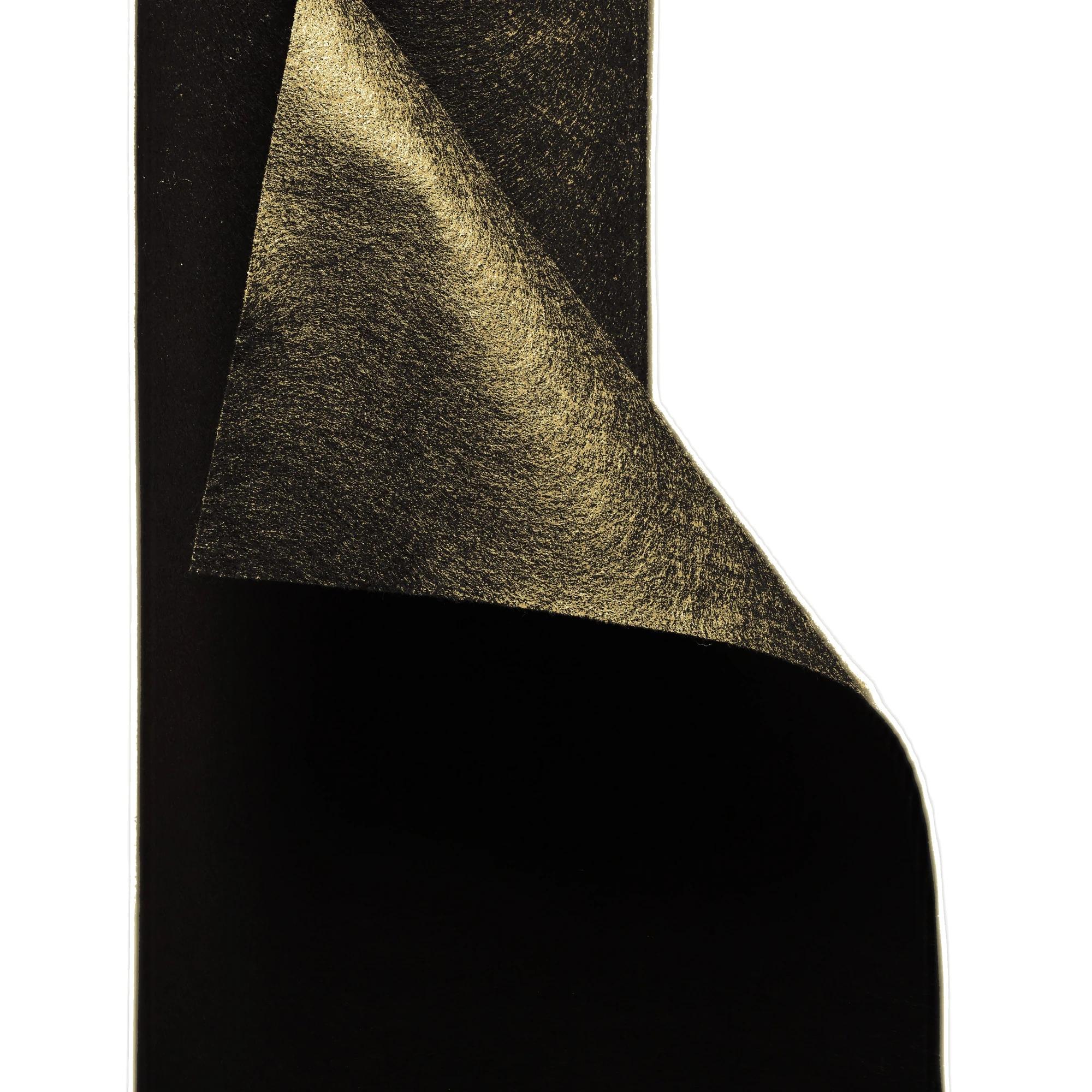
TERRA
Non-woven geotextile designed for drainage, filtration, and soil separation.
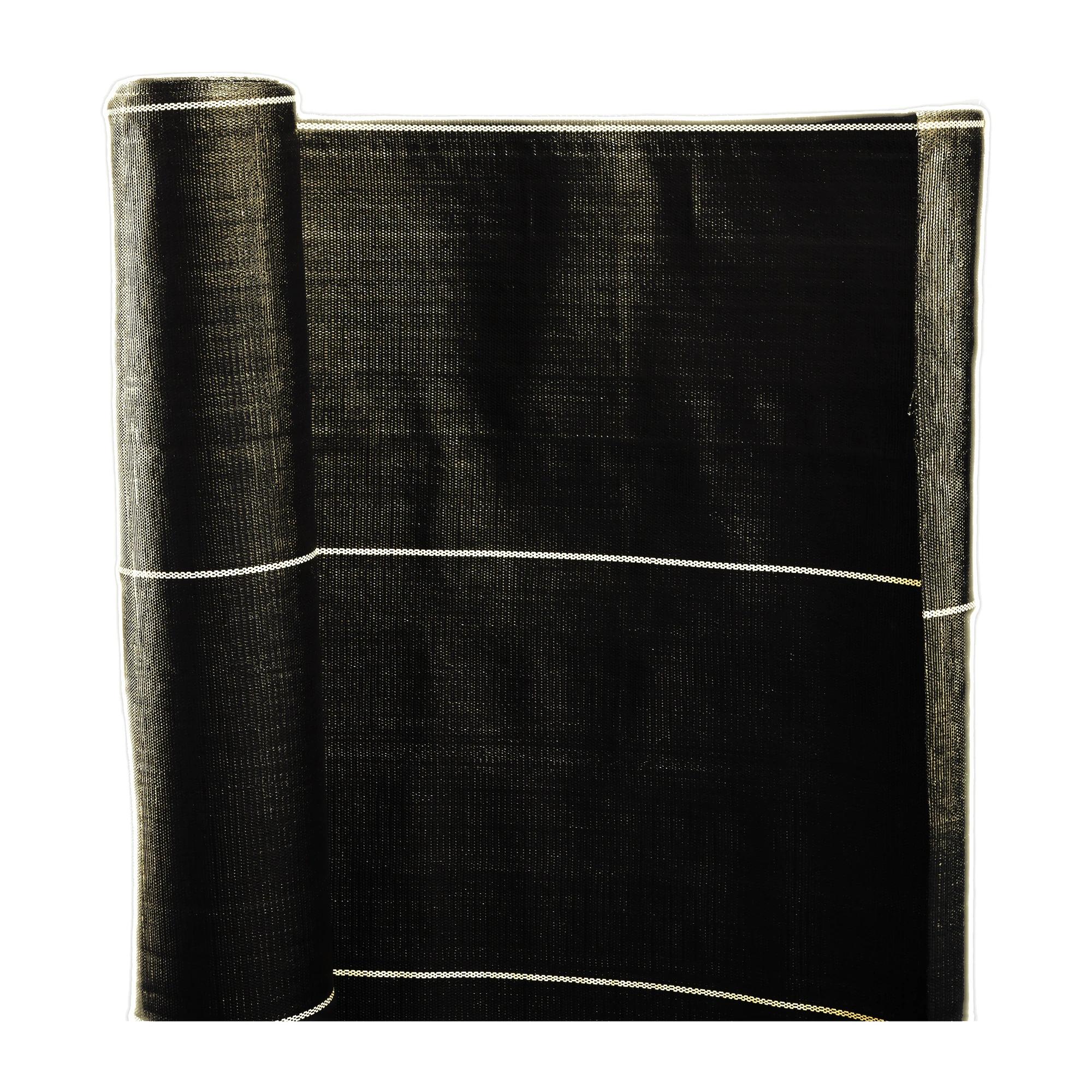
SHIELD
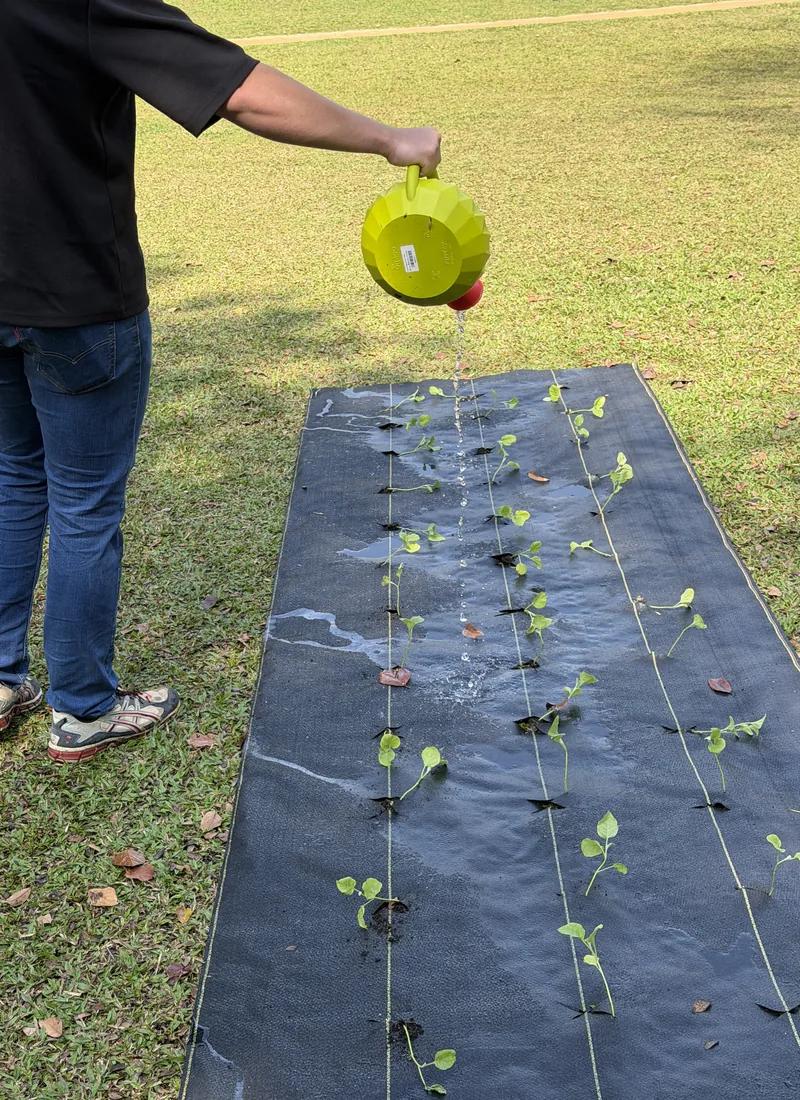
Woven polypropylene weed barrier built to suppress weeds while letting water and air through.
XBAR
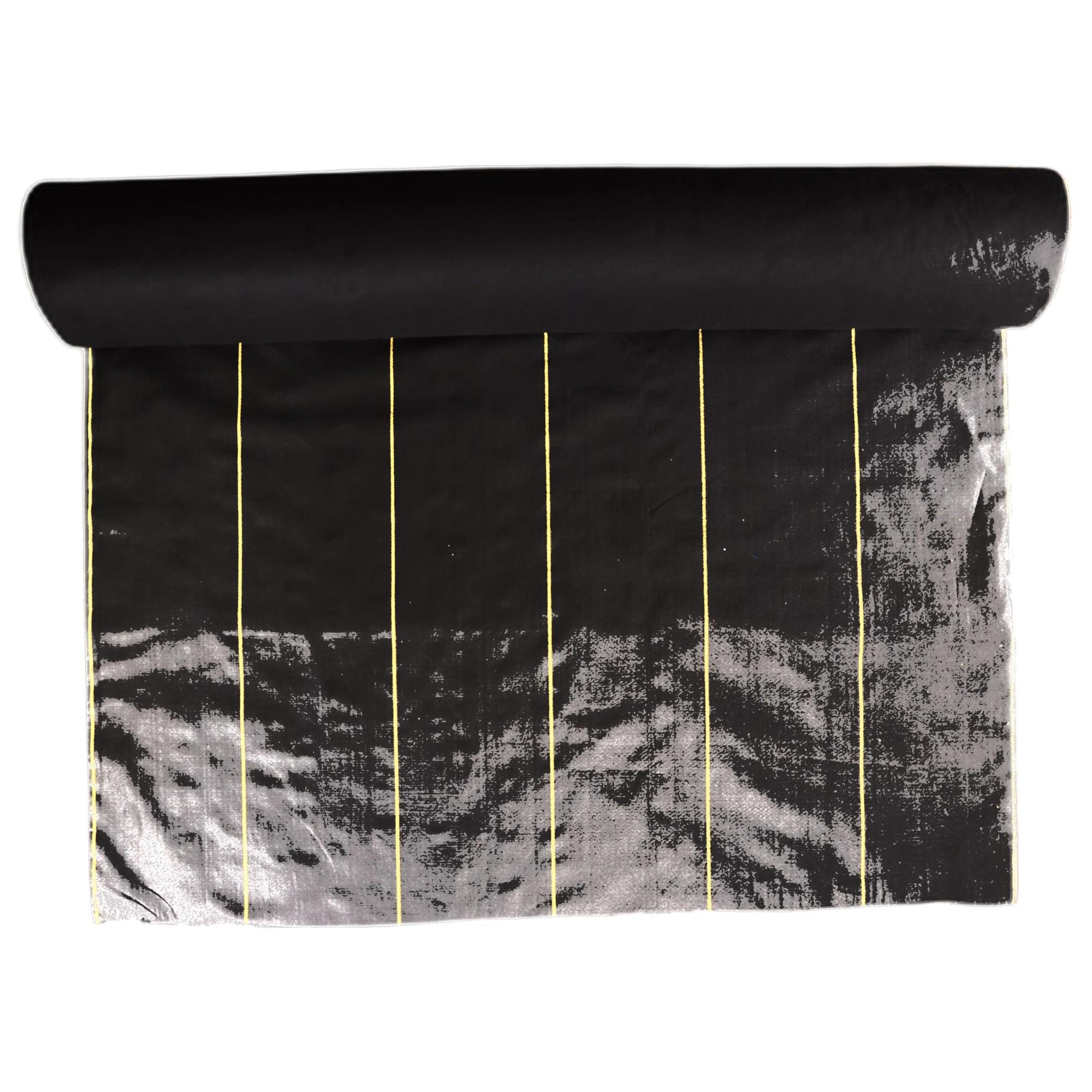
Heavy-duty woven hybrid engineered for load and separation under hard surfaces.