
Gardeners tend to have strong feelings about landscape fabric vs cardboard. One camp swears by sheet mulching with cardboard: free, biodegradable, and good for soil life. The other swears by fabric: lay it once and cut the weeding loop.
Both camps are right, about different jobs. Cardboard and landscape fabric solve different problems, and picking between them is easier once you know what each one is actually good at.
At DOTDAY, we sell woven landscape fabric, so we'll be upfront about where cardboard is the better pick.
How cardboard works as a weed barrier
Cardboard blocks light. Lay it over grass or weeds, wet it down, and cover it with compost or mulch, and the plants underneath die back from lack of sunlight. Over a season or so, the cardboard breaks down into the soil.
This method is often called sheet mulching or lasagna gardening.
What cardboard is good at
- Killing lawn to start a new bed. It's one of the easiest ways to turn grass into a planting area without digging.
- Adding organic matter. As it breaks down, it feeds soil life.
- Low cost. Shipping boxes are free.
- Short-term projects. Great for a season of smothering before you plant.
Where cardboard falls short
- It doesn't last. Once it breaks down, weed seeds in the soil and blown-in seeds can germinate again.
- It needs repeating. For ongoing weed control, you'll be laying new cardboard every season or two.
- Prep matters. Tape, labels, and glossy printed coatings should be removed before use.
- Hard to use under stone. Cardboard under gravel or rock breaks down and leaves soil mixed into the stone.
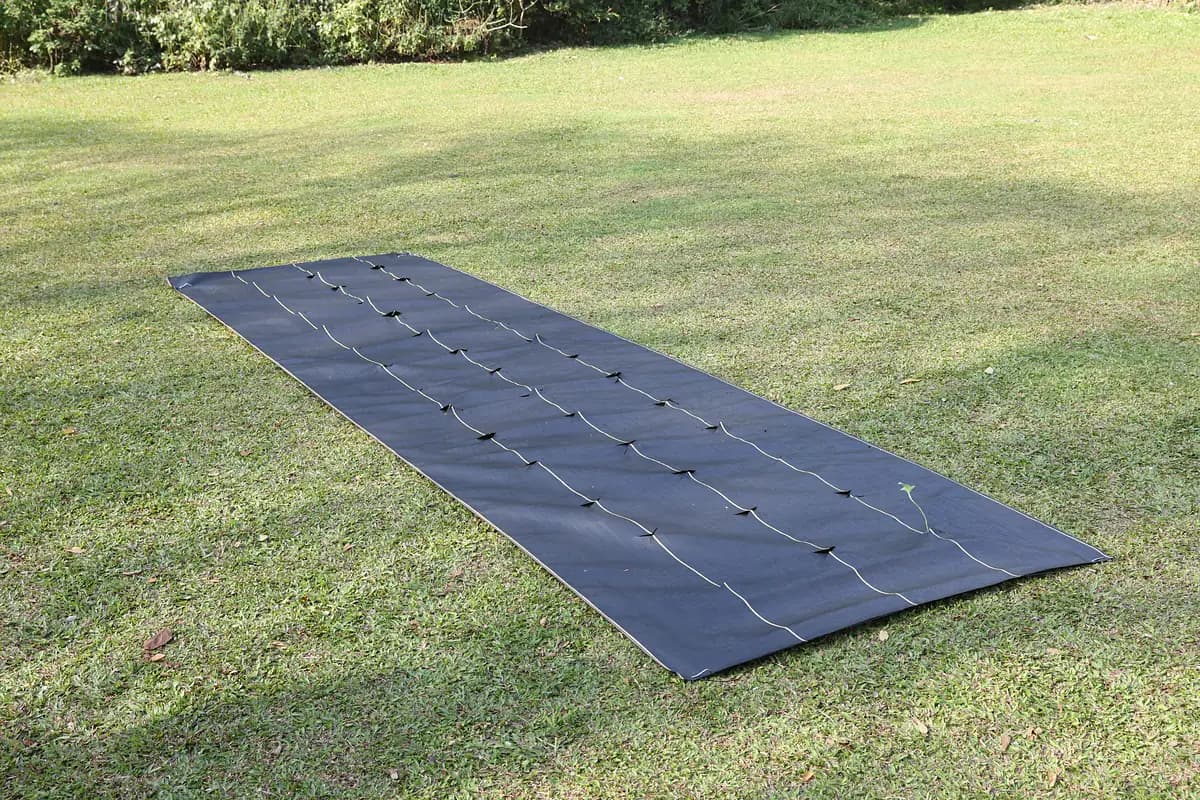
How landscape fabric works as a weed barrier
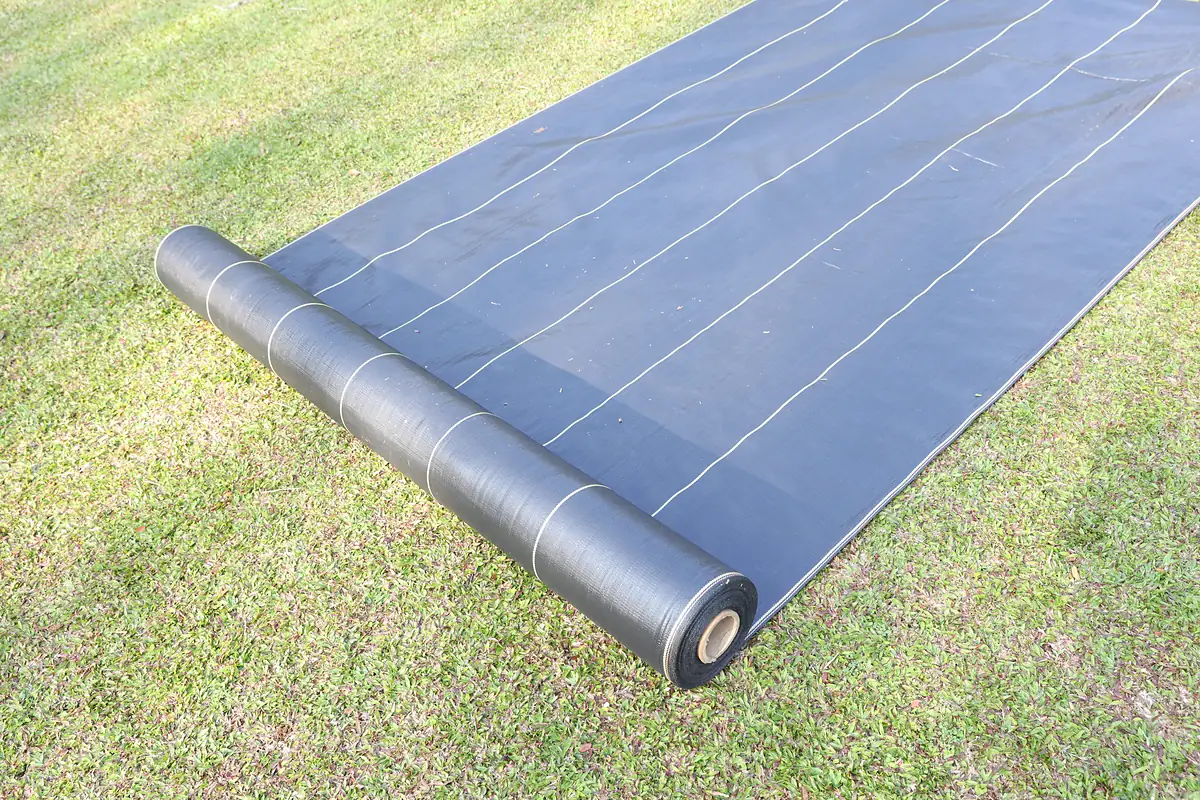
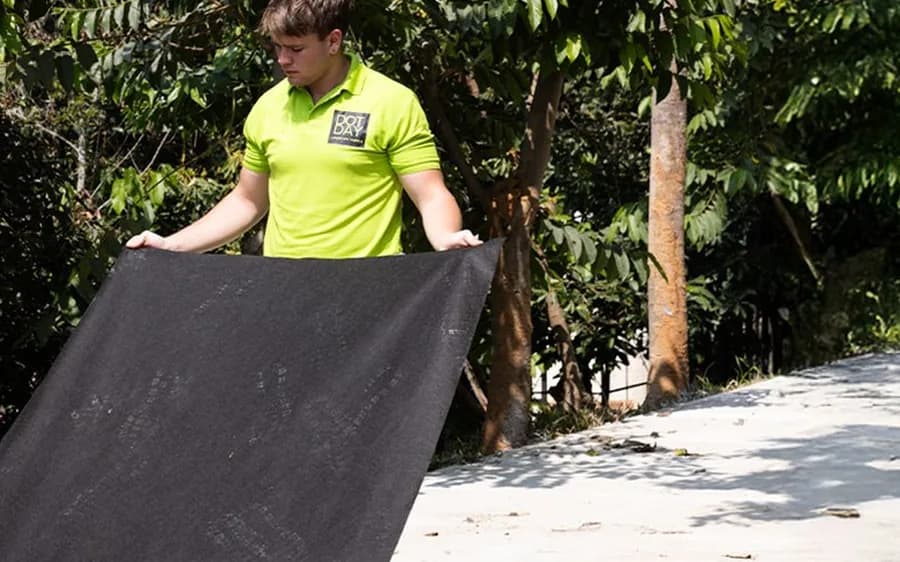
A woven landscape fabric also blocks light, but it's made from polypropylene and designed to stay in place when covered correctly. Water and air pass through, and weeds in the soil below can't reach the sun.
What landscape fabric is good at
- Long-term weed control in beds you don't dig up every season: shrubs, perennials, foundation plantings.
- Under mulch for a layer that keeps working after the mulch settles.
- Rows and production growing. Farms and nurseries use woven ground cover to cut weeding across large areas.
- Under gravel and stone, where a durable separation layer is essential.
Where landscape fabric falls short
- Not for beds you replant constantly. If you direct-sow and dig every season, fabric gets in the way.
- Doesn't add organic matter. You feed the soil from the top with compost and mulch.
- Needs cover. Exposed fabric breaks down in sunlight.
- Upfront cost. You buy it once, but you do buy it.
Quick comparison
| Feature | Cardboard | Woven landscape fabric |
|---|---|---|
| Blocks weeds from below | Yes, until it breaks down | Yes, for years when covered |
| Lasts | Roughly a season | Long-term when covered correctly |
| Adds organic matter | Yes | No |
| Water and air flow | Yes, when wet | Yes |
| Under gravel or rock | Not recommended | Yes, with the right fabric |
| Best for | Starting new beds, short-term smothering | Permanent beds, rows, paths, stone areas |
| Cost | Free or low | Paid, one-time |
Landscape fabric vs cardboard: which one should you use?
Start with the job, not the material. The two work well in different parts of the same garden.
Use cardboard when:
- You're converting lawn into a new vegetable or flower bed.
- You plan to dig, amend, and replant the bed regularly.
- You want to build soil over time with compost layers.
Use landscape fabric when:
- The bed is permanent, with shrubs, perennials, or trees.
- You're growing in fixed rows or spacing, like strawberries, peppers, or nursery stock.
- You're covering a path, border, or stone area.
- You want to cut ongoing weeding in a large area.
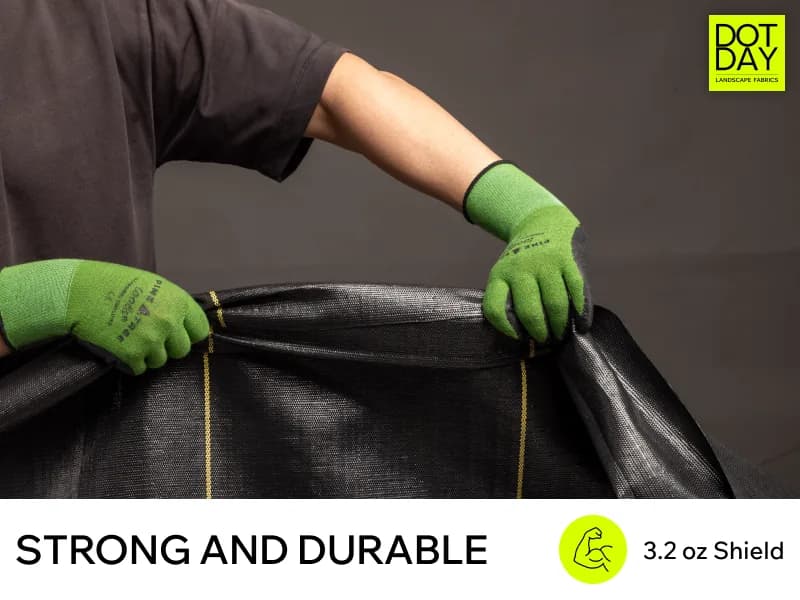
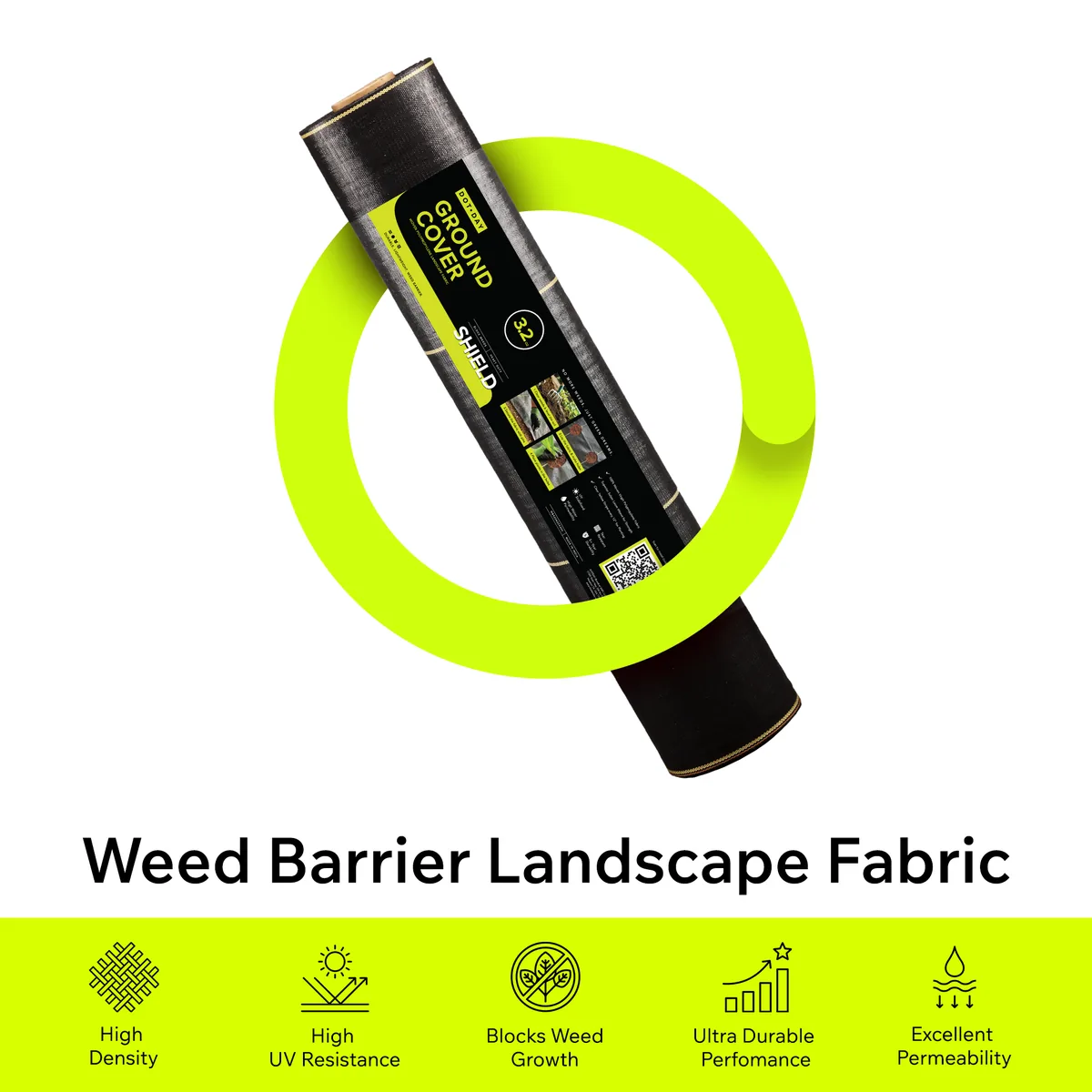
For beds and rows, DOTDAY SHIELD is a 3.2 oz woven polypropylene weed barrier built for gardens, farms, nurseries, and mulch beds. For gravel and stone paths, XBAR is the 5 oz dual-layer built to handle load.
Can you use both?
Yes, and it's a smart combination in some gardens.
- Smother, then cover. Use cardboard to kill lawn in a new bed, then lay landscape fabric once your permanent plants are placed.
- Split by zone. Cardboard and compost in annual vegetable beds you rework each season; fabric under the paths between them.
A common layout: annual beds sheet-mulched with cardboard and compost, and the walkways between beds covered with fabric and wood chips or gravel. That puts each material where it works best.
How to lay landscape fabric in a permanent bed
- 1Clear existing weeds and rootsEspecially perennial weeds.
- 2Amend the soil firstOnce fabric is down, adding compost below it is harder.
- 3Rake smooth and firmRake the surface smooth and firm.
- 4Roll out fabricOverlapping seams generously.
- 5Pin edges and seamsPin the edges and seams in place.
- 6Cut an X for each plantPlant, and fold the flaps back.
- 7Cover with mulchCover with 2 to 3 inches of mulch.
Our step-by-step guide on how to install weed barrier fabric covers the full process, and the Fabric Calculator helps you order the right amount.
How much fabric does your bed need?
Use the DOTDAY Fabric Calculator to work out how much fabric and overlap your bed needs.
The honest bottom line
Cardboard starts beds and builds soil. Landscape fabric keeps permanent areas cleaner with less weeding. Seeds that land on mulch can still sprout on top of either one, so light maintenance stays part of a low-weed garden. For a deeper look, read Do Weed Barriers Actually Work?.
What we recommend
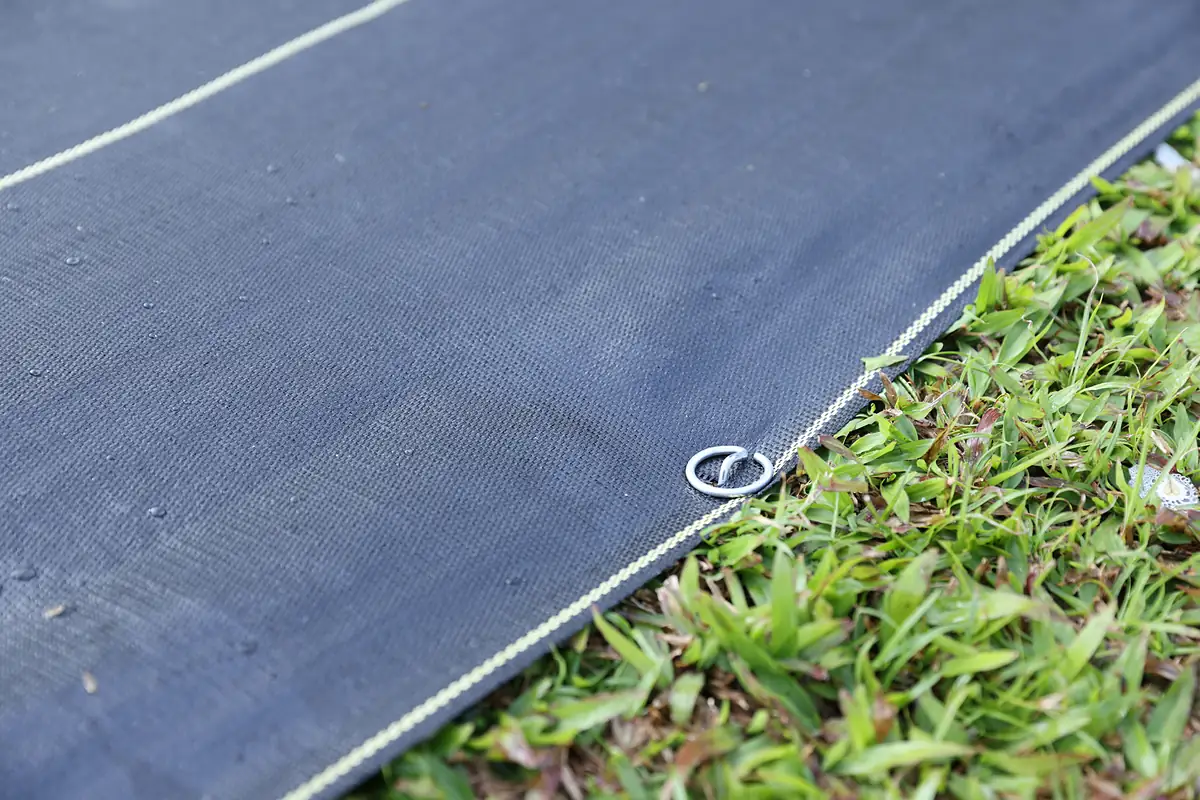
For permanent beds, rows, and paths, we recommend SHIELD, our 3.2 oz woven polypropylene weed barrier. It is UV-stabilized (70% strength retained after 500 hours, ASTM G154), lets water and air reach the soil, and sits under mulch, soil, or straw. For a new bed you will amend and replant every season, cardboard is still a fine choice.
DOTDAY does not sell cardboard. SHIELD is the companion layer for permanent zones around a cardboard-mulched bed: paths, borders, and shrub strips. See our garden weed barrier page for bed layouts, and when to replace landscape fabric when a sheet has finished its useful life. Market gardens and farms can request bulk pricing. Check live sizes on the product page before you order.
Cardboard is great for building new beds; woven fabric is better where plantings stay put for the long haul. DOTDAY publishes specs for every fabric we sell, so you can check the fit before you order.
Use the DOTDAY Fabric Calculator to size your order, or try the Fabric Finder if you're still choosing a fabric.
SHIELD is the fabric for permanent beds
DOTDAY SHIELD is a 3.2 oz woven polypropylene weed barrier for beds, rows, borders, and shrub strips. Check live sizes on the product page.
Shop SHIELDThree fabrics. One simple rule.
Use the right fabric for the right ground condition.
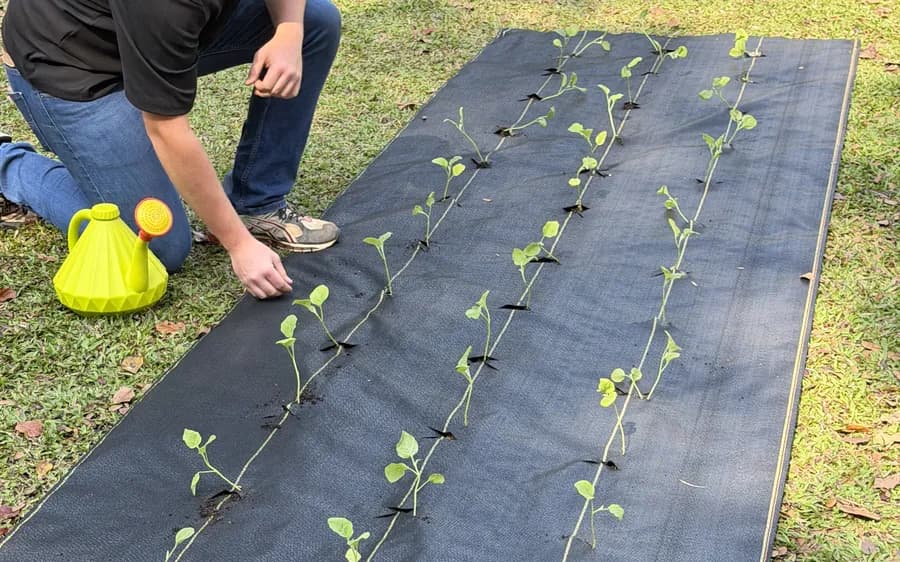
SHIELD
Woven polypropylene weed barrier built to suppress weeds while letting water and air through.
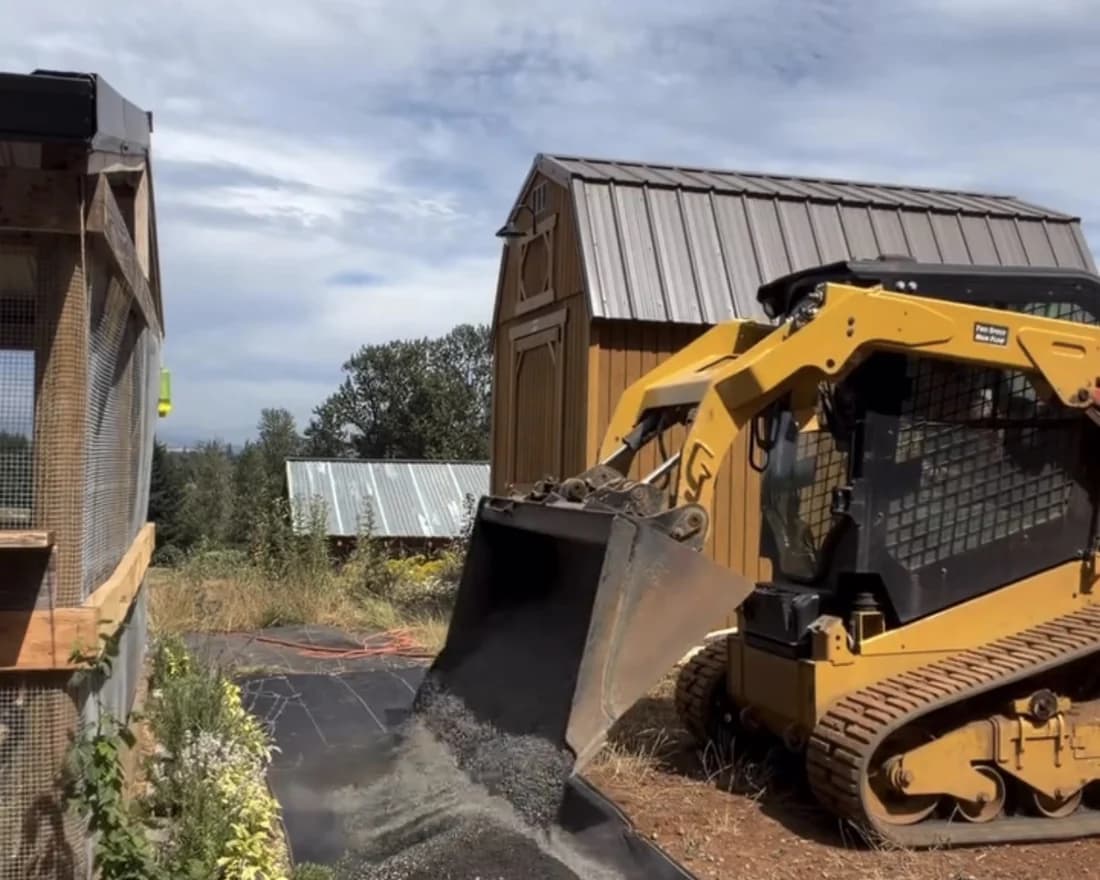
XBAR
Heavy-duty woven hybrid engineered for load and separation under hard surfaces.
TERRA
Non-woven geotextile designed for drainage, filtration, and soil separation.