Do weed barriers actually work?
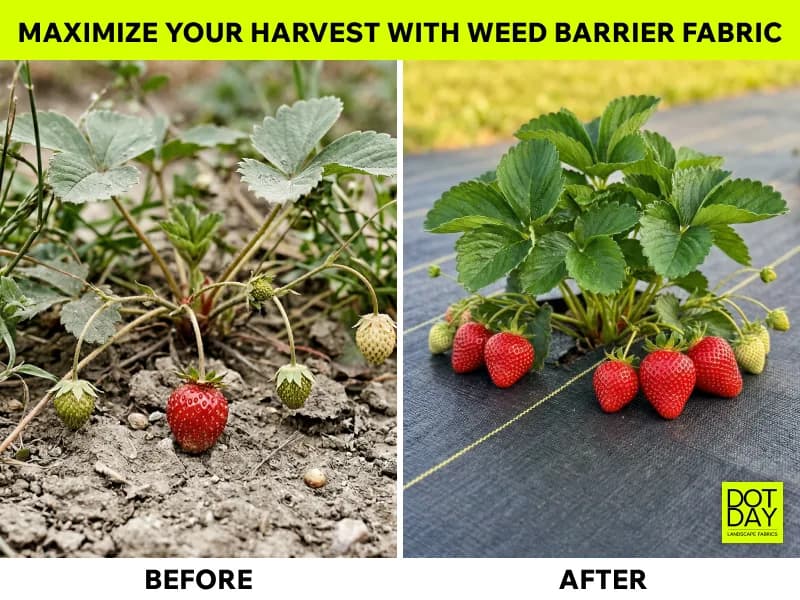
Search around long enough and you will find people saying landscape fabric does not work, that weeds come back, fabric clogs, and it is a waste of money. They are not entirely wrong, but they are usually describing the wrong fabric, installed the wrong way, in the wrong place. So do weed barriers actually work? Used correctly, yes. A quality weed barrier blocks sunlight so weeds beneath cannot grow, while letting water and air through. Most stories of failure come from light perforated fabric, poor overlaps, or weeds rooting in debris on top of the fabric, not from the concept failing. Size your project with the DOTDAY Fabric Calculator.
What is the problem with landscape fabric?
Most fabric problems trace back to four avoidable causes, not the fabric itself. Light perforated fabric has pre-punched holes that are weak points where weeds push straight through, while a tight woven fabric blocks light without relying on holes. Weeds root on top when mulch and debris break down into a thin soil layer on the fabric surface, so keep the top layer clean. Bad overlaps let weeds find any gap at the seams, which overlapping 6 to 12 inches closes. And sun exposure breaks fabric down fast, so always cover with mulch, gravel, or rock. None of those is the concept being broken. That is exactly why DOTDAY SHIELD is woven and UV-stabilized with no pre-punched holes.
Running weed control across properties or a farm?
DOTDAY supplies SHIELD to landscapers and growers direct. Request bulk and pro pricing for multi-site coverage.
What actually kills weeds long-term?
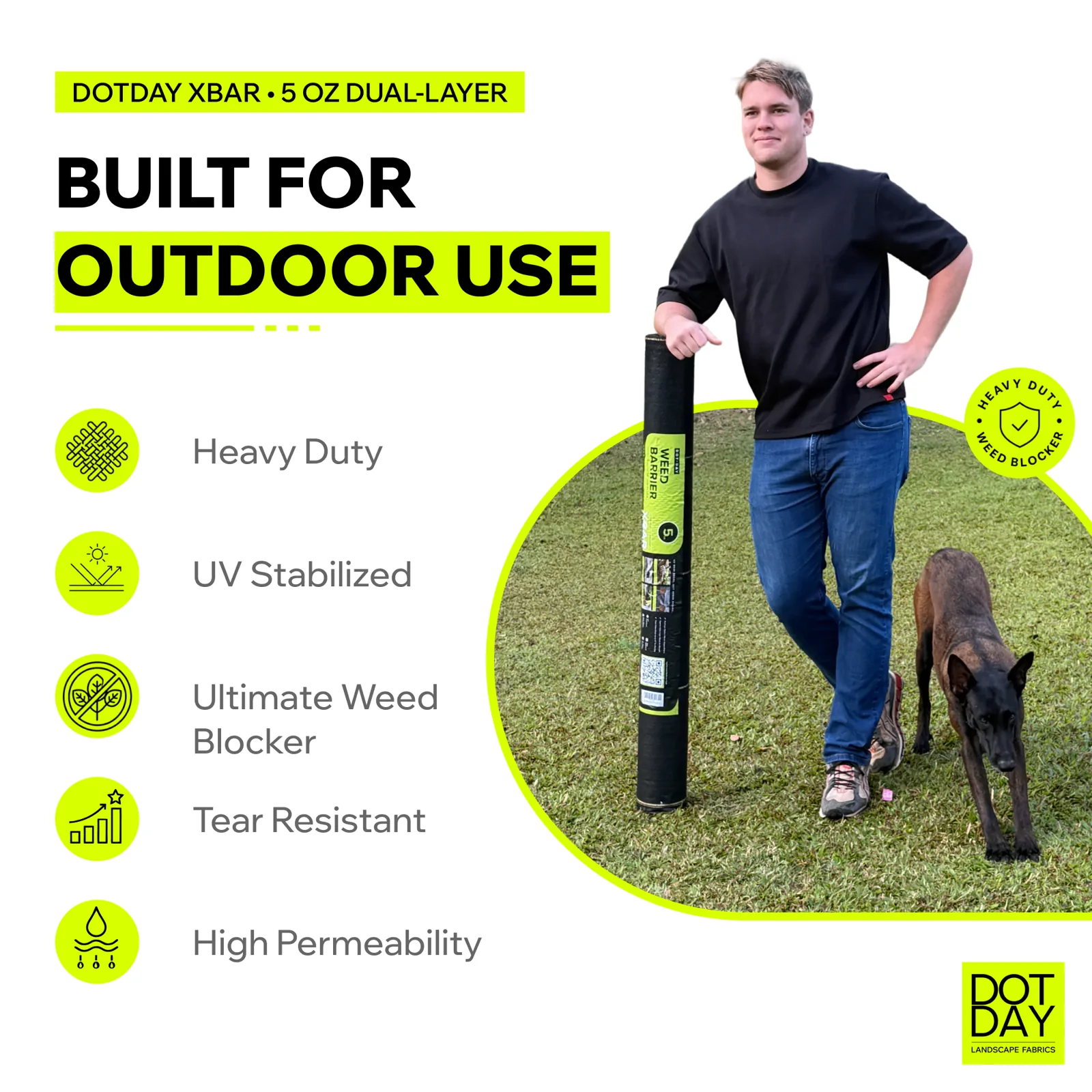
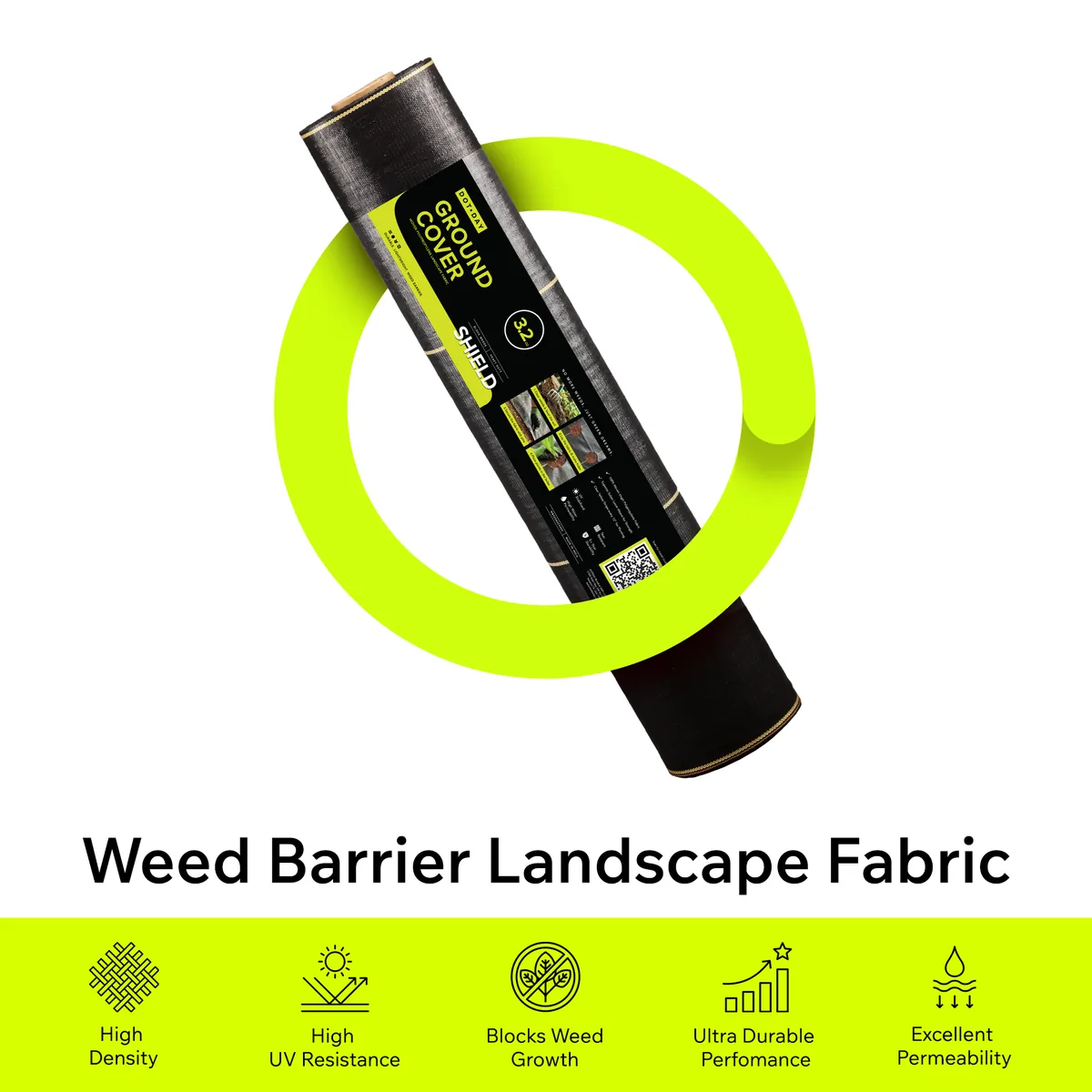
Lasting weed control is a system, not a single product. The reliable approach combines a quality woven barrier to block sunlight from existing weeds and seeds below, a covering layer of mulch, gravel, or rock to protect the fabric and improve the look, surface maintenance to clear leaves and debris so new seeds cannot root on top, and the right fabric for the load so it does not tear and open gaps. For beds, mulch, farms, and nurseries, SHIELD 3.2oz woven is built for this exact job. For gravel and hardscape where there is load on top, step up to XBAR so the barrier survives the traffic.
Talk to a DOTDAY fabric expert
Tell us your ground condition and what is going on top, and we will point you to the right fabric and quantity.
Talk to an ExpertThree fabrics. One simple rule.
Use the right fabric for the right ground condition.
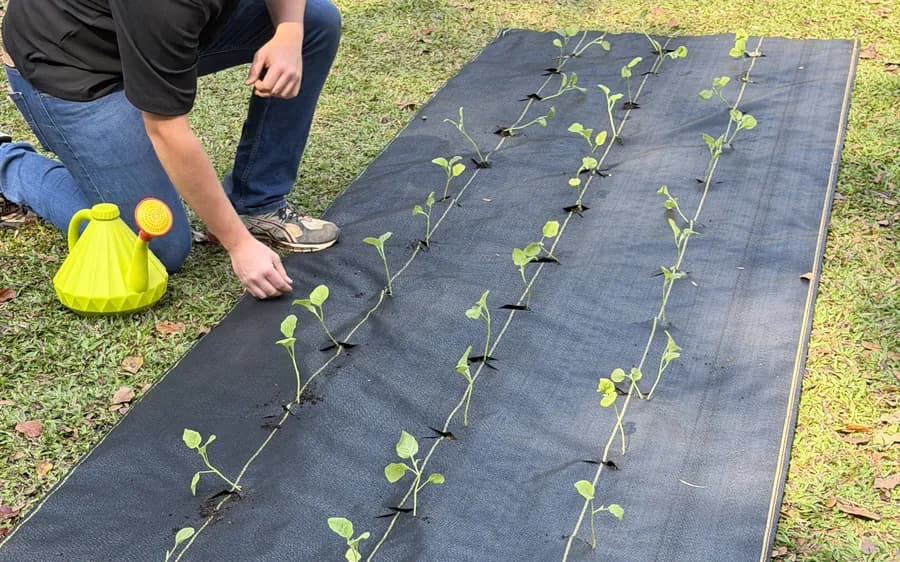
SHIELD
Woven polypropylene weed barrier built to suppress weeds while letting water and air through.
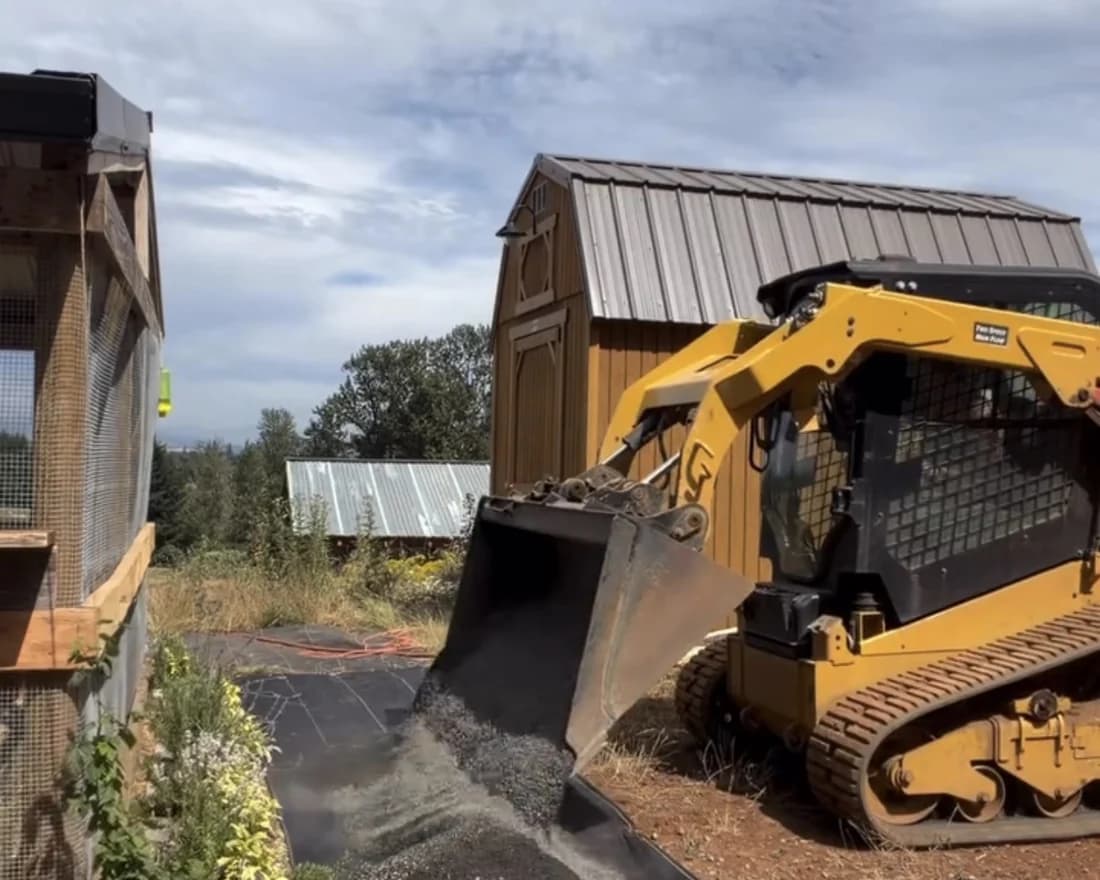
XBAR
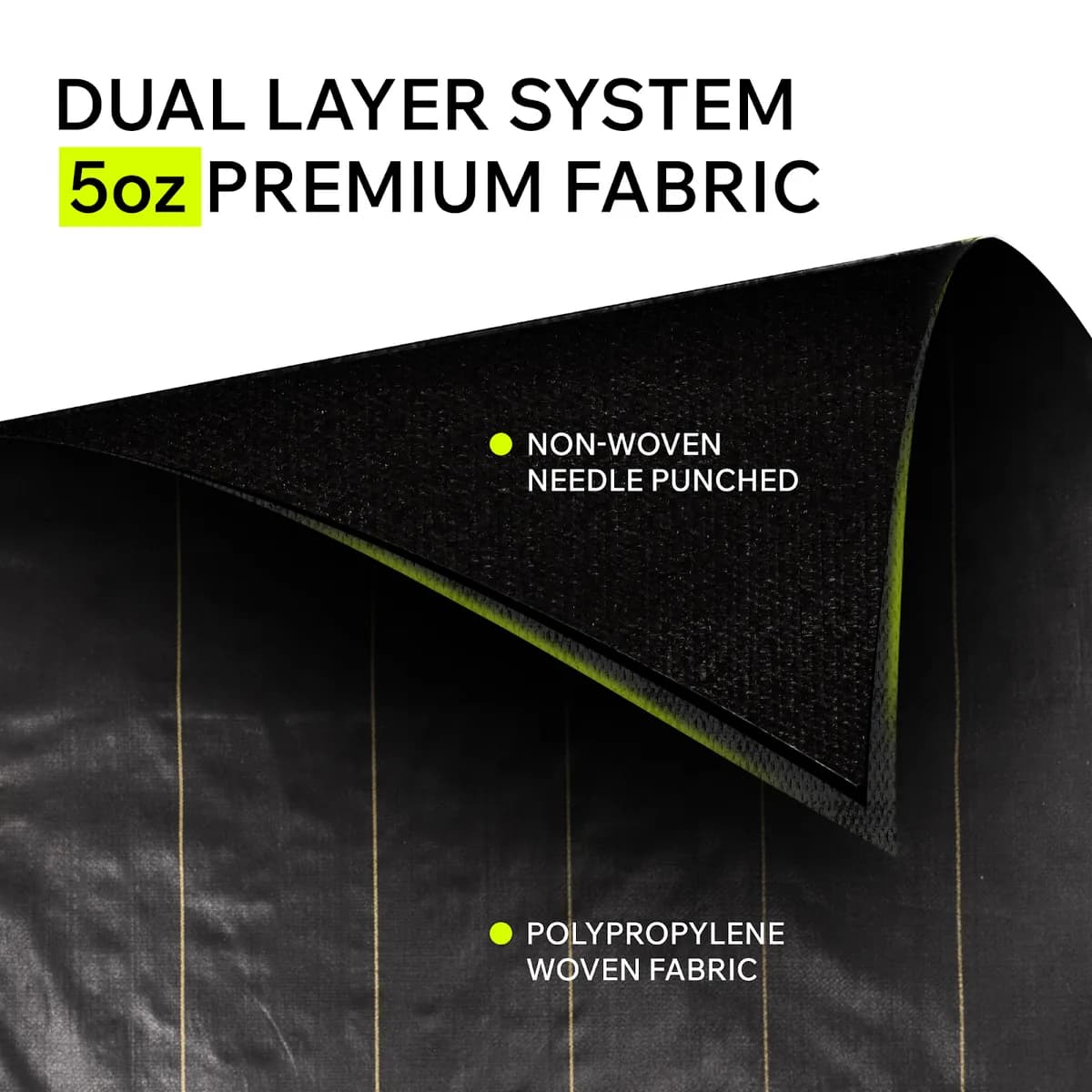
Heavy-duty woven hybrid engineered for load and separation under hard surfaces.
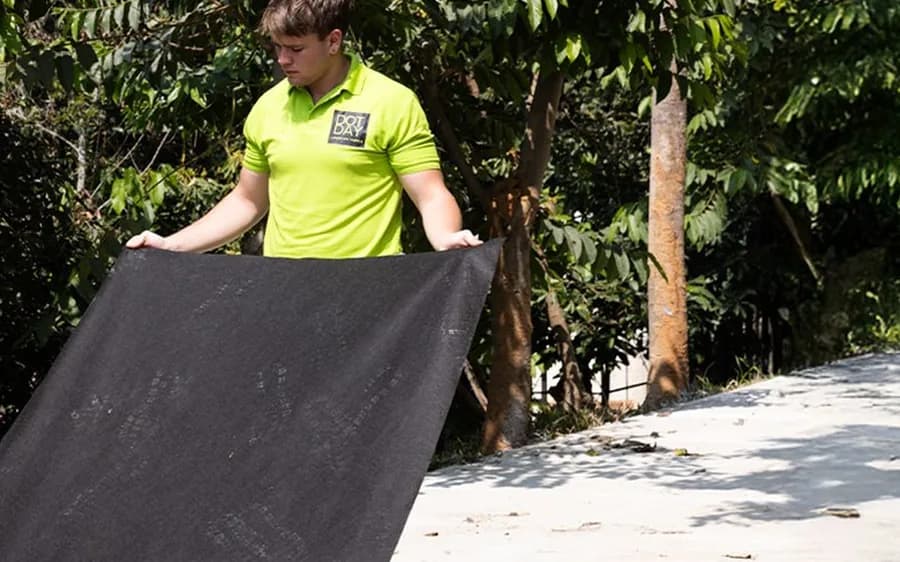
TERRA
Non-woven geotextile designed for drainage, filtration, and soil separation.