Landscape Fabric in Flower Beds vs. Fire Pits: The Honest Guide to Using It Right
- dotday_gardener

- May 23
- 8 min read
Every week, gardeners ask us the same question in two very different ways. A homeowner redoing their fire pit wants to know if they need landscape fabric under the gravel. A flower grower who has always used mulch wants to know if fabric will hurt her soil. Both questions are completely valid. Both deserve an honest answer - not a sales pitch.
Here is the truth: landscape fabric is one of the most misused products in outdoor landscaping - not because it does not work, but because people use the wrong type in the wrong place. Get the match right and you eliminate years of weeding maintenance. Get it wrong and you create a problem harder to fix than the weeds you were trying to stop. This guide covers both sides completely, with specific DOTDAY product guidance for every use case.
Landscape Fabric Under Fire Pits, Gravel, and Hardscape: Absolutely Use It

For any hardscape application - fire pit surround, gravel seating area, stone pathway, paver border, or decorative rock bed - landscape fabric is not optional. It is foundational. Skipping it is the single biggest mistake in hardscape landscaping, and here is exactly why.
First, it stops weeds from the soil below pushing up through your gravel. Without fabric, weed seeds already sitting in your native soil germinate straight up through the decorative layer within one growing season. No amount of surface spraying stops this -the problem is underground. Second, it acts as a separator that prevents your gravel from sinking into the earth over time. Rain, foot traffic, and natural soil movement work stone down into bare soil faster than most people expect. Fabric holds the two layers distinct so your surface stays where you put it. Third, and critically for fire pit zones, it maintains drainage. Water, air, and soil gases need to move freely through the ground. A quality woven landscape fabric lets all of this pass through while holding everything else in place.
Why DOTDAY XBAR 5oz Is Built for Hardscape and Fire Pit Applications
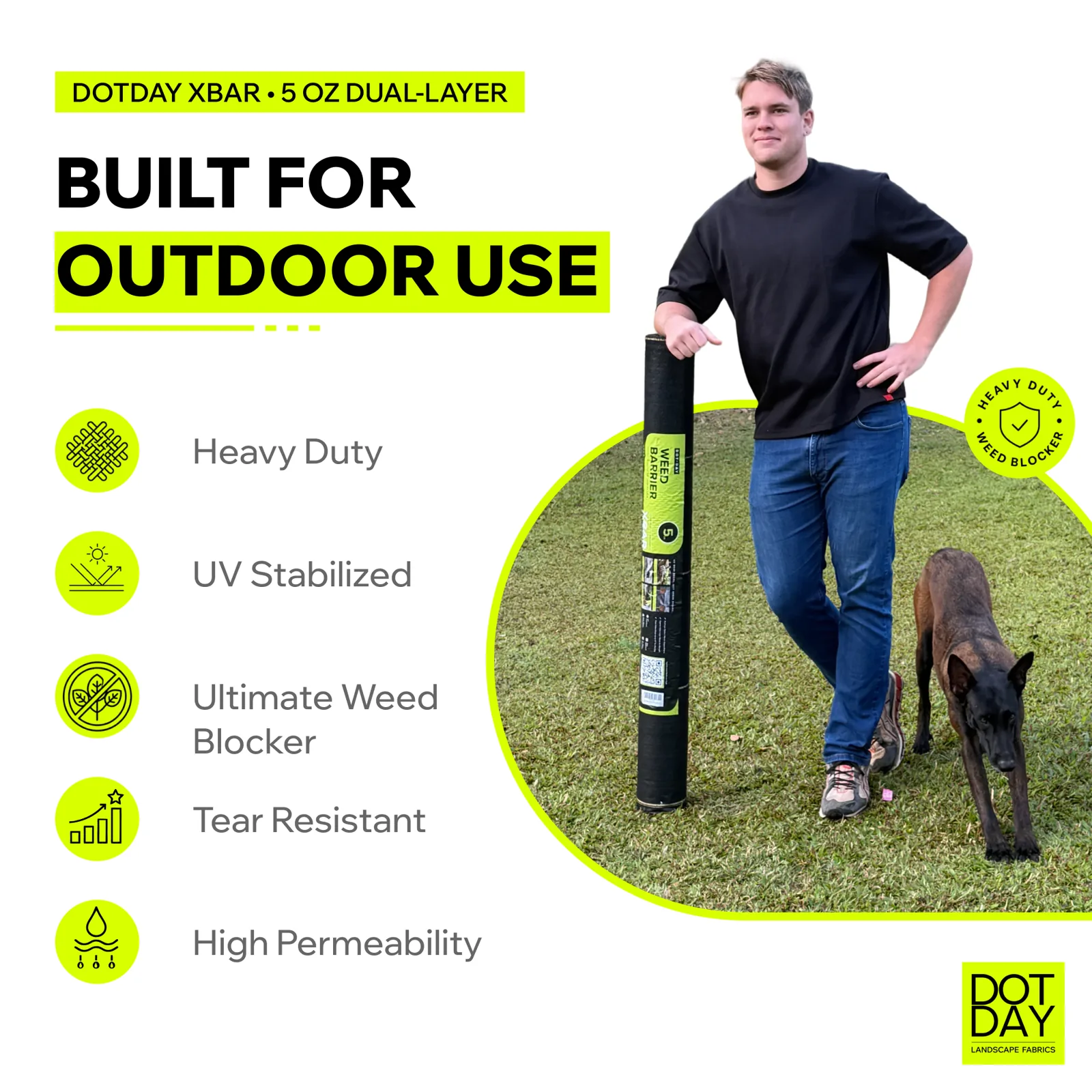
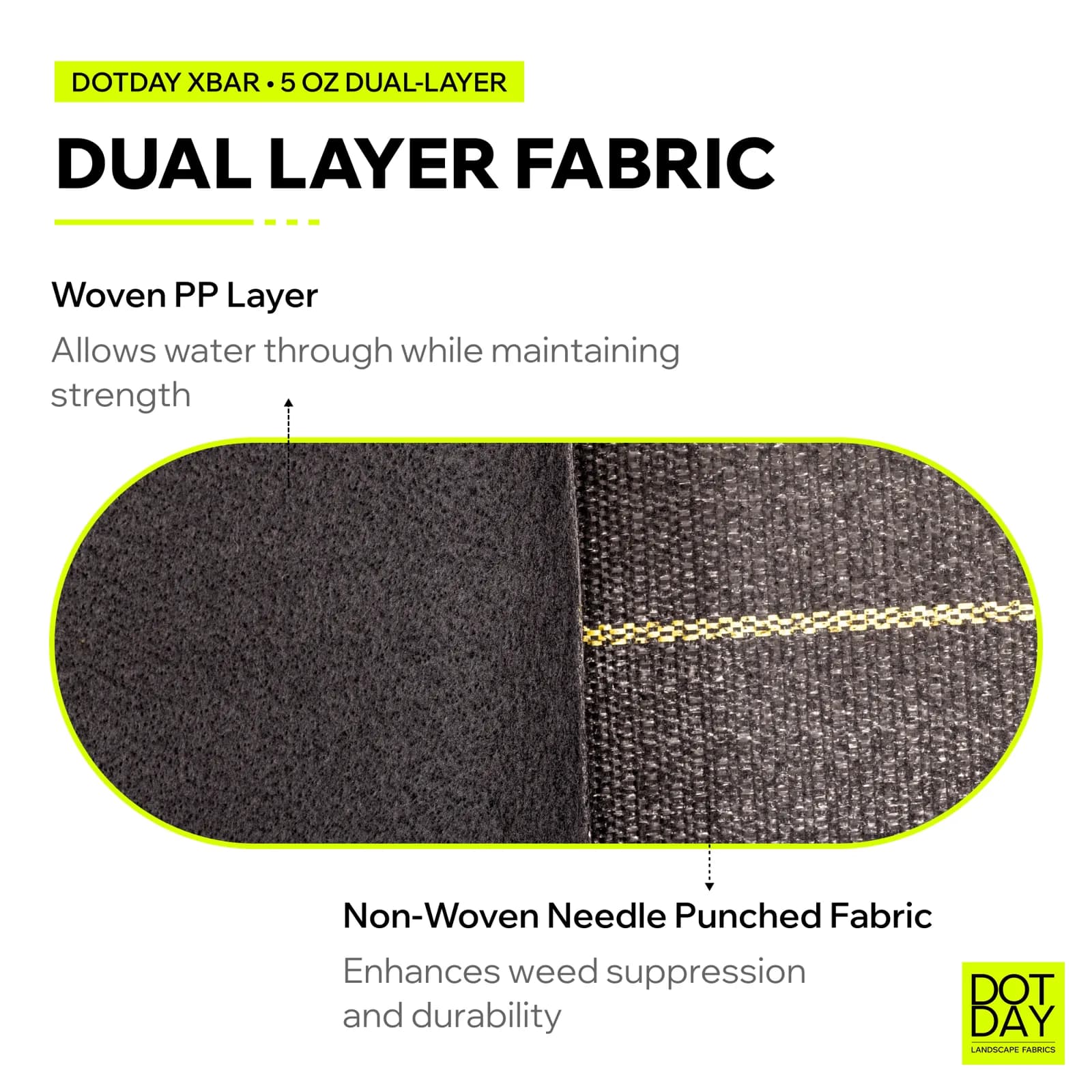
Not all weed barrier fabric handles hardscape loads equally. DOTDAY XBAR is a 5oz per square yard, dual-layer construction - a woven polypropylene base bonded with a needle-punched cap layer. The woven base provides structural rigidity and tear resistance under the weight of gravel and foot traffic. The needle-punched cap layer maintains high water permeability and prevents fine soil particles from migrating up into your gravel over time. This dual-layer design is precisely what separates XBAR from standard single-layer options for fire pit and hardscape use.
XBAR is UV-stabilized, which matters enormously for exposed fabric edges around fire pits and pathway borders where sunlight hits the material directly. Cheap landscape fabrics degrade, crack, and fray at exposed edges within two to three seasons. XBAR is engineered for long-term outdoor performance. Every roll ships with 12-inch high-visibility alignment guides and a step-by-step install guide so your installation is clean and professional from the first cut.
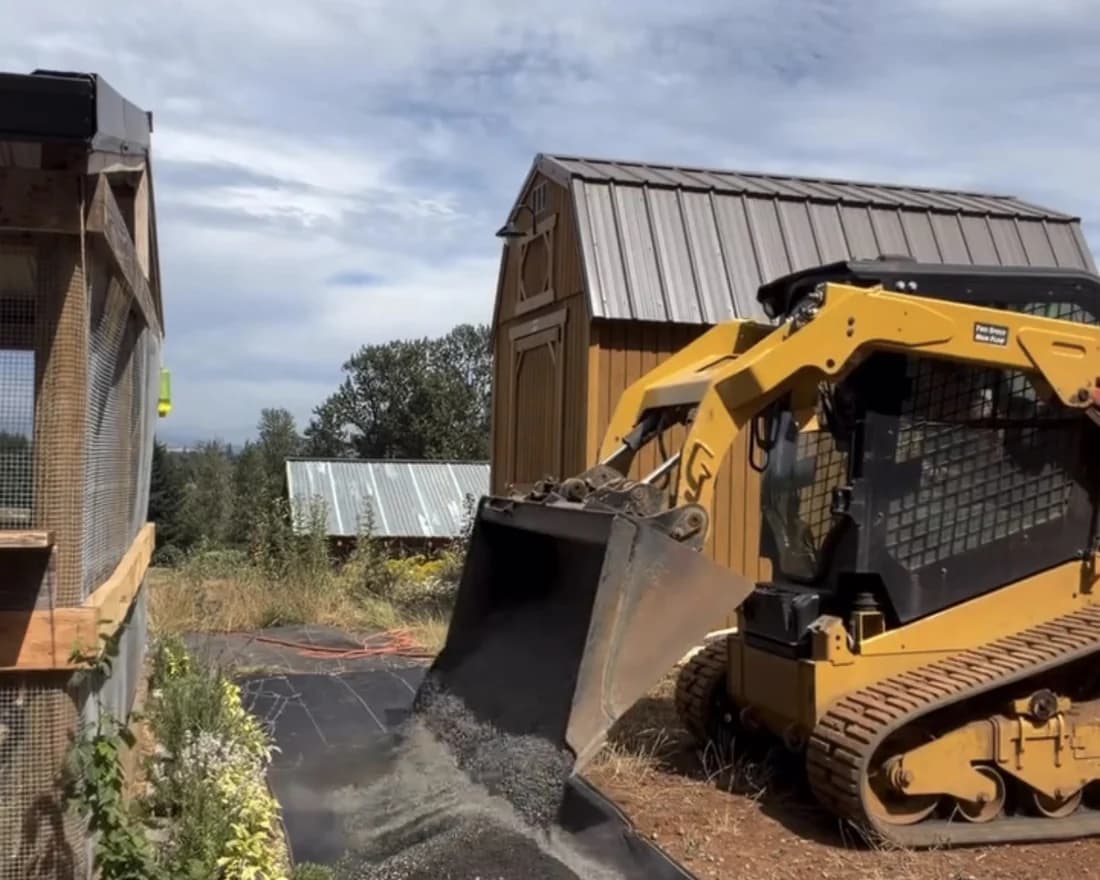
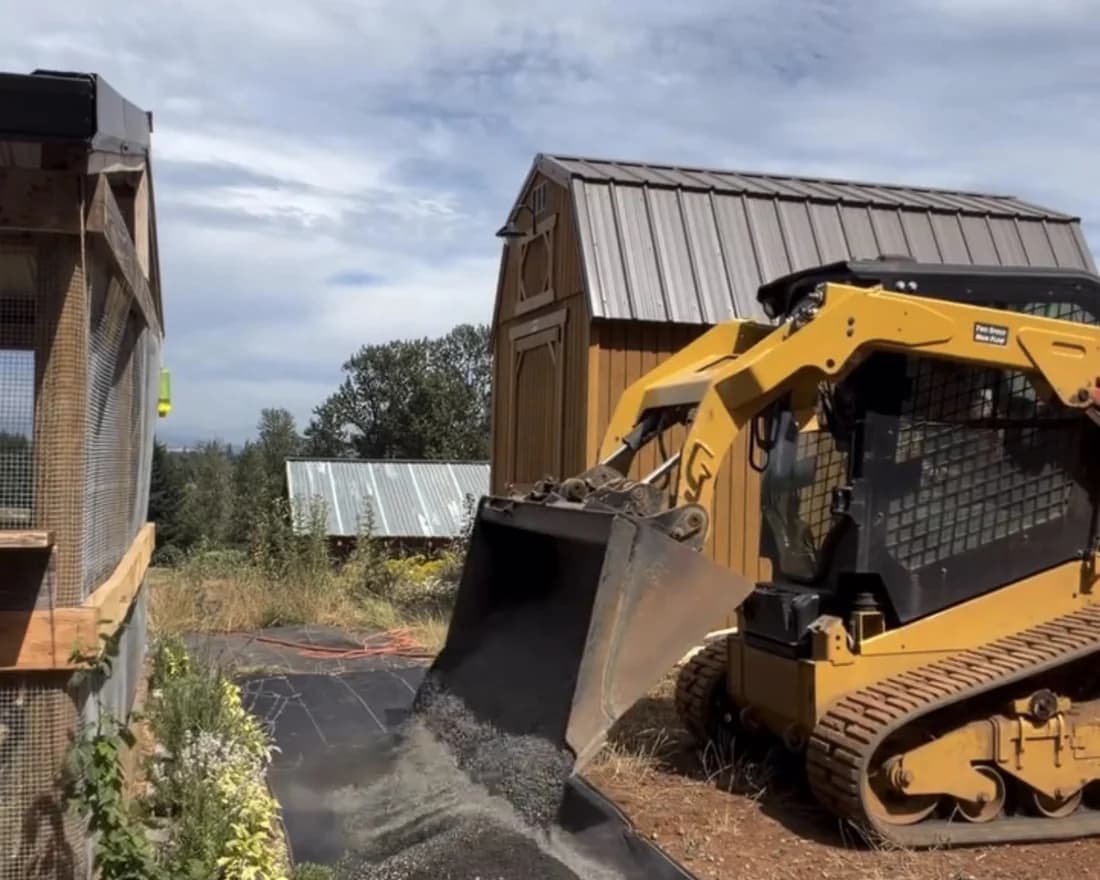
Fire pit installation in four steps: clear and level the zone, lay DOTDAY XBAR smooth and flat with a minimum 6-inch overlap at any seams, secure with landscape staples at 12-inch intervals, then add gravel or crushed stone to 2 to 3 inches depth. The fabric works invisibly underneath. Clean, weed-free results for years - no herbicides, no annual maintenance.
Landscape Fabric in Flower Beds: The Honest Answer Most Brands Will Not Give You

Here is where DOTDAY will give you the truth rather than the sale. The concern that experienced gardeners raise about landscape fabric in flower beds is not unfounded - and acknowledging it honestly is the only way to actually help you make the right call.
The core issue: when fabric is buried under organic mulch for multiple seasons, decomposing material gradually works into the weave and reduces permeability over time. In actively managed beds where you are dividing perennials, amending soil, or replanting each season, fabric also becomes a practical obstacle - roots grow into it, cutting planting holes takes real time, and removal is a significant project. These are legitimate trade-offs, and in those specific situations mulch alone is the better choice.
That said, there are three flower garden scenarios where DOTDAY fabric is absolutely the right call - and where the trade-offs tip decisively in its favor.
3 Flower Garden Scenarios Where Landscape Fabric Is the Right Call
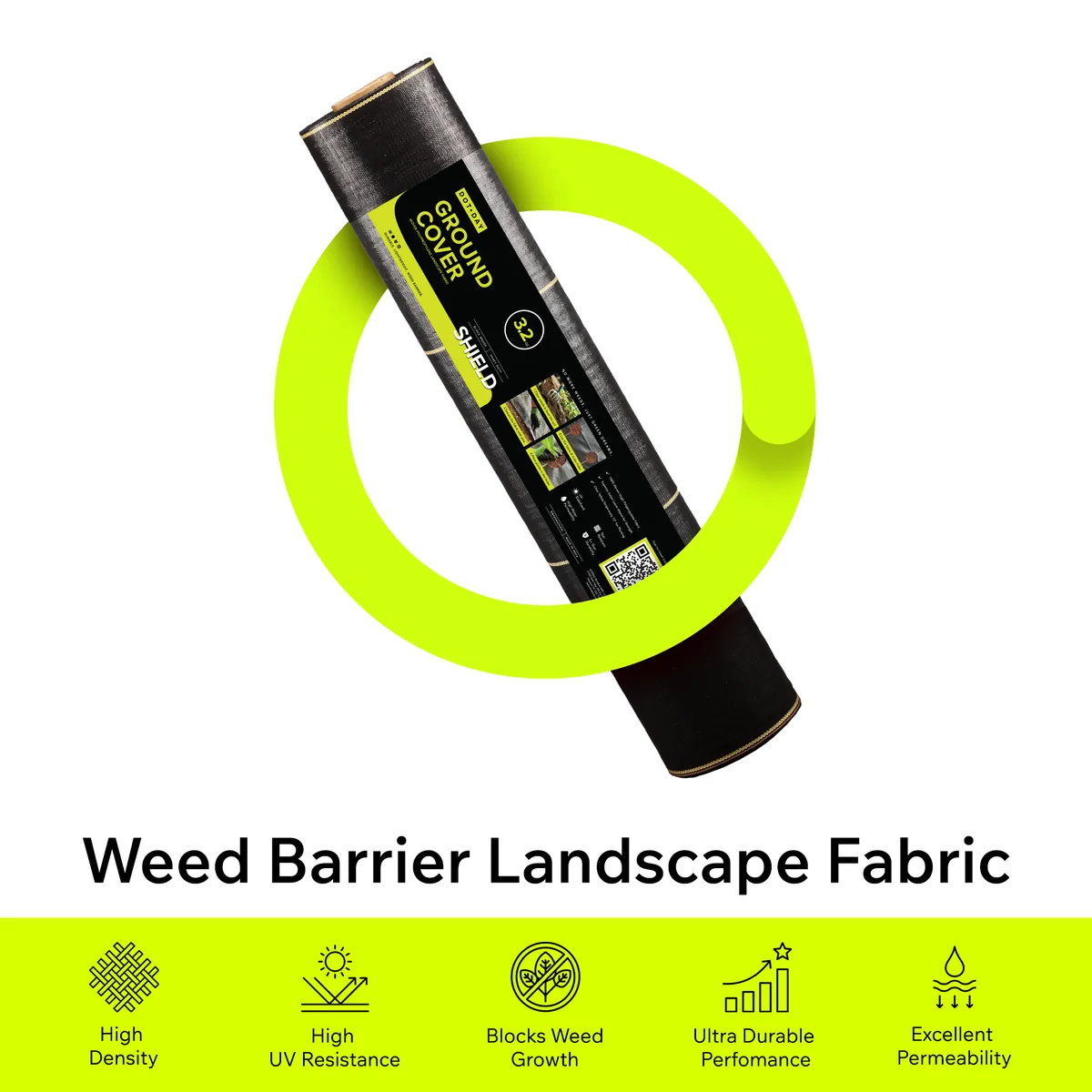
Scenario 1 - Established ornamental borders and foundation shrubs. If your planting layout is fixed - foundation shrubs, ornamental grasses, established perennial borders, rose beds - and you are not regularly digging or amending, DOTDAY SHIELD 3.2oz (110 GSM) under decorative bark or stone delivers years of low-maintenance weed control with very little downside. SHIELD is lighter than XBAR, highly permeable so water and air reach your plant roots consistently, and cuts clean without fraying along the built-in 12-inch planting guides. Set it, mulch over it, and largely forget about weeding.
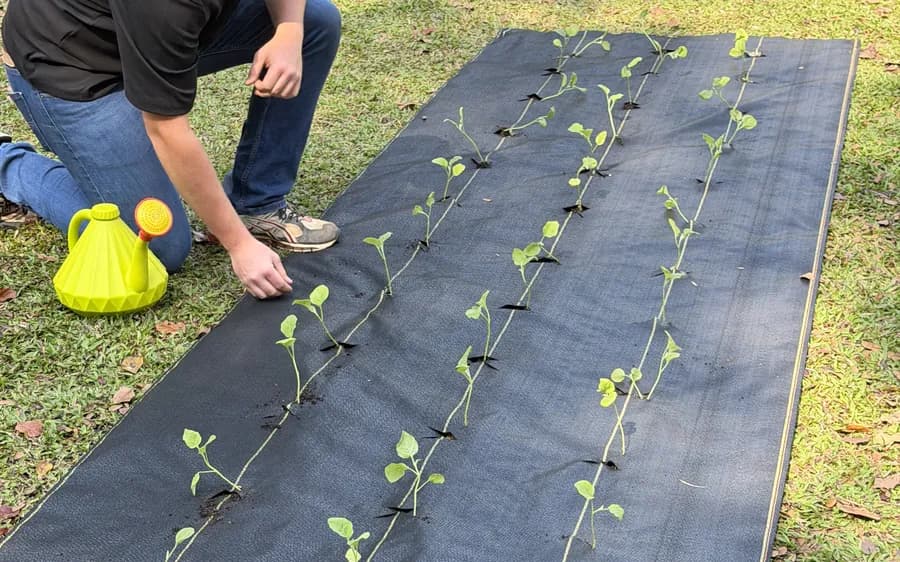
Scenario 2 - Cut flower fields, sunflower patches, and pumpkin patches. This is the use case that transforms how growers manage their land. Fabric down the walking aisles between plant rows eliminates aisle weeding entirely - one of the most time-consuming, never-ending tasks in any flower or vegetable operation. DOTDAY SHIELD 3.2oz works in the plant rows with pre-cut or burned planting holes. DOTDAY XBAR 5oz works in the walking aisles where foot traffic demands more durability. This is DOTDAY's recommended dual-solution approach: lighter fabric where plants grow, heavy-duty where boots go.
Scenario 3 - New bed establishment. Landscape fabric is extraordinarily effective at smothering an area before you plant - suppressing existing weeds, couch grass, and invasive runners during the prep phase. Cover the area for four to eight weeks and the vegetation below is gone. From there, remove the fabric and mulch over the cleared bed, or keep it in place and cut your planting holes. Both approaches work. The choice comes down to how much flexibility you want in the bed going forward.
Landscape Fabric and Mulch Together: A Stronger Combination Than Either Alone

The most common concern from mulch gardeners: if I put fabric down, am I cutting off the organic benefits mulch delivers to my soil? The honest answer depends entirely on which fabric you choose. Cheap non-woven or plastic landscape fabric genuinely does restrict what passes through. A high-permeability woven fabric like DOTDAY SHIELD 3.2oz maintains consistent water, air, and nutrient flow - mulch nutrients leach through the weave to your root zone, earthworms operate in the soil below, and your soil biology is not starved out.
The combination works like this: fabric stops weed seeds germinating from below. Mulch on top covers the fabric, blocks light so seeds landing on the surface cannot germinate, retains soil moisture, moderates temperature, and gives the bed a clean, finished appearance. With fabric underneath, your 2-inch mulch layer stays effective far longer - you are not fighting weeds pushing from the native soil. Without fabric, that same mulch layer is overcome by aggressive weeds within a single season in a problem area.
High-Altitude and Extreme Weather Gardens: Fabric Quality Is Non-Negotiable
If you are gardening in a high-altitude environment - Colorado's Front Range, for example, where intense UV radiation, hailstorms, dramatic freeze-thaw swings, and relentless wind are part of every growing calendar - fabric quality becomes your single most important purchase decision.
UV degradation is the silent failure mode of bargain landscape fabric. Thin polypropylene products without proper UV stabilization become brittle, crack at fold lines, and disintegrate in as little as two seasons under high-altitude sun. You end up with shredded fragments tangled through your soil and gravel - far harder to remove than the weeds you were trying to prevent. Both DOTDAY SHIELD and XBAR are built with advanced UV stabilizers engineered for long-term outdoor exposure. This is a construction difference - not marketing language - that directly determines how many seasons of reliable performance you get.
For hail-prone climates specifically: the 5oz weight and dual-layer construction of XBAR absorbs hail impact without perforation. In Colorado's climate, heavy-duty UV-stabilized fabric is not a premium option - it is the minimum standard for reliable multi-season performance.
Quick Reference: The Right DOTDAY Fabric for Every Project
Fire pit surround, gravel seating area, under pavers, stone pathways → DOTDAY XBAR 5oz (170 GSM). Maximum durability, puncture resistance, and drainage under load and foot traffic.
Established shrub borders, foundation plantings, fixed ornamental beds → DOTDAY SHIELD 3.2oz (110 GSM). Lighter, highly permeable, easy to install. Right weight for planted beds that will not take heavy load.
Cut flower fields, sunflower and pumpkin patches, vegetable operation plant rows → SHIELD 3.2oz with planting holes. Walking aisles between rows → XBAR 5oz. This dual-solution approach is how professional nurseries and cut flower growers use DOTDAY at scale.
Actively amended flower beds with seasonal replanting → skip the fabric in the planting zone and use 2 to 3 inches of quality organic mulch instead. Save the fabric for aisles and pathways around the beds where it delivers maximum return.
Frequently Asked Questions
Is landscape fabric permeable?
Yes - quality woven landscape fabric like DOTDAY SHIELD and XBAR allows water, air, and nutrients to pass through freely. This is the critical difference from plastic sheeting, which blocks everything and should never be used in a garden or planted setting.
Should I put landscape fabric under mulch in flower beds?
In established beds with fixed plantings yes - fabric under mulch creates a stronger weed barrier than mulch alone. In actively amended beds where you replant each season, mulch alone gives you more flexibility and better soil health long term.
How do I stop weeds growing through landscape fabric?
Install with a full 6-inch overlap at all seams, secure edges completely with landscape staples so no gaps exist at edges, and keep a layer of mulch or gravel on top to block light from any seeds that land on the fabric surface.
What weight landscape fabric do I need for a fire pit or gravel area?
Use a minimum 5oz (170 GSM) heavy-duty fabric for any hardscape application. Lighter fabric compresses and loses structural integrity under the weight of gravel and repeated foot traffic over time.
Is landscape fabric safe to use near a fire pit?
Yes - keep the fabric installed beneath your gravel or stone layer, not exposed at the surface near an open flame. A 2 to 3 inch gravel layer over the fabric provides appropriate separation from radiant heat.
What is the difference between DOTDAY SHIELD and XBAR?
SHIELD is a 3.2oz (110 GSM) single-layer woven polypropylene - ideal for garden beds, plant rows, nurseries, and light-duty ground cover where permeability is the priority. XBAR is a 5oz (170 GSM) dual-layer woven plus needle-punched construction designed for hardscape, heavy foot traffic, driveways, gravel, and pavers where structural strength and puncture resistance are essential. Both are UV-stabilized and manufactured from 100% virgin polypropylene.
The Right Fabric for the Right Project - That Is the DOTDAY Standard
Landscape fabric is not universally good or bad. It is a precision tool that performs brilliantly when matched correctly to the job. For hardscape, fire pits, and gravel: DOTDAY XBAR 5oz is the non-negotiable standard - do not skip it. For established flower borders: DOTDAY SHIELD 3.2oz under decorative mulch is your best long-term partner. For actively amended seasonal beds: use mulch in the planting zone and save the fabric for your aisles and pathways.
Every DOTDAY roll ships with a step-by-step install guide, 12-inch high-visibility alignment markings, and a standard 3-inch core compatible with roll-handling equipment for larger projects. Available from 3ft x 50ft for home garden beds to 8ft x 100ft for commercial installs and bulk operations. If you are planning a fire pit redo, expanding a flower field, or setting up a new pumpkin patch and want a recommendation specific to your layout, reach out to us directly. We will give you an honest answer before you spend a dollar.


Comments