
Mulch on its own suppresses weeds, holds moisture, and makes beds look finished. So why add fabric underneath? And is putting landscape fabric under mulch actually a good idea, or does it cause more problems than it solves?
The answer depends on the bed. In some beds, fabric under mulch cuts weeding dramatically when covered correctly. In others, it gets in the way. Here's how to decide, and how to do it right if you go ahead.
This DOTDAY guide covers when fabric under mulch helps and when mulch alone is enough.
What mulch does on its own
A 2 to 3 inch layer of mulch:
- Blocks light to many weed seeds on the soil surface.
- Holds moisture and moderates soil temperature.
- Breaks down over time and adds organic matter to the soil.
What mulch doesn't do well is stop persistent weeds pushing up from below, or hold up as it thins and breaks down. Every season, you top it up and pull the weeds that got through.
What landscape fabric under mulch adds
A woven landscape fabric under the mulch:
- Blocks weeds from below even as the mulch thins.
- Keeps mulch cleaner by separating it from the soil, so it doesn't mix in as quickly.
- Reduces how often you need to re-mulch for weed control.
- Lets water and air through, so plants and soil stay healthy.
When fabric under mulch makes sense
- Shrub beds and foundation plantings. Plants stay put for years, so you're not digging through fabric.
- Perennial borders with established plants and high weed pressure.
- Areas around trees and along fences, walls, or driveways.
- Farm rows, nursery beds, and production areas where hand weeding is costly.
- Beds with persistent weeds coming up from the soil.
When to skip it
- Annual vegetable and flower beds you dig, amend, and replant every season.
- Beds where you want plants to spread by runners or self-seeding, like some ground covers.
- Beds where you want mulch to break down into the soil to build organic matter over time.
For a closer look at the alternatives, see Do Weed Barriers Actually Work? If you're weighing a low-cost sheet-mulch layer instead, our landscape fabric vs cardboard comparison covers how long each lasts.
SHIELD weed barrier install: roll, cut, plant
- Clear weeds and roots, then rake the bed smooth.
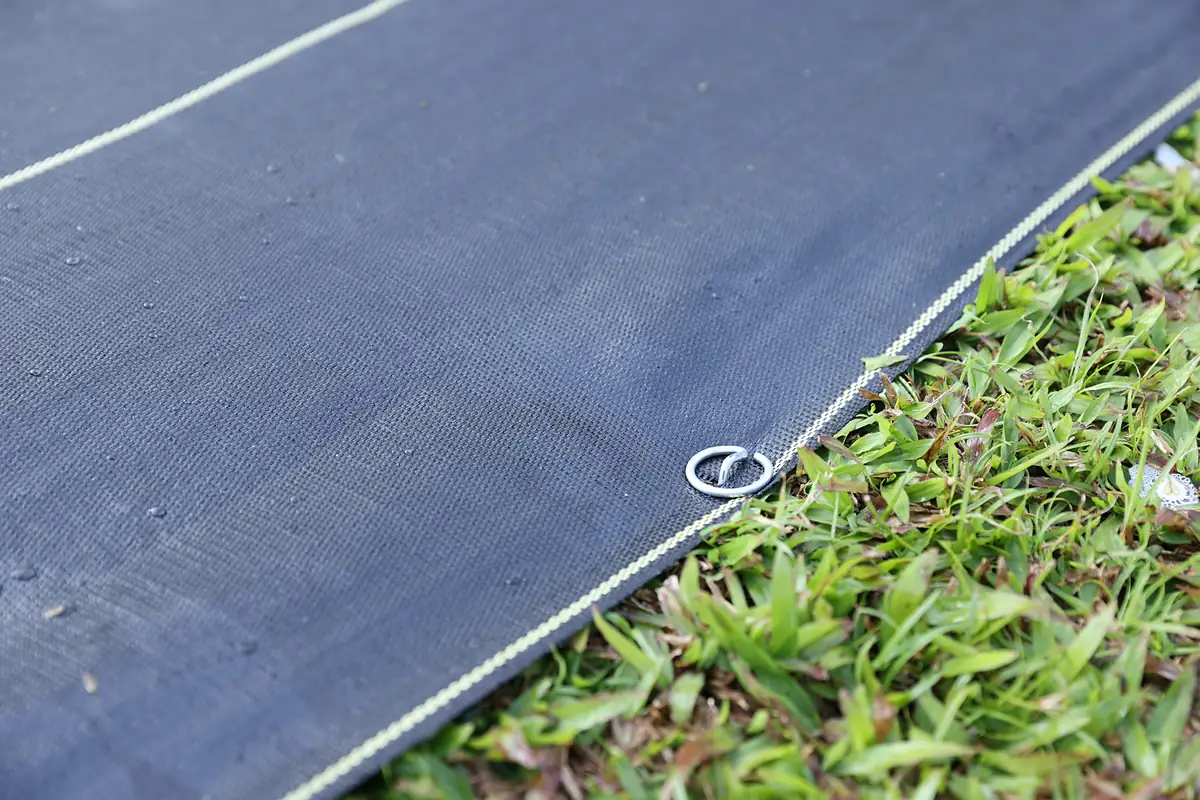
- Overlap the seams and pin every edge down.
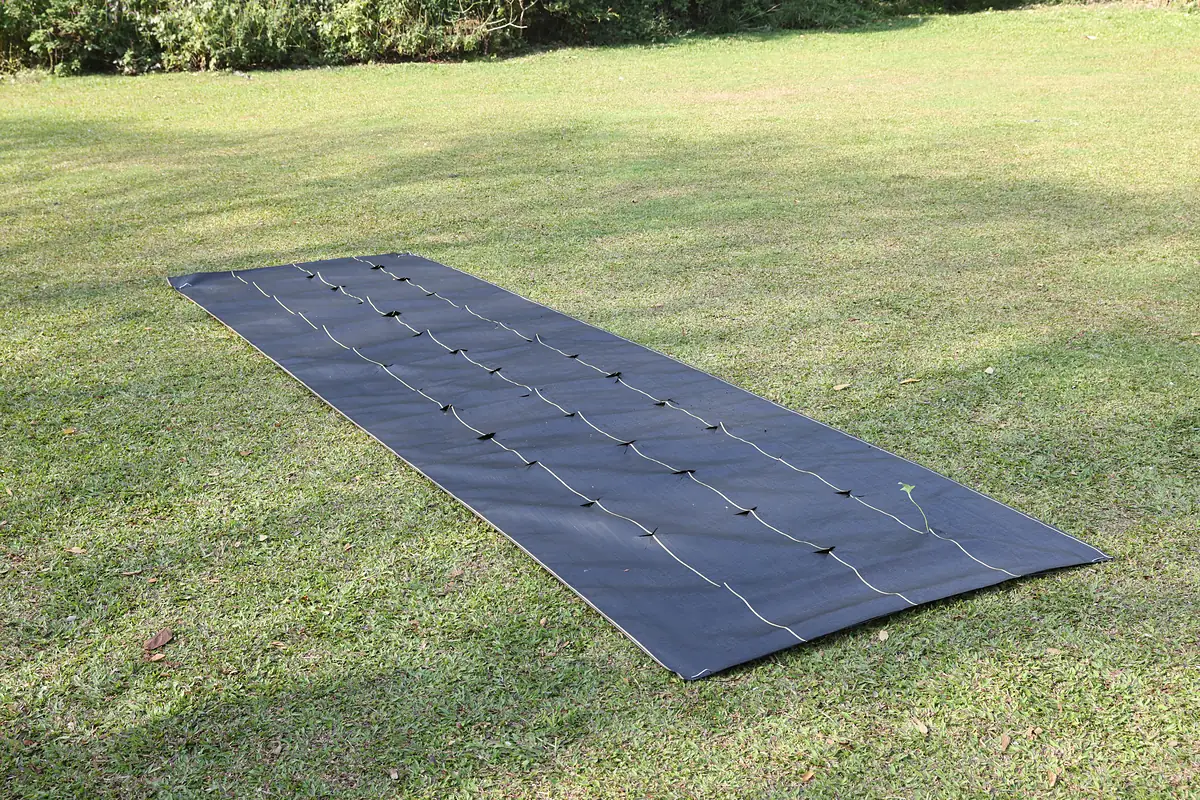
- Cut an X for each plant and top the fabric with mulch.
How much fabric does your bed need?
Use the DOTDAY Fabric Calculator to work out how much fabric and overlap your bed needs.
What we recommend
Under mulch, the fabric's job is weed control and permeability, not load. A woven polypropylene weed barrier is designed for this.
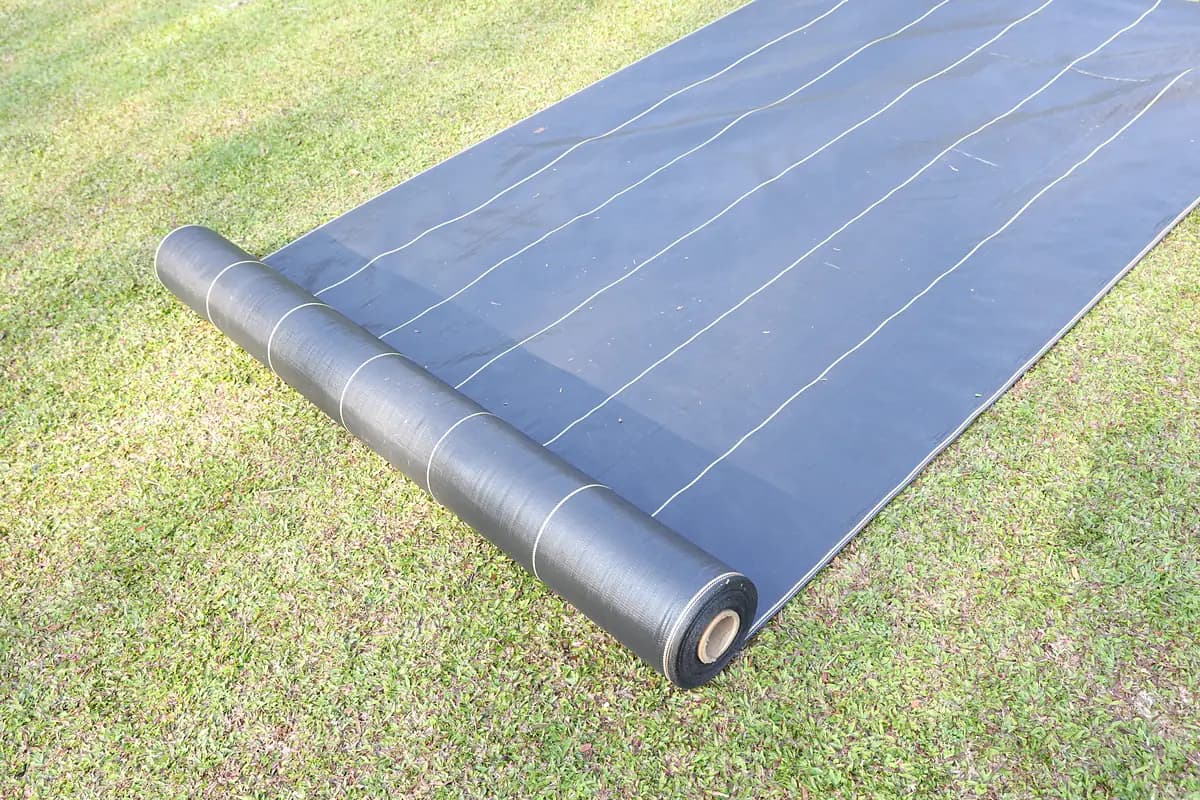
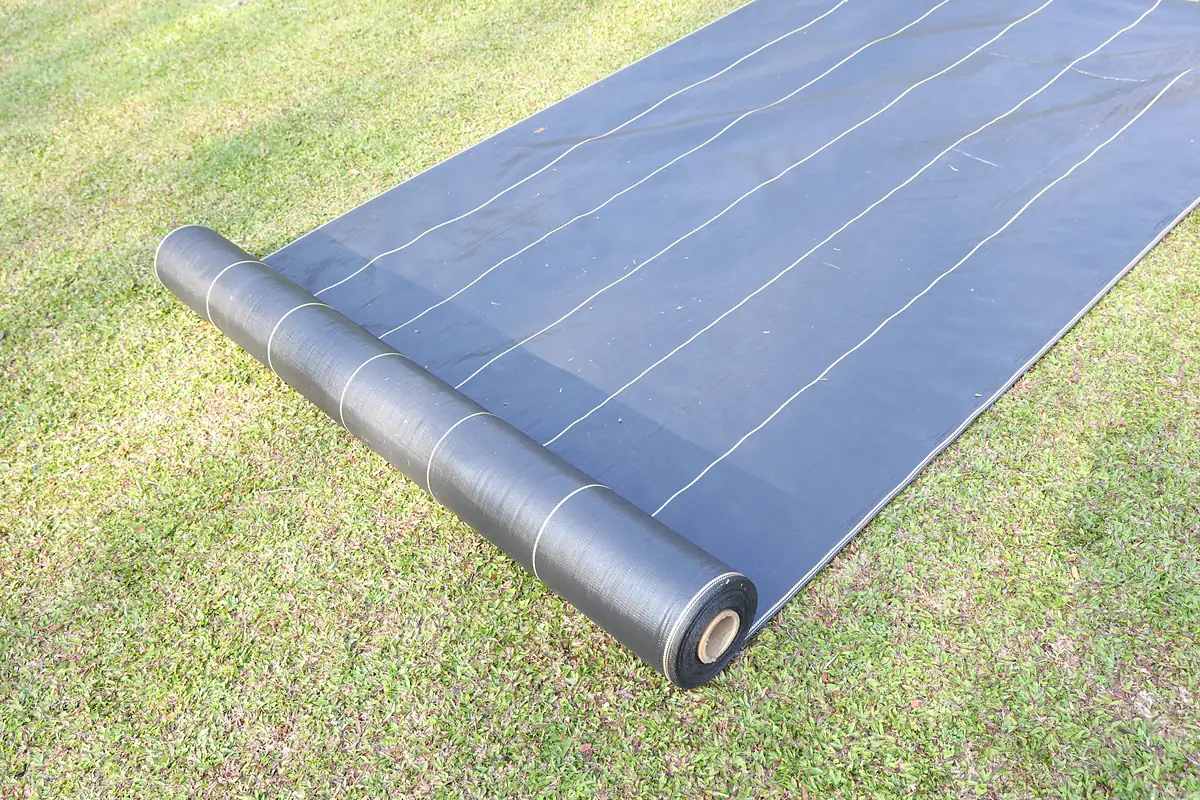
DOTDAY SHIELD is a 3.2 oz woven barrier built for gardens, farms, nurseries, and mulch beds. It blocks light to the soil while letting rain and irrigation pass through, and it's easy to cut for planting. On the September 2026 TDS it tests at 180 / 105 lb grab tensile (ASTM D4632) and 82 / 75 lb trapezoid tear (ASTM D4533), and it keeps 70% of its strength after 500 hours of UV exposure (ASTM G154). Printed 12 inch guide stripes make straight cuts and planting rows easier.
If the mulched area also gets heavy foot traffic, like a path through a bed, a heavier fabric like XBAR holds up better. And under gravel or rock instead of mulch, XBAR is the better choice.
DOTDAY doesn't sell mulch. Buy it locally, and use SHIELD as the layer underneath.
If you are choosing between fabric and sheet mulching, treat cardboard as a short-term bed reset and SHIELD as the lasting weed barrier under mulch. Trade buyers can request bulk pricing.
How to lay fabric under mulch
### 1. Clear the bed
Remove weeds and grass, including perennial weed roots. Anything left below will keep trying to grow.
### 2. Amend the soil first
Work in compost or other amendments now. It's much harder to improve the soil after the fabric is down.
### 3. Grade and smooth
Rake the bed smooth so the fabric lies flat.
### 4. Lay the fabric
Roll out SHIELD over the bed. Overlap seams generously and pin edges and seams. Tuck edges under edging or into a shallow trench.
### 5. Plant
Cut an X in the fabric for each plant, fold back the flaps, plant, and fold the flaps back around the base. Keep openings small.
### 6. Mulch
Spread mulch evenly over the fabric. For the full roll-out, overlap and edging steps, see our weed barrier fabric install guide.
How deep should mulch be over fabric?
A common target is 2 to 3 inches. That's enough to cover the fabric completely, protect it from sunlight, and hold moisture. Much deeper and you'll build up a thicker layer of decomposing material on top of the fabric, which gives weed seeds a place to root.
Keep mulch pulled back a little from plant stems and tree trunks.
The Fabric Calculator helps you order the right amount of fabric with overlap.
Mulch coverage chart over landscape fabric
Mulch is sold by the cubic yard (bulk) or in 2 cubic foot bags. One cubic yard is 27 cubic feet, which spreads over 324 square feet at 1 inch deep. Divide by your depth to get coverage:
| Mulch depth over fabric | 1 cubic yard covers | One 2 cu ft bag covers |
|---|---|---|
| 1 inch | 324 sq ft | 24 sq ft |
| 2 inches | 162 sq ft | 12 sq ft |
| 3 inches | 108 sq ft | 8 sq ft |
| 4 inches | 81 sq ft | 6 sq ft |
For a 10 x 20 ft shrub bed (200 sq ft) at 3 inches, that's about 1.9 cubic yards, or 25 bags. Round up a little for uneven ground. The DOTDAY Mulch Calculator does the math for any bed shape, and the fabric calculator sizes the roll underneath.
The one maintenance habit that matters
Over time, mulch on top of fabric breaks down into a thin layer of compost. Seeds that blow in land there and sprout. The fabric blocks weeds from below, but it can't stop weeds that root on top.
The fix is simple:
- Pull shallow weeds while they're small. Roots sit in the mulch, so they come out easily.
- Refresh mulch before it fully breaks down.
- Every few years, rake off old, broken-down mulch and replace it with fresh mulch rather than just piling more on top.
Types of mulch over fabric
| Mulch | Over fabric? | Notes |
|---|---|---|
| Shredded bark | Yes | Knits together, stays in place well |
| Wood chips | Yes | Good for paths and shrub beds |
| Pine straw | Yes | Light, can shift in wind and rain |
| Rubber mulch | Possible | Doesn't break down; use a durable fabric |
| Rock or gravel | Use a stone-rated fabric | XBAR is built for stone |
Common mistakes
- Skipping soil prep. Once fabric is down, amending the soil is harder.
- Big planting holes. Weeds come up around plants.
- Too much mulch. A thick layer of decomposing mulch on top becomes a seedbed.
- Fabric showing through. Sunlight breaks it down. Keep it covered.
- Plastic sheeting instead of fabric. Water and air can't reach the soil.
For more on weed control in beds, see our guide to landscape fabric for weed control.
Wrapping up
Fabric under mulch pays off in permanent beds; mulch alone suits beds you work often. DOTDAY publishes specs for every fabric we sell, so you can check the fit before you order.
SHIELD is the fabric for permanent beds
DOTDAY SHIELD is a 3.2 oz woven polypropylene weed barrier for beds, rows, borders, and shrub strips. Check live sizes on the product page.
Shop SHIELDThree fabrics. One simple rule.
Use the right fabric for the right ground condition.
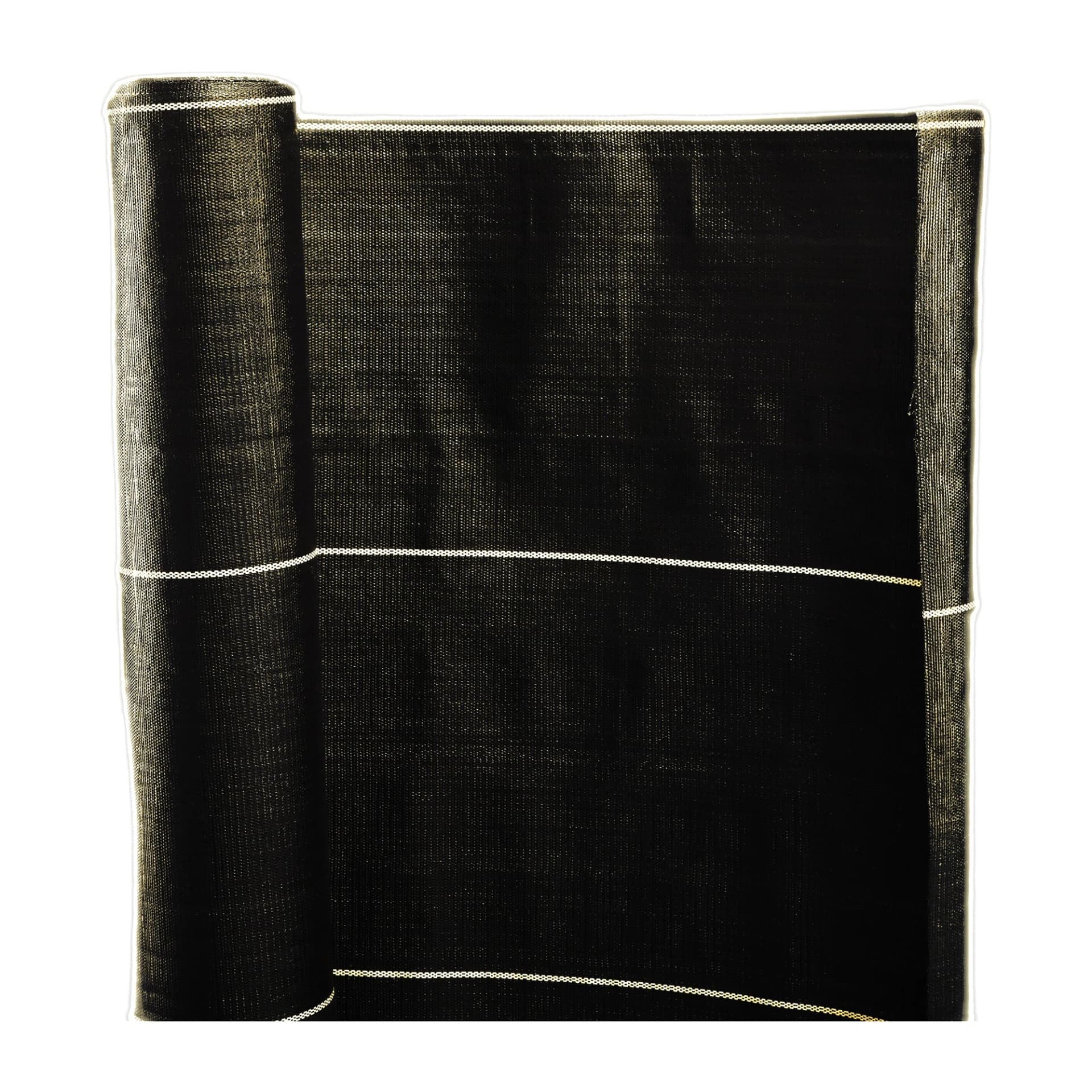
SHIELD
Woven polypropylene weed barrier built to suppress weeds while letting water and air through.
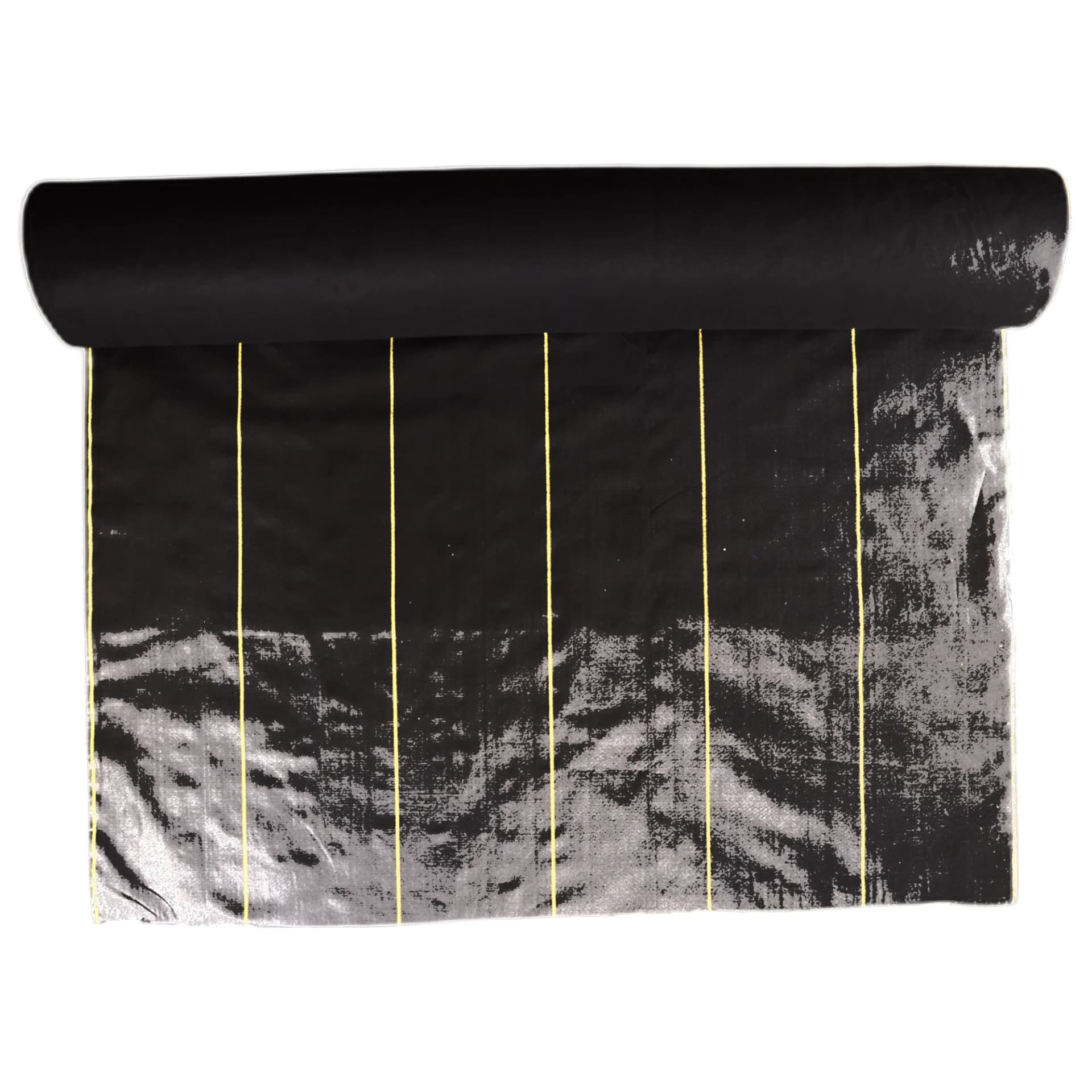
XBAR
Heavy-duty woven hybrid engineered for load and separation under hard surfaces.
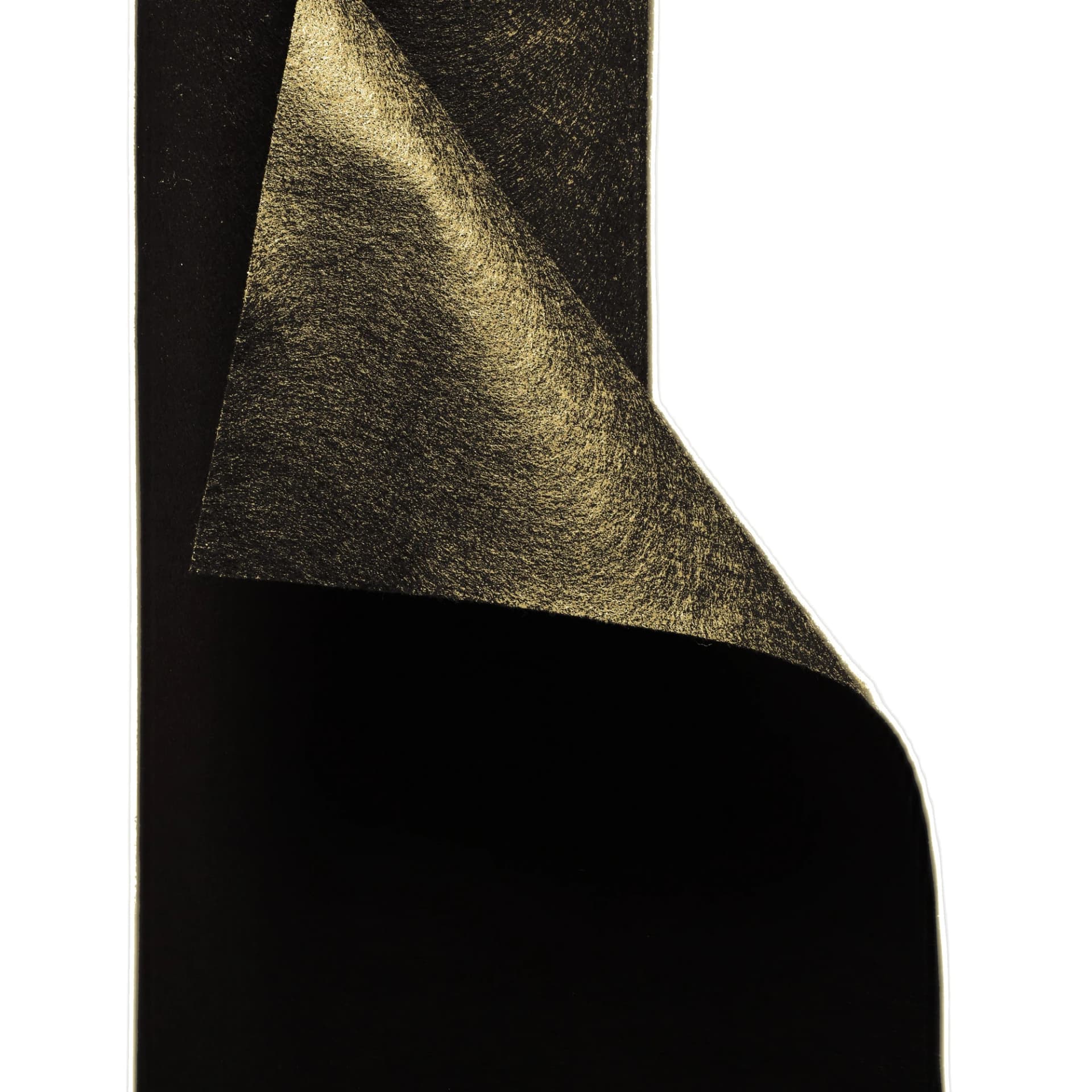
TERRA
Non-woven geotextile designed for drainage, filtration, and soil separation.