
Filter fabric is the layer that lets water through and keeps soil out. Wrap it around drain rock and a French drain keeps moving water. Skip it, or use the wrong kind, and silt moves into the stone until the drain stops draining.
At DOTDAY, we make non-woven geotextile for exactly this job. Here's what filter fabric is, which type belongs in a drain, and how to pick the right weight.
What filter fabric is
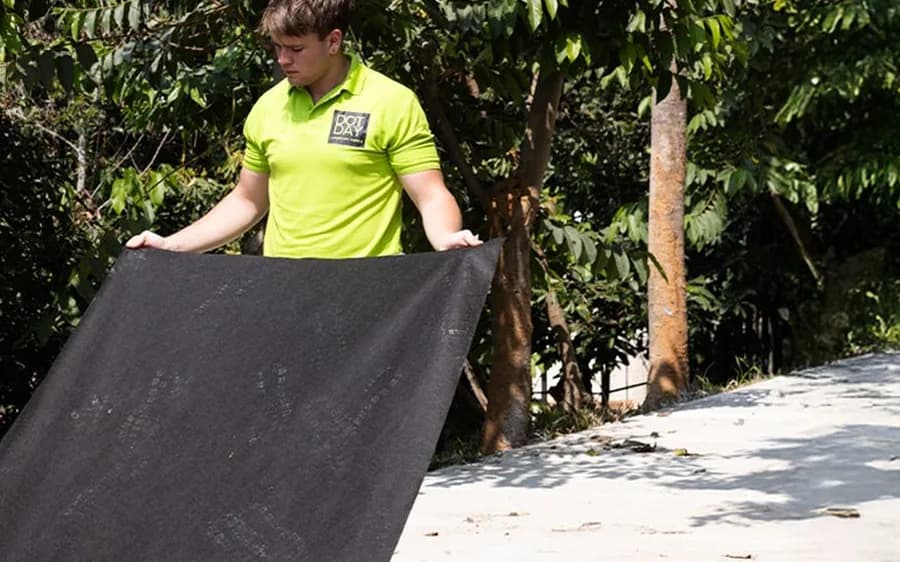
"Filter fabric" is the everyday name for a non-woven geotextile used as a filter. It is a needle-punched polypropylene fabric, felt-like and flexible, that does three things at once:
- Filters: water passes through while soil particles stay put.
- Separates: soil stays on one side and stone on the other.
- Drains: water moves through the fabric in every direction, not just straight down.
Typical spots are wrapped around drain rock, lining French drains and dry wells, and between stone and soil behind a wall. It is not a weed barrier, and it is not a pipe. It is the barrier that keeps the drainage zone open.
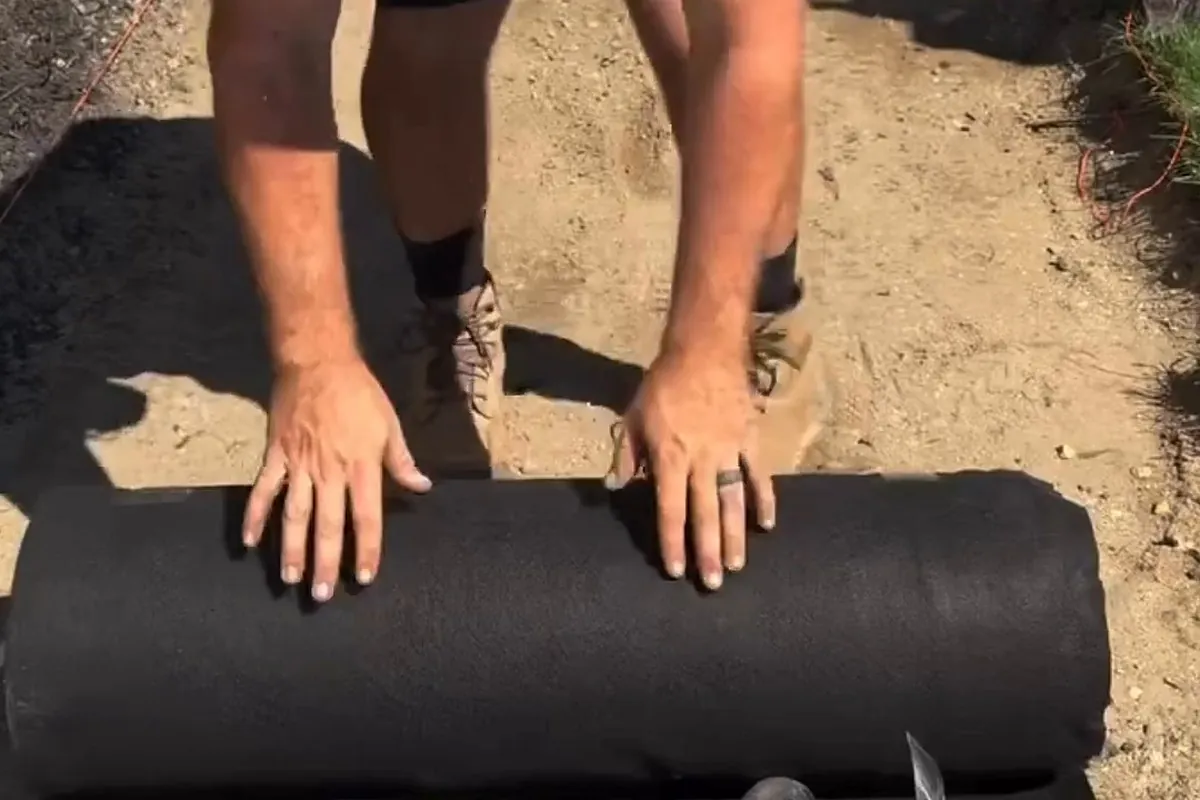
Filter fabric vs landscape fabric
Garden weed-block fabric and filter fabric can look alike on a shelf, but they are built for different jobs. Woven landscape fabric is made of flat tapes woven into a grid. It sheds soil and slows water, and fine silt clogs the weave. In a drain, that means the fabric plugs and water backs up.
Never use woven fabric in a drain. Use a non-woven geotextile. Its tangled fibers form a random, three-dimensional filter that keeps flowing when silt collects. For the full comparison, see woven vs non-woven landscape fabric.
French drain filter fabric
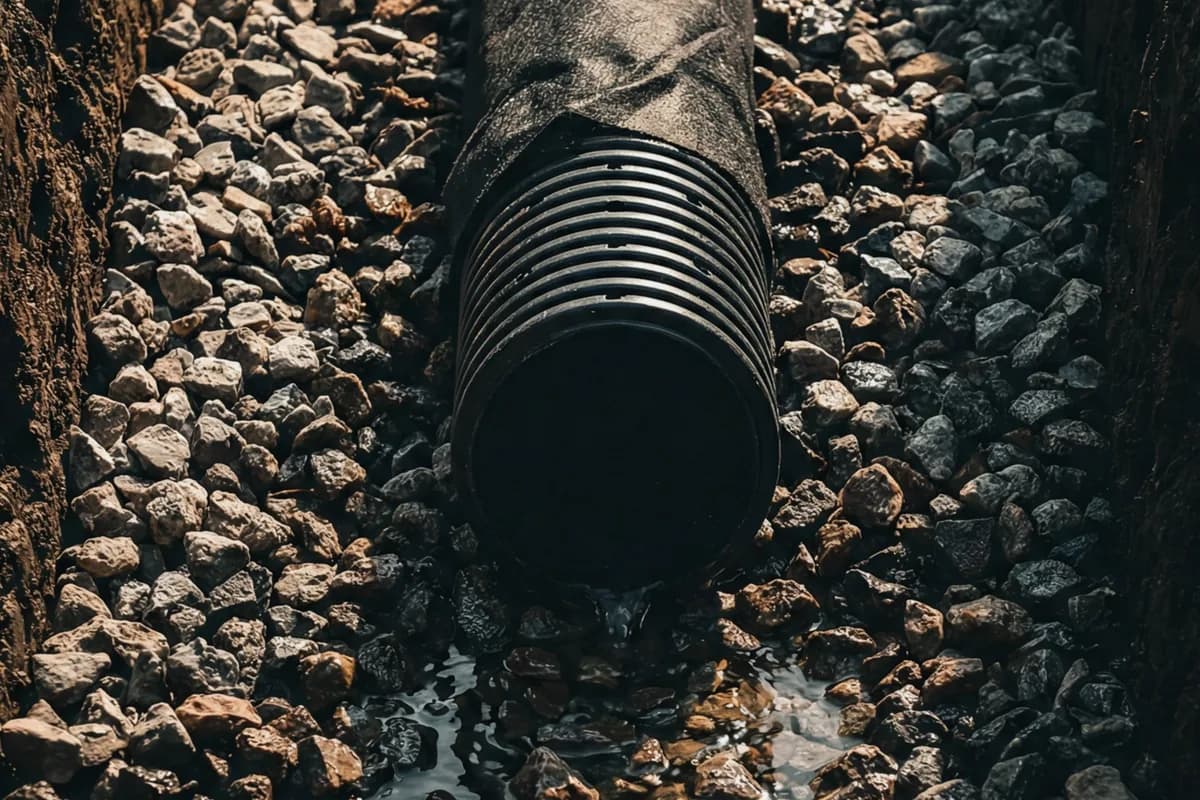
A French drain is a trench of clean stone with a perforated pipe, and the fabric is what protects it. The classic layout:
- 1DigDig the trench with a steady slope toward the outlet.
- 2LineLine the trench with filter fabric, leaving generous overhang on both sides.
- 3Stone and pipeAdd a few inches of clean stone, then the perforated pipe with holes facing down.
- 4FillFill with stone to near the top.
- 5Fold and coverFold the overhang across the top, overlapping it, and cover with soil, sod, or a thin stone layer.
That fold-over is what earns the name "wrap." Soil can't wash down into the stone from the top or in from the sides. Our French drain fabric page shows this in more detail.
Geotextile filter fabric: weight and AOS
Two numbers matter when you choose a geotextile filter fabric: weight, which tells you how tough it is, and AOS, which tells you how fine the openings are. AOS stands for apparent opening size, measured under ASTM D4751. Water flow is measured under ASTM D4491. Here are the TERRA numbers from our technical data sheet:
| TERRA weight | AOS | Water flow |
|---|---|---|
| 4 oz | 0.20 mm | 4,800 l/min/m² |
| 6 oz | 0.20 mm | 4,000 l/min/m² |
| 8 oz | 0.16 mm | 3,300 l/min/m² |
Strength climbs with weight too. Grab tensile runs 100, 160, and 205 lb across the three weights. CBR puncture runs 300, 400, and 500 lb. The pattern is simple: the heavier fabric has a finer opening and more puncture strength, and it moves a bit less water. All three move plenty for a residential drain. Grab the full sheet from our technical data sheets.
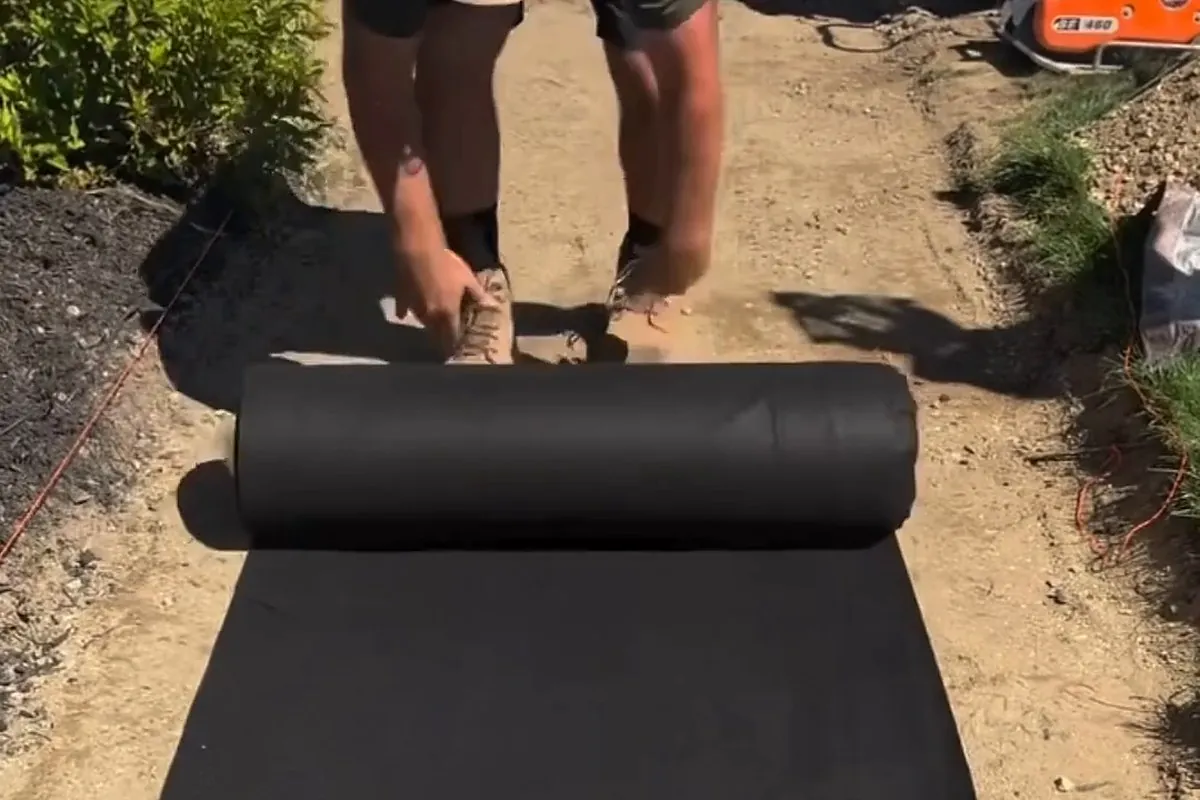
Match the weight to the stone. Rounded pea gravel is easy on fabric, so a lighter weight works. Sharp crushed stone or heavy compaction calls for 8 oz.
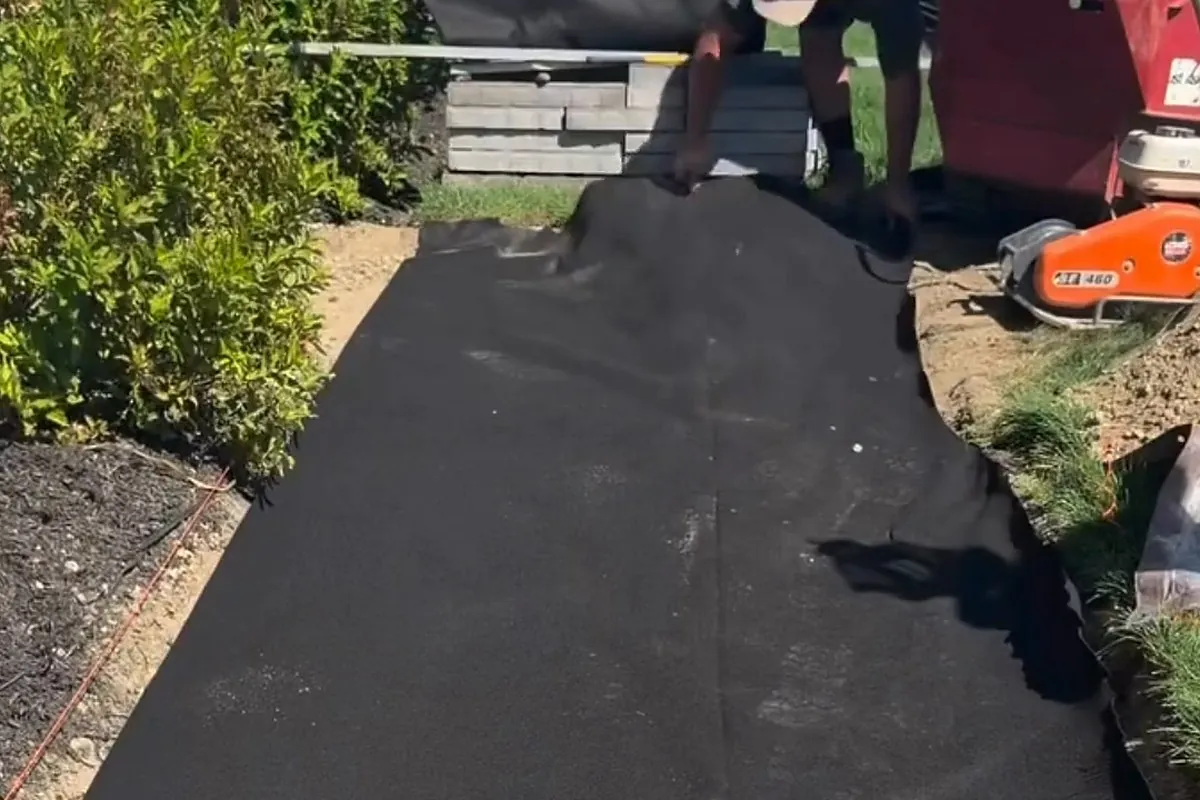
TERRA filter fabric going into a walkway excavation
Unroll the fabric flat across the excavation, then cover it with stone or fill.
How much fabric does your trench need?
Use the DOTDAY Fabric Calculator to work out how much fabric a trench needs, including overhang.
Filter fabric for drainage: wrap vs sock
Two ways to protect a perforated pipe, and they solve different problems:
| Feature | Fabric wrap | Pipe sock |
|---|---|---|
| What it is | Filter fabric that lines the whole trench and wraps the stone and pipe | A thin knit sleeve on the pipe itself |
| What it protects | The stone bed, so the entire drain stays open | Only the slots, so silt can still fill the stone around it |
A sock is not a substitute for a wrap. If silt is getting into the stone, a sock on the pipe won't help, because the stone bed fills first. For most yard drains, we recommend the wrap. On soils with a lot of fine silt or clay, some builders use both.
Where else filter fabric goes
The same idea works anywhere stone meets soil and water needs to move:
- Dry wells and downspout pits: line the pit so silt doesn't seal the stone.
- Behind retaining walls: separate the drainage stone from the retained soil. Read retaining wall fabric for the layout.
- Under rock, swales, and dry creek beds: keep soil from washing up through the stone.
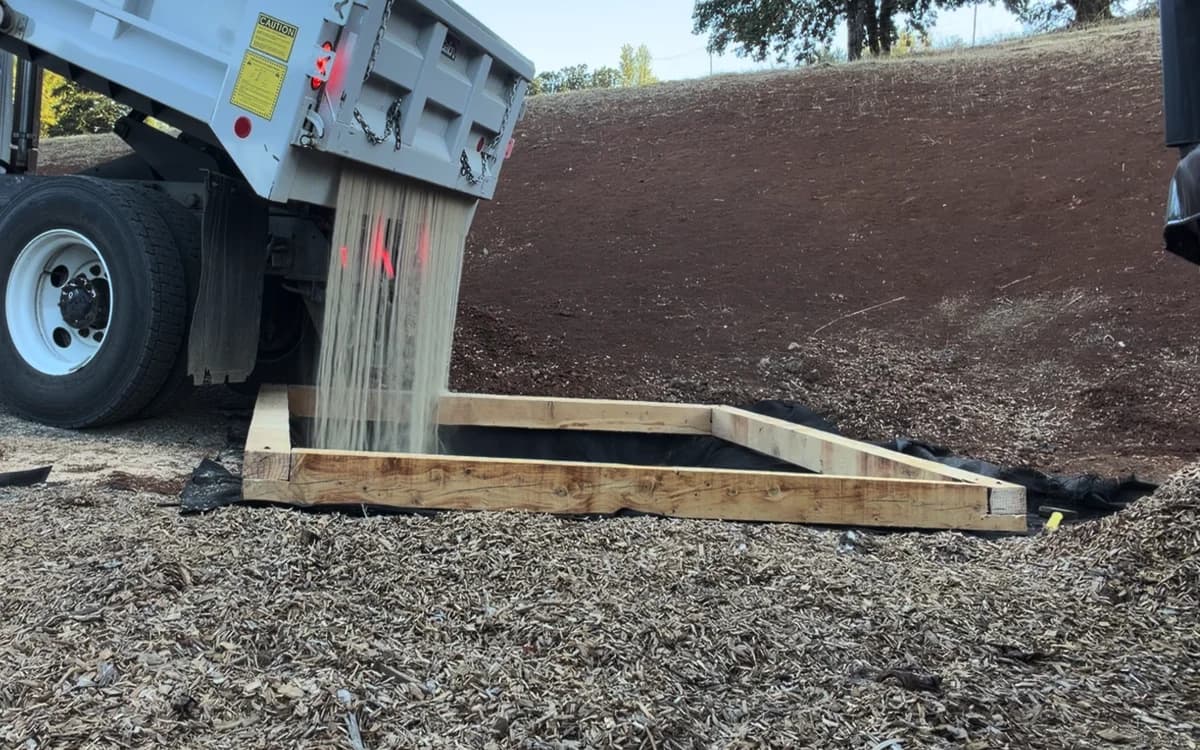
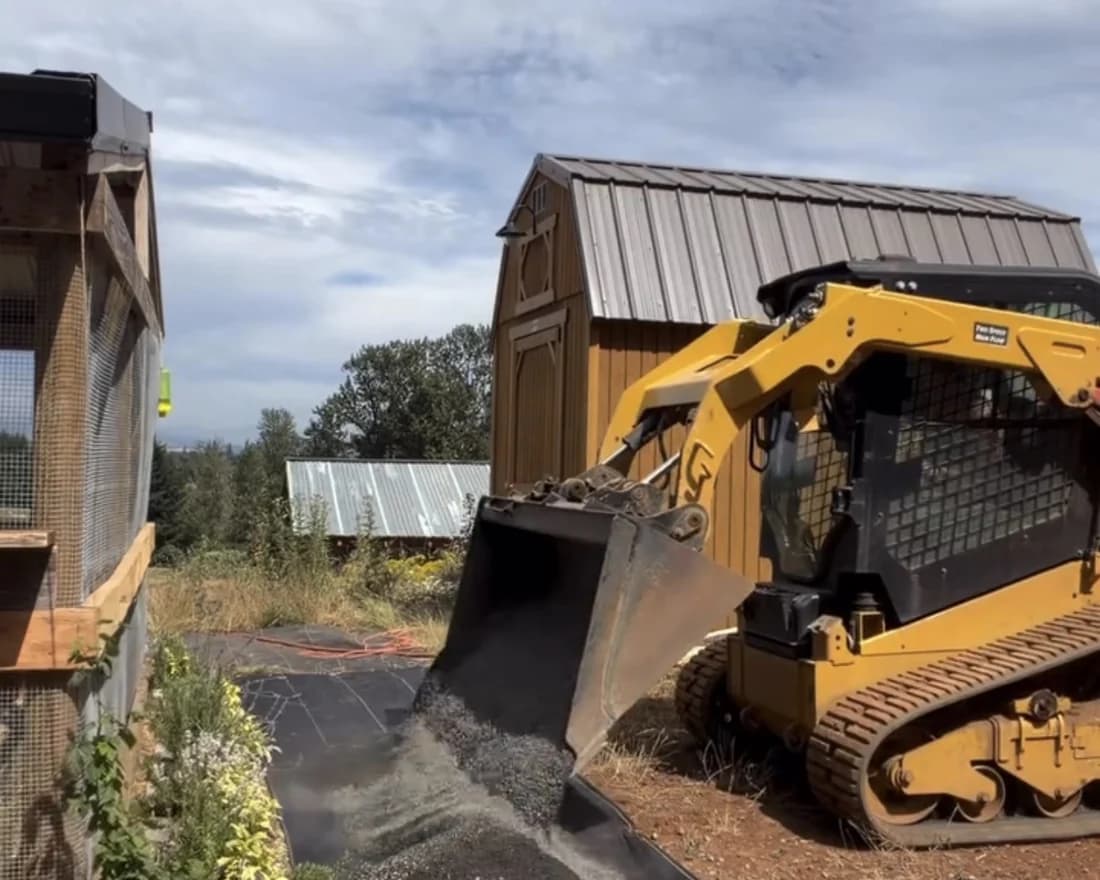
- Under gravel bases: separate base stone from soft subsoil, as in the photo below.
For taller walls that also use geogrid, geogrid vs geotextile explains which layer does which job.
What we recommend
For filter fabric in a French drain, dry well, or wall drainage layer, we recommend TERRA, our black, felt-like, needle-punched non-woven geotextile. It has no guide lines because it is not a weed barrier; it is a filter. Choose 8 oz for sharp crushed stone and heavy loads, 4 oz for light drainage with rounded gravel, and check the product page for the sizes in stock today.
Keep the woven fabrics for weed control. For garden beds and gravel paths we make SHIELD and XBAR, but neither belongs inside a drain.
Landscapers and installers buying for several jobs can request bulk pricing. To work out how much fabric a trench needs, including overhang, use the Fabric Calculator.
Common mistakes
- Using woven landscape fabric in a drain. Silt clogs it.
- Skipping the overhang. Without enough to fold over the top, the wrap is open.
- Using dirty stone. Fines in the stone clog the fabric from inside.
- Relying on a sock alone. It doesn't protect the stone bed.
- Puncturing the fabric. Match the weight to the stone, and lay it smooth.
Wrapping up
Filter fabric is a small line item that decides whether a drain keeps working. Pick a non-woven, wrap the stone, leave enough overhang, and match the weight to the rock. At DOTDAY, we'd rather you install the right fabric once than dig the drain twice.
Planning a drain or wall? Use the DOTDAY Fabric Calculator to size your order, or try the Fabric Finder if you're still choosing a fabric.
TERRA for French drains, dry wells, and wall drainage
Non-woven needle-punched geotextile in 4, 6, and 8 oz. Check the product page for the sizes in stock today.
Shop TERRAThree fabrics. One simple rule.
Use the right fabric for the right ground condition.
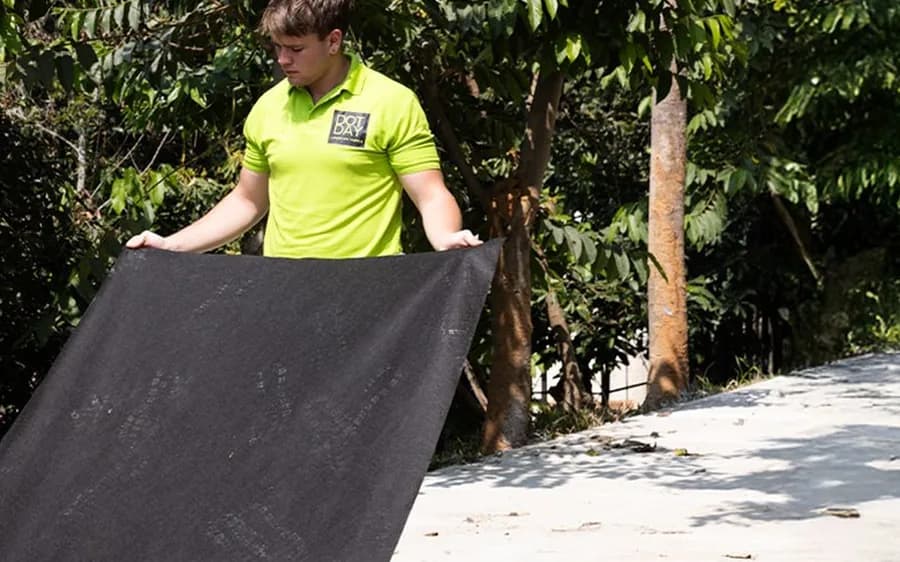
TERRA
Non-woven geotextile designed for drainage, filtration, and soil separation.
SHIELD
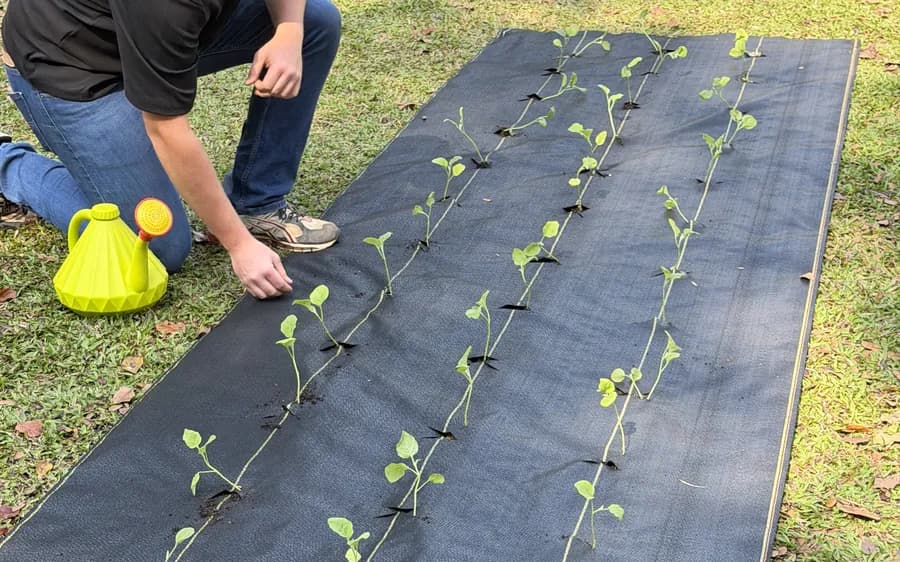
Woven polypropylene weed barrier built to suppress weeds while letting water and air through.
XBAR
Heavy-duty woven hybrid engineered for load and separation under hard surfaces.