
Geogrid and geotextile both go into the ground, both come on rolls, and both show up on retaining wall and driveway plans. That's where the similarities end. They do very different jobs, and substituting one for the other is a common and costly mistake.
Here's a plain-English comparison of geogrid vs geotextile, where each belongs, and when a project needs both.
At DOTDAY, we make geotextile fabric, not geogrid, so we'll be clear about where our products fit and where they don't.
What geotextile is
A geotextile is a permeable fabric. It can be woven or non-woven. Its main jobs are:
- Separation: keeping two materials apart, like gravel and soft soil.
- Filtration: letting water through while holding soil particles back.
- Drainage: moving water through or along the fabric.
- Protection and stabilization: cushioning and spreading load in some applications.
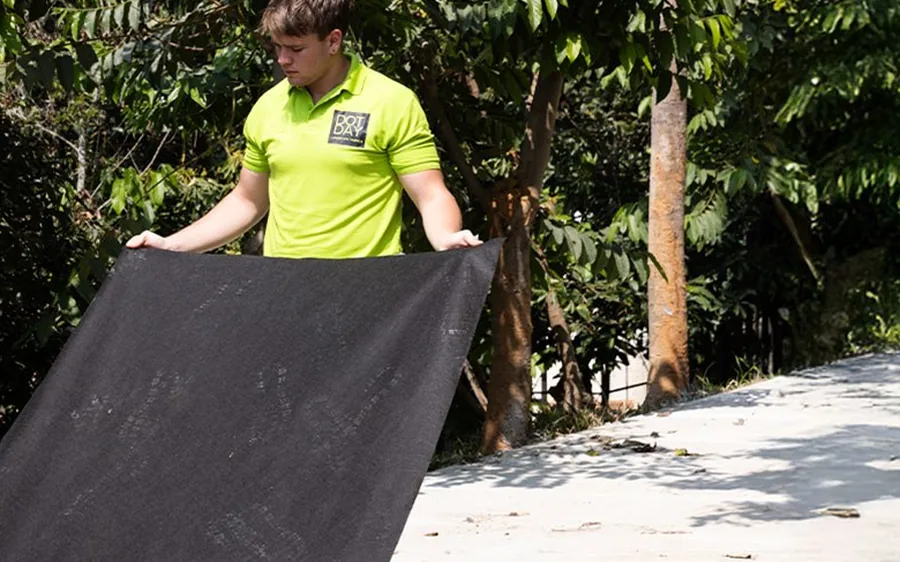
A non-woven needle-punched geotextile, like DOTDAY TERRA, is felt-like and flexible. Water moves through it in every direction, and it conforms to the shape of a trench or slope. For how woven and non-woven fabrics differ, see woven vs non-woven landscape fabric.
What geogrid is
A geogrid is a stiff, open grid, usually made from polymer, with large openings between ribs. It looks more like a mesh or netting than a fabric. Its main job is:
- Reinforcement: interlocking with soil or aggregate to add tensile strength and resist movement.
Aggregate locks into the openings of the grid. That confinement helps a soil mass or base layer act as a stronger unit.
Geogrid does not filter. Water and soil pass straight through its openings.
Geogrid vs geotextile at a glance
| Feature | Geotextile | Geogrid |
|---|---|---|
| Looks like | Fabric (woven or felt-like) | Open, stiff grid |
| Main job | Separation, filtration, drainage | Reinforcement, confinement |
| Filters out soil particles? | Yes | No |
| Water passes through? | Yes, filtered | Yes, freely (large openings) |
| Typical uses | Drains, walls, under gravel, erosion under rock | Taller retaining walls, weak-soil bases, steep slopes |
| Replaces the other? | No | No |
In retaining walls
This is where the two most often appear together.
- Geotextile separates the drainage stone behind the wall from the retained soil, so soil doesn't clog the drainage zone. See our guide to retaining wall fabric.
- Geogrid is laid in horizontal layers into the backfill behind taller segmental walls, tying the soil mass to the wall so the whole structure resists the pressure of the soil behind it.
Short garden walls often don't need geogrid, but they still benefit from fabric around the drainage zone. Taller walls, walls with slopes or driveways above, and walls near structures often need geogrid as part of an engineered design. The block manufacturer and local code determine when geogrid is required and how it's spaced.
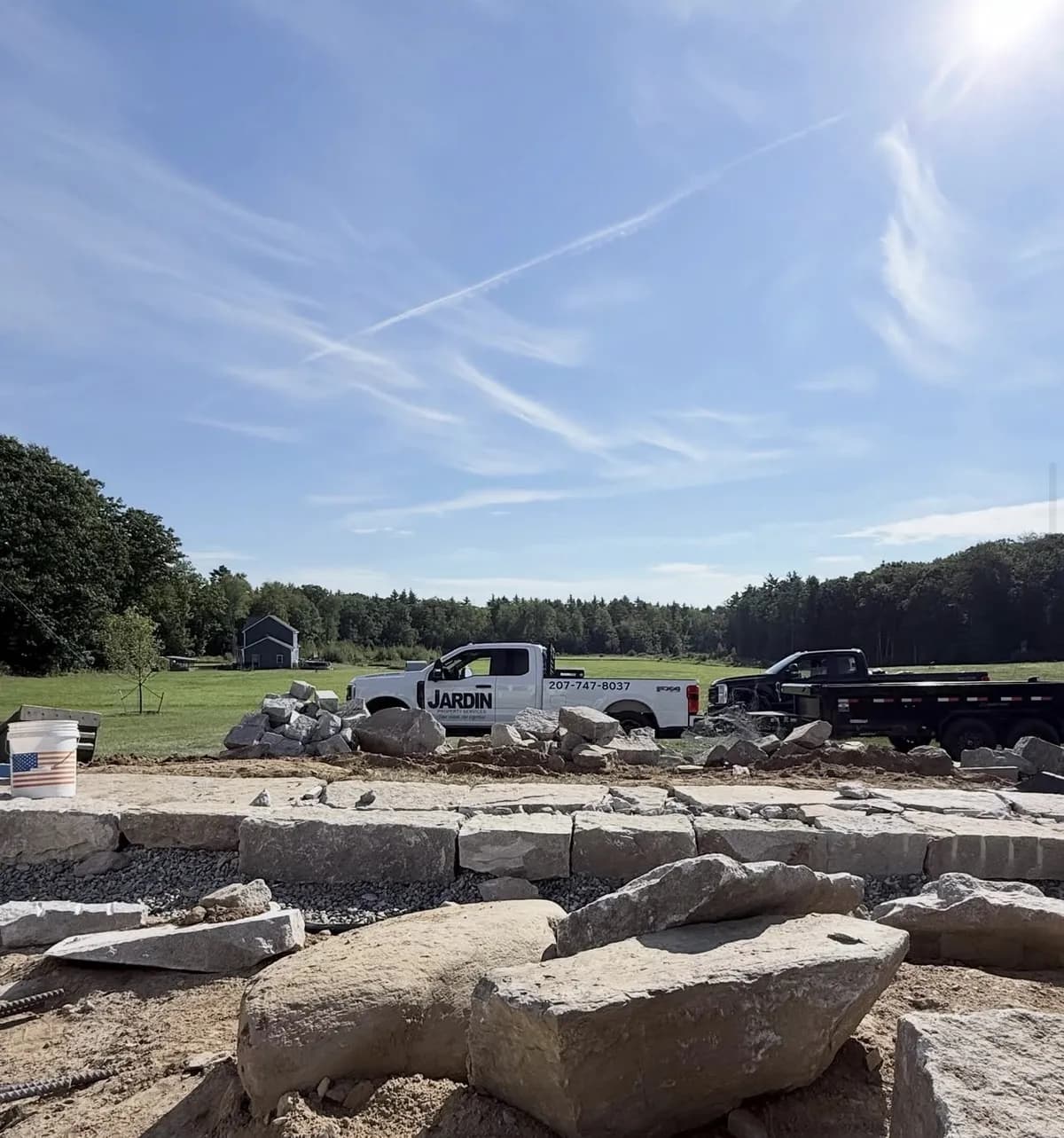
In driveways and roads
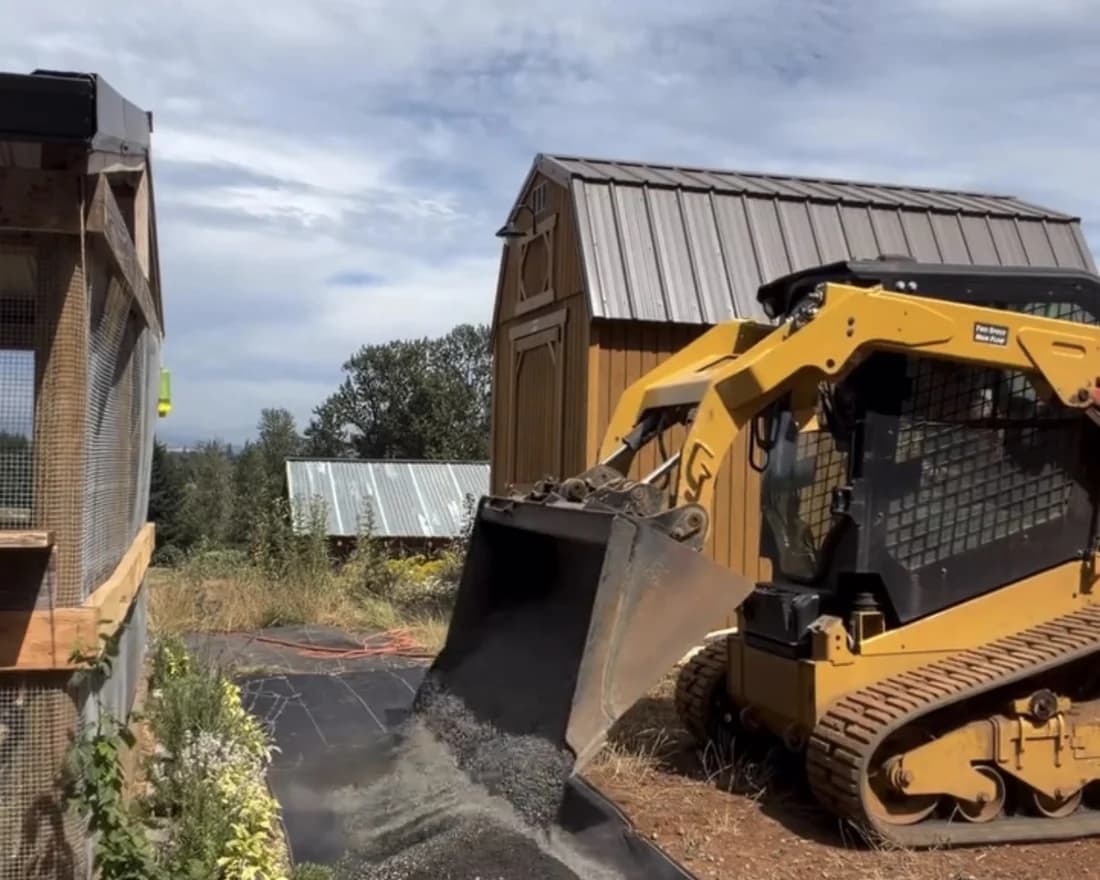
- Geotextile separates aggregate from soft soil so the base doesn't sink and mix. On most residential and farm projects, this is the main fabric job. Our guide to the best fabric for gravel driveways covers that choice in detail.
- Geogrid is sometimes added over very weak soils to confine the aggregate and improve load distribution. It's more common on engineered projects.
On soft, wet ground, some designs use both: geotextile on the soil for separation, with geogrid above it to confine the base.
On slopes
- Geotextile goes under rock and riprap to keep soil from washing out between stones.
- Geogrid can reinforce the soil mass on steep, engineered slopes.
Signs of slope movement, like cracks or bulging, need an engineer.
Planning a driveway or wall?
Use the DOTDAY Fabric Calculator to size your order before you buy.
A closer look at wall drainage
Walls are where the two products most often get confused, so it's worth walking through the layout of a typical taller segmental wall that uses both:
- 1BlocksStacked with the setback the manufacturer specifies.
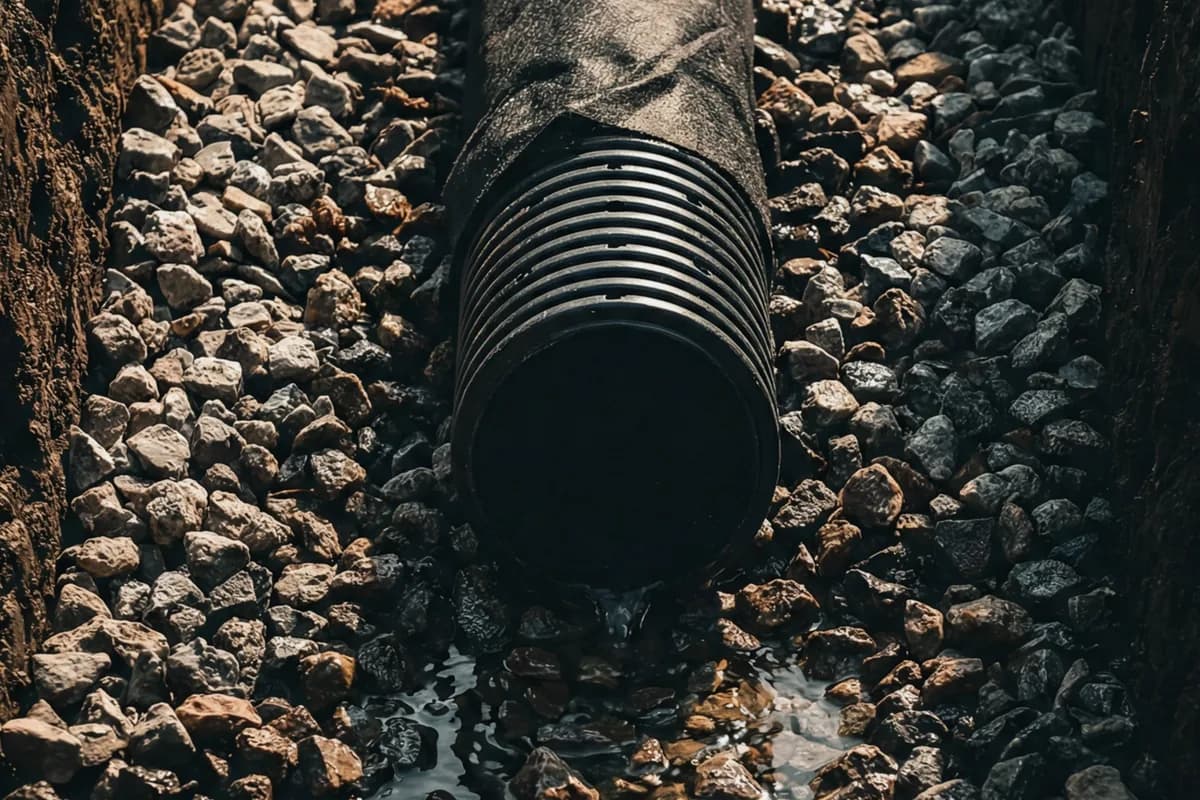
- 2Drainage stoneDirectly behind the blocks, with a perforated pipe at the base.
- 3GeotextileBetween the drainage stone and the retained soil, and folded over the top of the stone, so fines stay out of the drainage zone.
- 4Geogrid layersExtending horizontally from between block courses back into the compacted backfill, at the spacing and length the design calls for.
- 5Compacted backfillPlaced in lifts over each geogrid layer.
Each layer does its own job. Drop the geotextile and the drainage zone clogs over time, pressure builds, and the wall works harder than it was designed to. Drop the geogrid on a wall that needs it, and the soil mass behind the wall isn't tied in.
Which does your project need?
Ask what problem you're solving.
- Keeping soil out of stone, or stone out of soil? That's geotextile.
- Filtering water in a drain, wall, or dry well? That's geotextile.
- Holding back a tall wall of soil, or strengthening a weak base? That's geogrid, usually in an engineered design.
- Both? Taller walls and weak-soil roads often use both.
What we recommend
For the fabric side of a wall, drain, or slope, we recommend TERRA, our non-woven needle-punched geotextile. It comes in three weights: 4 oz for light drainage, 6 oz for French drains and most retaining walls, and 8 oz for sharp, angular stone and heavy compaction.
For a gravel driveway, the separation layer we recommend is XBAR, our 5 oz dual-layer fabric: a woven top that carries load and suppresses weeds, bonded to a needle-punched non-woven backing that adds bulk and puncture resistance. Our driveway fabric page shows real installs. The simple rule: XBAR under a residential gravel driveway, TERRA 8 oz when an engineered road base or drainage layer calls for a non-woven geotextile.
DOTDAY doesn't sell geogrid. When a project needs reinforcement, the geogrid comes from your block supplier or engineer's spec, and DOTDAY fabric is the separation and filtration layer that goes with it. Contractors speccing fabric across wall and site projects can request bulk pricing and check our technical data sheets.
Common mistakes
- Using geogrid as a filter. Soil passes straight through its openings.
- Using fabric instead of required geogrid. A tall wall can fail.
- Skipping fabric because geogrid is there. The drainage zone still clogs.
- Guessing on tall walls. Follow the block manufacturer's guide and local code, and get an engineer when required.
Wrapping up
Geogrid reinforces; geotextile separates and filters. Many projects need both. At DOTDAY, we'd rather you buy the right fabric once than the wrong one twice.
Planning a driveway or wall? Use the DOTDAY Fabric Calculator to size your order, or try the Fabric Finder if you're still choosing a fabric.
TERRA for the fabric side of a wall, drain, or slope
Non-woven needle-punched geotextile in 4, 6, and 8 oz. Check roll sizes and pick the weight for your job.
Shop TERRAThree fabrics. One simple rule.
Use the right fabric for the right ground condition.
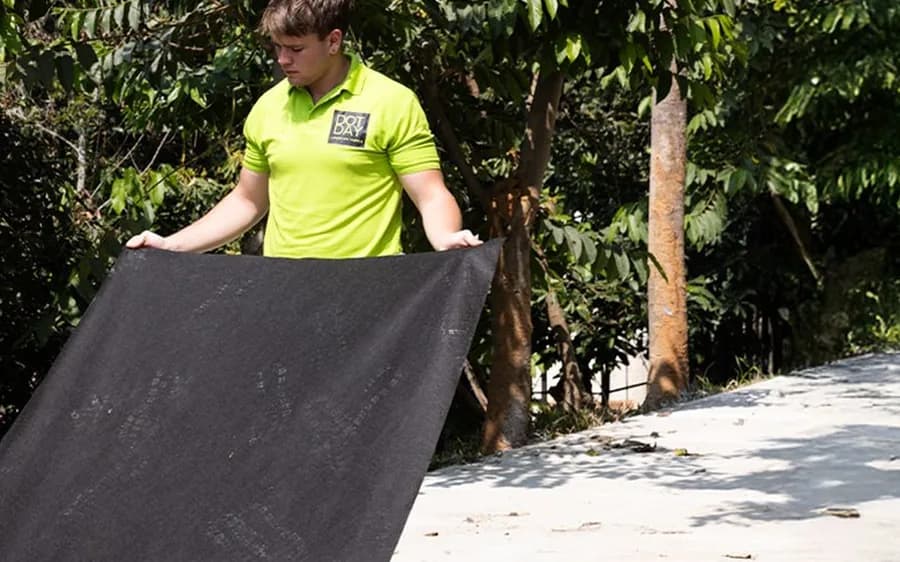
TERRA
Non-woven geotextile designed for drainage, filtration, and soil separation.
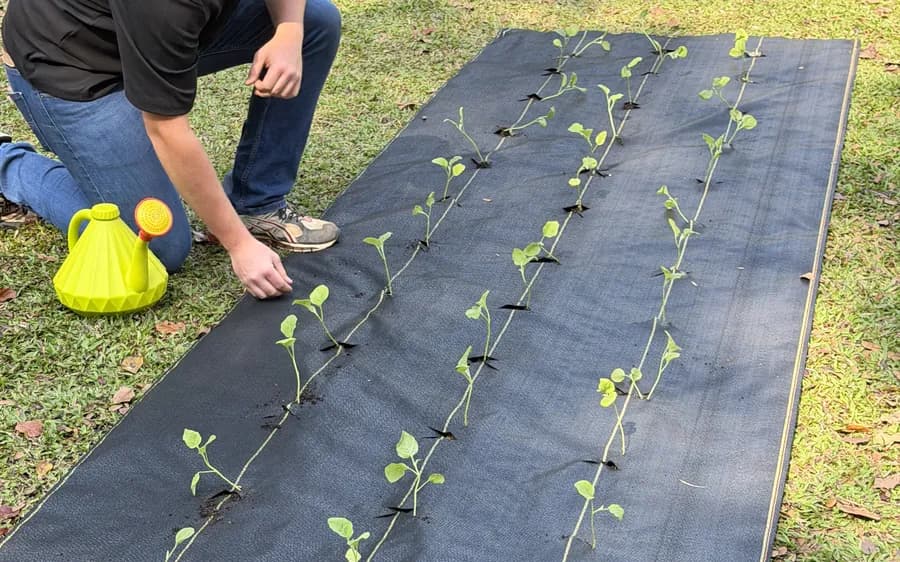
SHIELD
Woven polypropylene weed barrier built to suppress weeds while letting water and air through.
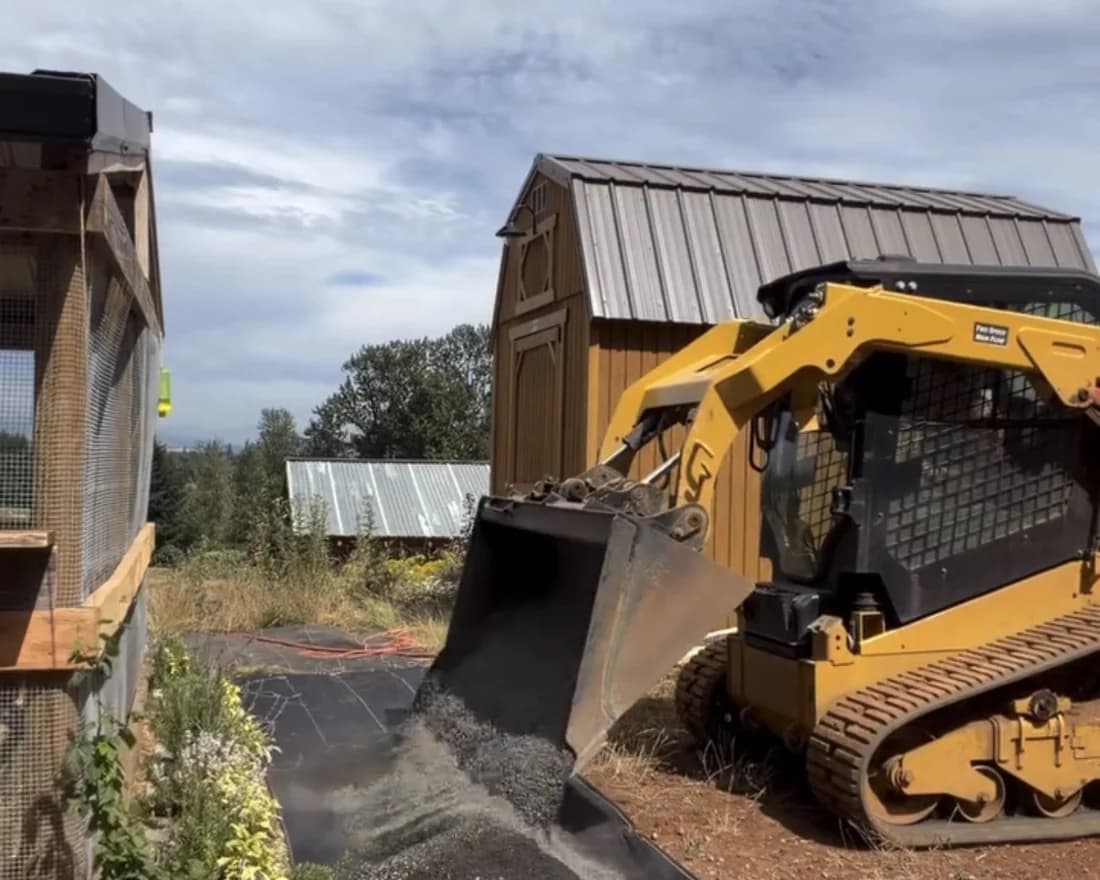
XBAR
Heavy-duty woven hybrid engineered for load and separation under hard surfaces.