
A bare slope loses soil every time it rains. Water picks up loose particles, carves small channels, and carries dirt down onto your patio, driveway, or neighbor's yard. Over time, those small channels become gullies.
Shop for erosion control fabric and you'll find two very different kinds of products sold under similar names. On slopes, picking the right one depends on whether you're trying to grow plants or armor the grade with stone.
At DOTDAY, we sell the geotextile that goes under stone on slopes, so this guide is clear about which products we carry and which we don't.
Erosion control fabric: blanket vs geotextile
### Erosion control blankets: for slopes you want to plant
Erosion control blankets are made from straw, coir (coconut fiber), wood fiber, or similar materials, often held together with netting. You lay them over seeded soil on a slope. They slow down rain and runoff, hold seed and soil in place, and give grass or ground cover time to establish. Many are designed to break down as the plants take over.
Use a blanket when the long-term plan is vegetation holding the slope.
### Non-woven geotextile: for slopes you armor with stone
A non-woven geotextile is a durable, permeable fabric laid under stone: rock, riprap, or gravel. It doesn't hold the slope on its own. Its job is to separate and filter: water passes through, but soil stays in place under the rock instead of washing out between the stones.
Use geotextile when the long-term plan is rock protecting the slope.
| Feature | Erosion control blanket | Non-woven geotextile |
|---|---|---|
| Purpose | Help vegetation establish | Keep soil under rock from washing out |
| Covered by | Nothing (plants grow through) | Rock, riprap, or gravel |
| Lifespan | Often designed to break down | Long-term, when covered |
| Left exposed to sun? | Designed for it | No, cover it |
| Typical use | Seeded banks, new grading | Rock slopes, swales, outlets, channels |
Where geotextile fits on a slope
DOTDAY TERRA is a non-woven needle-punched geotextile built for drainage, filtration, soil separation, and erosion control. On sloped ground, that looks like:
- Under rock on a steep bank where plants won't establish.
- Lining a swale or channel that carries runoff, under stone.
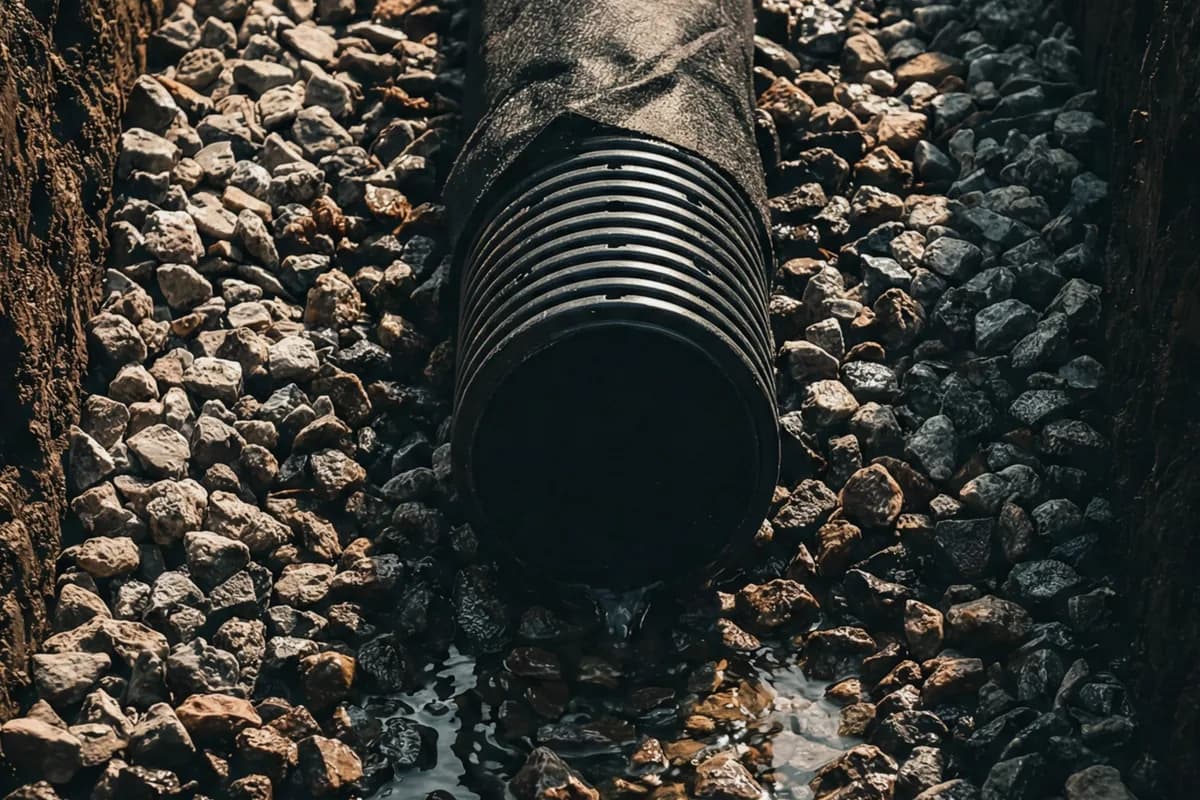
- At pipe and downspout outlets, under rock, where water hits the ground hard.
- Behind retaining walls that terrace a slope. See our guide to retaining wall fabric.
Without fabric, water moving through rock picks up the soil beneath it. The rock slowly settles into the holes it leaves, and the slope keeps eroding under the stone.
Choosing a TERRA weight for slopes
DOTDAY TERRA is needle-punched non-woven geotextile in 4, 6, and 8 oz. Use 4 oz under light rock on mild slopes, 6 oz for most residential rock armoring, and 8 oz under sharp riprap or heavy placement. Grab tensile runs 100, 160, and 205 lb across those weights. CBR puncture runs 300, 400, and 500 lb. See the thickness chart and technical data sheets for the full rows.
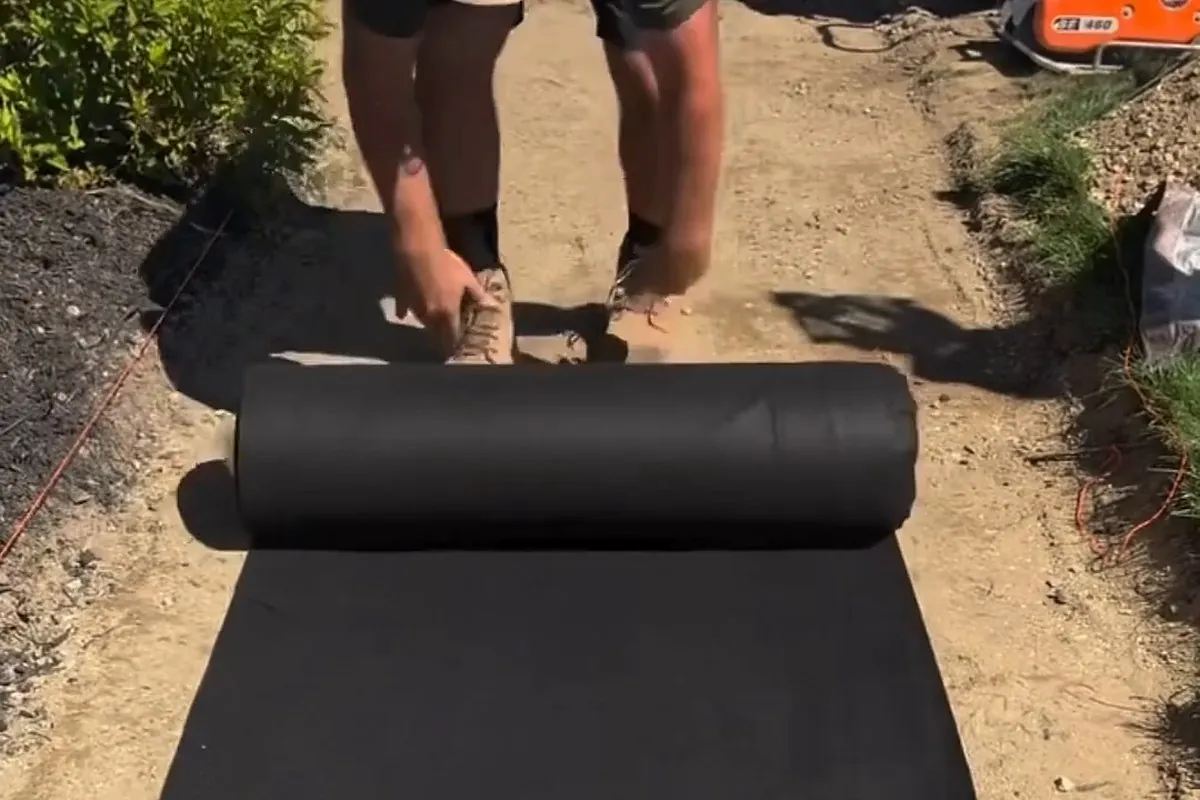
How to install geotextile under rock on a slope
- Grade a smooth slope and remove sharp roots or debris.
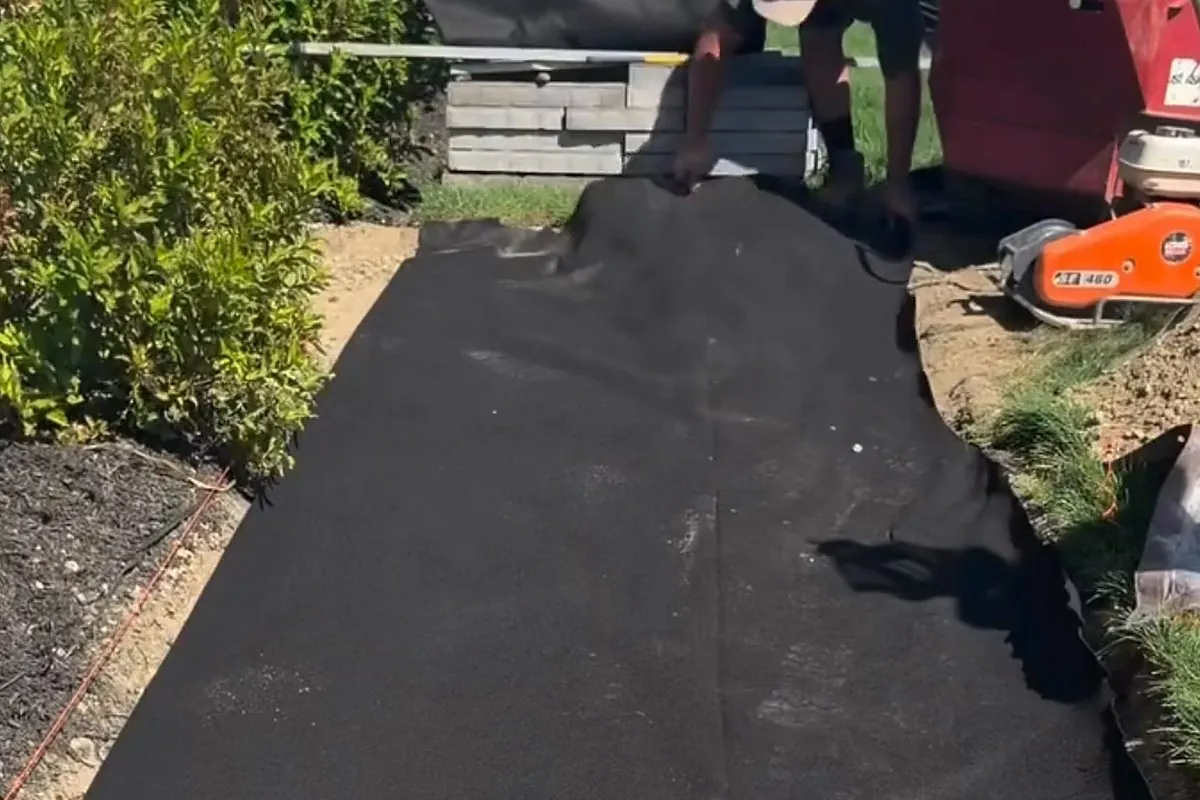
- Roll non-woven geotextile up the slope, not down, so overlaps shed water.
- Overlap seams at least 12 inches on slopes, more on steep grades.
- Pin or weight the fabric so it cannot slide while you place stone.
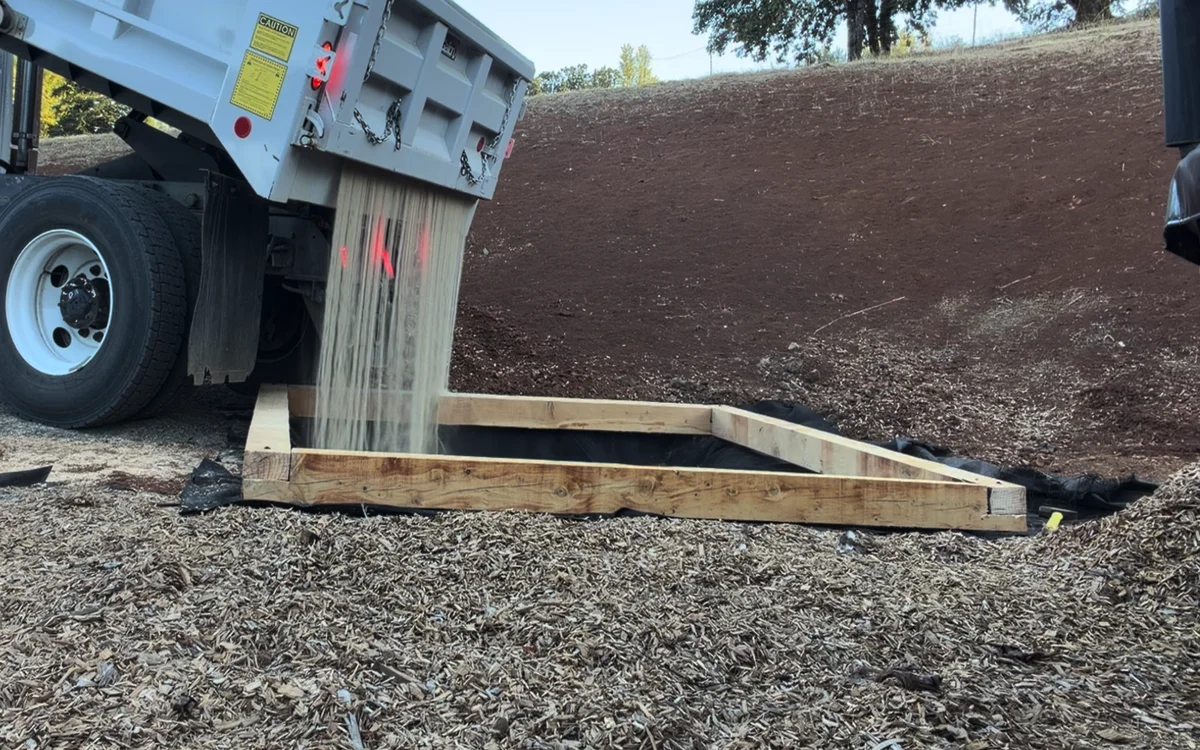
- Place rock from the bottom up. Avoid dropping sharp riprap from height onto thin fabric.
- Keep the fabric covered. Exposed non-woven ages faster in the sun.
For soft toes or wet bases, fix drainage first. Our French drain fabric page and retaining wall fabric guide cover related layouts, and filter fabric explains how TERRA holds soil fines back while water passes.
When a slope needs more than fabric
Fabric and stone handle surface erosion. They don't fix a slope that is moving. Call a civil or geotechnical engineer if you see:
- Cracks opening at the top of the slope
- Leaning trees, fences, or walls
- Bulging at the toe
- Slopes above or below structures, driveways, or roads
- Large slopes or significant water flow
Those are signs of deeper instability that need an engineered solution.
Fixing the water, not just the soil
Most erosion starts with water arriving somewhere it shouldn't. Before covering a slope, look uphill:
- Are downspouts dumping onto the slope?
- Is runoff from a driveway or roof concentrated in one spot?
- Is there a natural low path where water always runs?
Redirecting water with a swale, French drain, or extended downspouts often does as much as any fabric. Our French drain fabric page covers subsurface drainage.
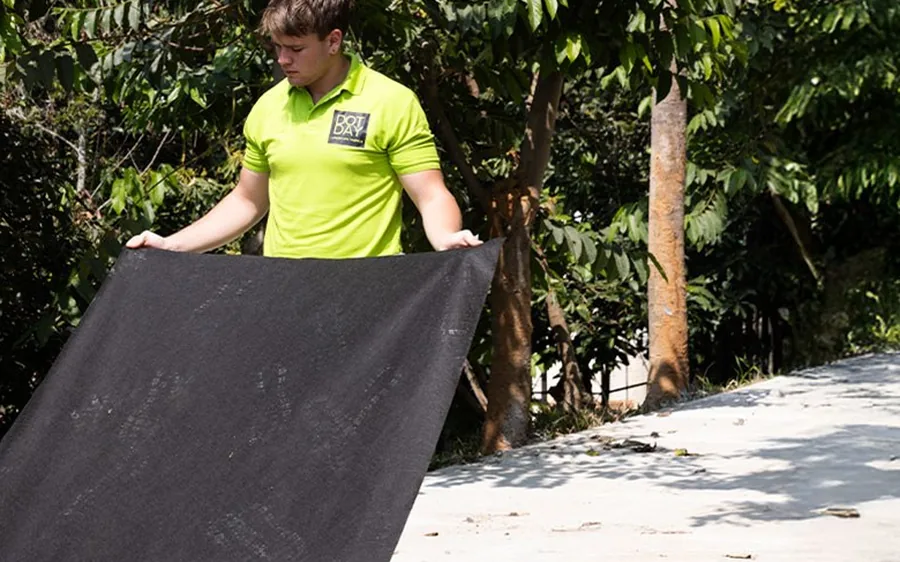
Why non-woven geotextile fabric matters under hardscapes (TERRA)
- Lay the fabric flat on prepared soil with no wrinkles.
- Overlap the seams so soil and base stay separated.
- Place stone or base gently so the fabric is not torn.
How much geotextile does your job need?
Use the DOTDAY Fabric Calculator to handle the overlap and roll math for your trench or wall.
What we recommend
Under rock on a slope, we use TERRA. Choose the weight by stone size and how the rock is placed: 6 oz for moderate rock, 8 oz for large or machine-placed stone.
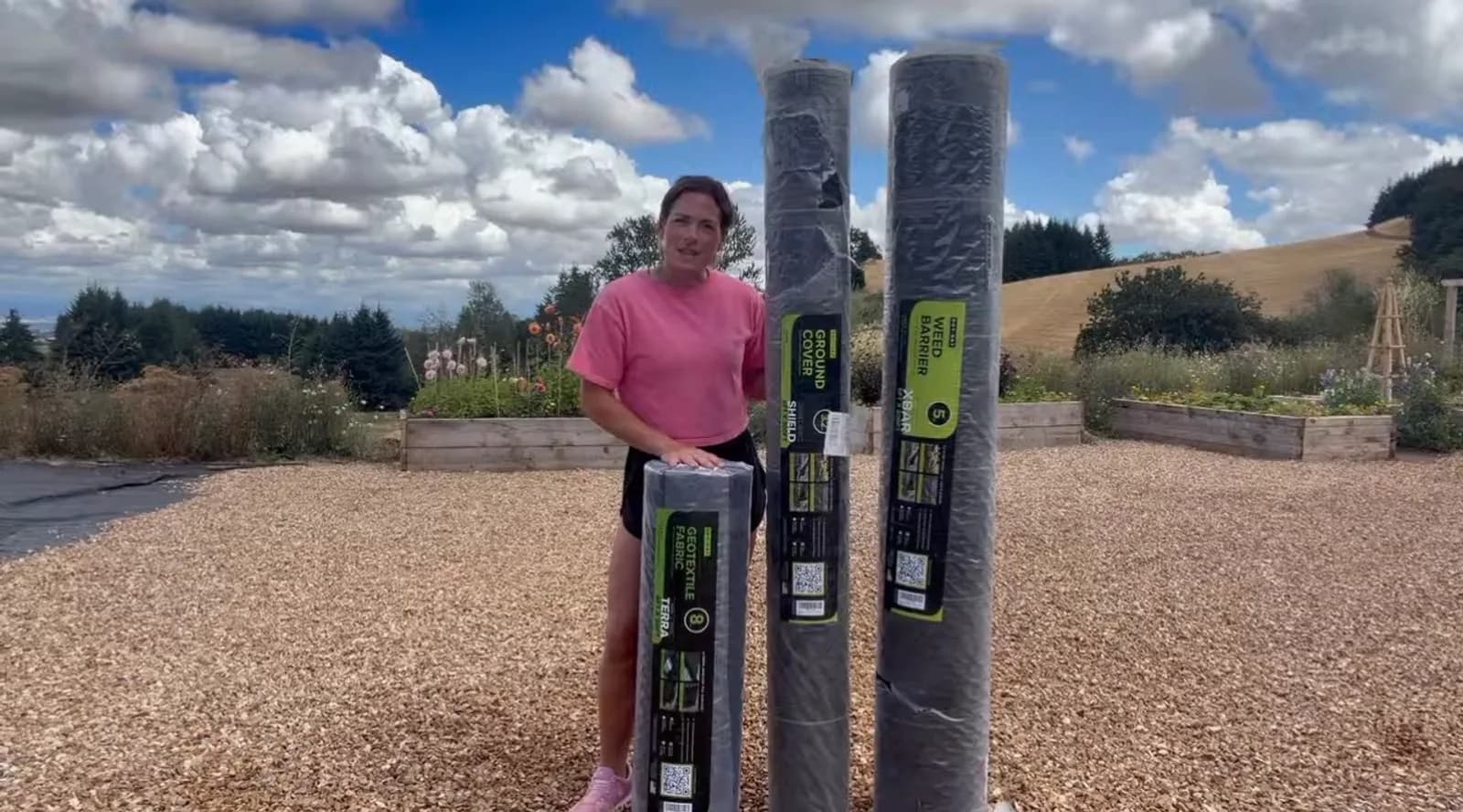
TERRA is our non-woven needle-punched geotextile in three weights: 4 oz for light drainage, 6 oz for French drains and walls, and 8 oz for road base and angular stone.
DOTDAY doesn't sell erosion control blankets, jute netting, or straw mats. If you're seeding a slope, use one of those. If you're armoring it with rock, TERRA is the separation layer underneath. The same layer sits behind a retaining wall when a slope gets a wall instead of rock. Contractors can request bulk pricing.
Common mistakes
- Using a woven weed barrier on a slope. It's built for beds, not for filtering water under rock.
- Leaving geotextile exposed. It's designed to be covered. Sunlight breaks it down.
- Rolling across the slope. Seams then face uphill and catch water.
- No top anchor. Water runs under the fabric and undermines it.
- Dropping heavy stone. Place it to avoid tears.
Wrapping up
Seeded slopes need an erosion control blanket or netting; armored slopes need geotextile under the rock. If your project doesn't fit neatly into one of these cases, the DOTDAY team can help you sort it out.
TERRA nonwoven geotextile for drainage and separation
Needle-punched nonwoven geotextile for French drains, walls, and base separation. Check the product page for the sizes in stock today.
Shop TERRAThree fabrics. One simple rule.
Use the right fabric for the right ground condition.
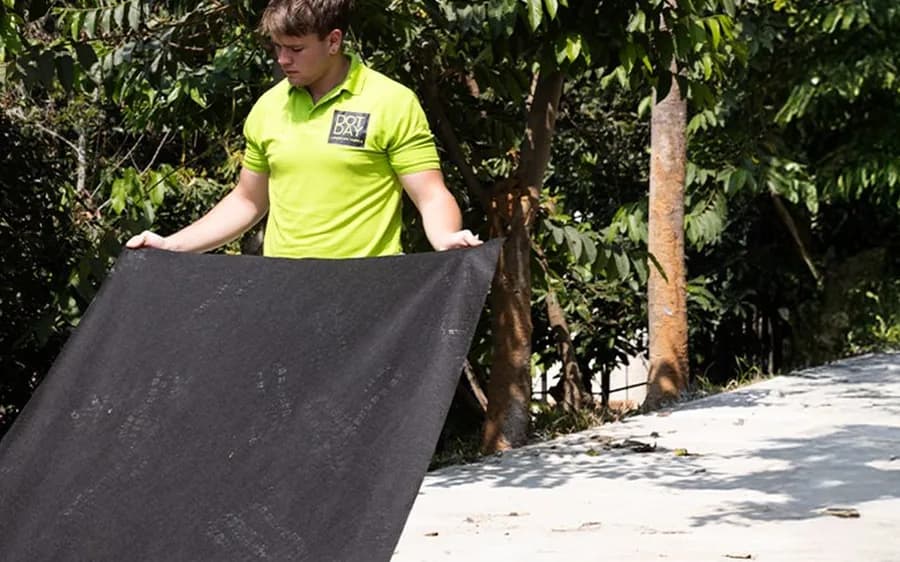
TERRA
Non-woven geotextile designed for drainage, filtration, and soil separation.
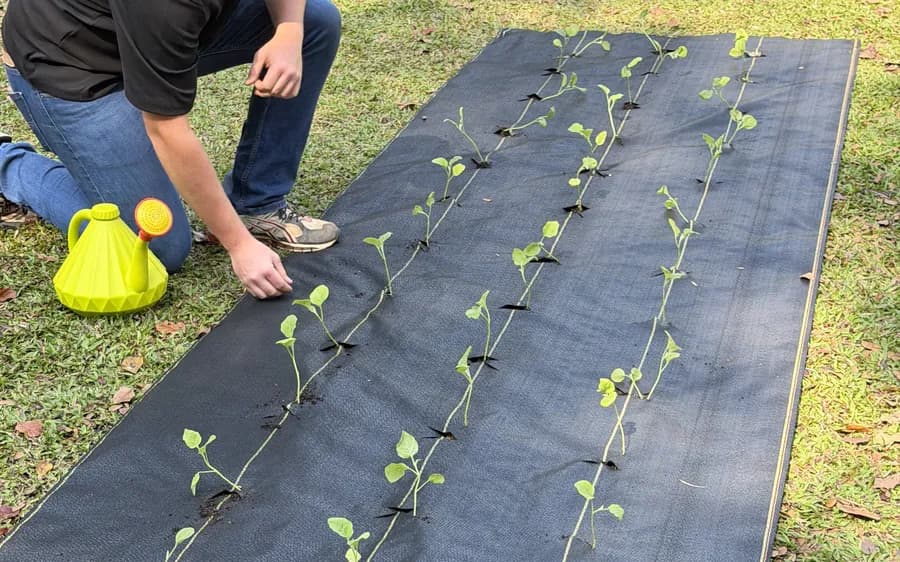
SHIELD
Woven polypropylene weed barrier built to suppress weeds while letting water and air through.
XBAR
Heavy-duty woven hybrid engineered for load and separation under hard surfaces.