
Search for fabric to put under gravel or behind a drain and you'll hit geotextile fabric vs landscape fabric used almost interchangeably. Some product listings call the same roll both under geotextile vs landscape fabric labels. Others treat them as opposites. If you're trying to buy the right thing for one job, that's confusing.
Here's the short version. Landscape fabric is a retail term for fabric used to control weeds in beds and under ground cover. Geotextile is an engineering term for permeable fabric used in soil work: separation, filtration, drainage, and stabilization. The two overlap more than most people realize, and the right choice depends on what the ground needs to do, not what the label says.
At DOTDAY, a Houston-based landscape fabric company that ships across the U.S., we sell both kinds, so this guide sorts them by job rather than by label.
What is geotextile fabric?
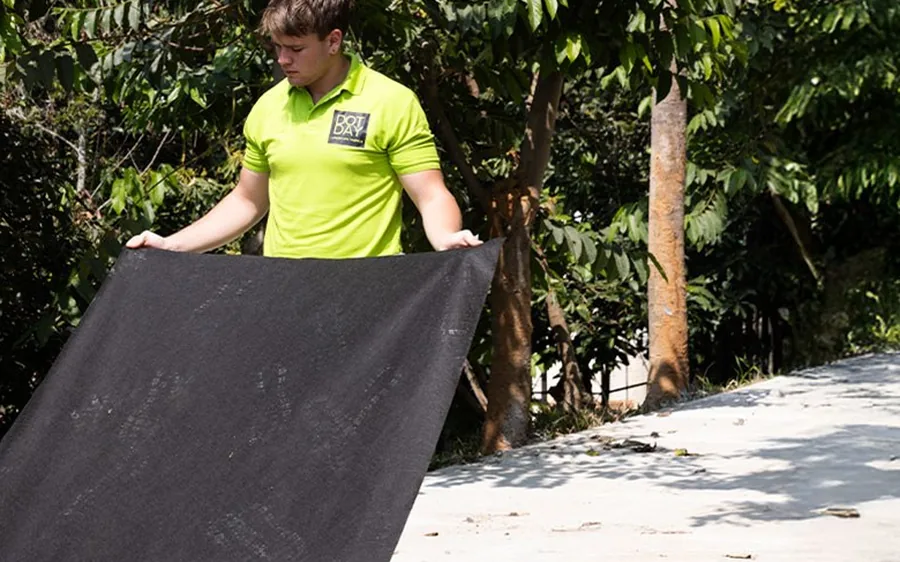
Geotextile fabric is permeable fabric made for soil work. It separates materials, filters water while holding soil back, drains water through or along the sheet, and can help stabilize a weak base. It may be woven (flat tapes) or non-woven (felt-like fibers). Landscape fabric sold for weed control is often a woven geotextile used as a light barrier under mulch. Drainage and filtration jobs usually need a non-woven geotextile instead.
What people usually mean by "landscape fabric"
When a homeowner says landscape fabric, they usually mean a weed barrier: a sheet laid over soil and covered with mulch, gravel, or rock to block sunlight so weeds can't establish.
Good landscape fabric does three things:
- Blocks light so weed seeds in the soil below don't sprout.
- Lets water and air through so plants and soil stay healthy.
- Holds up to handling so it survives being pulled, pinned, and planted through.
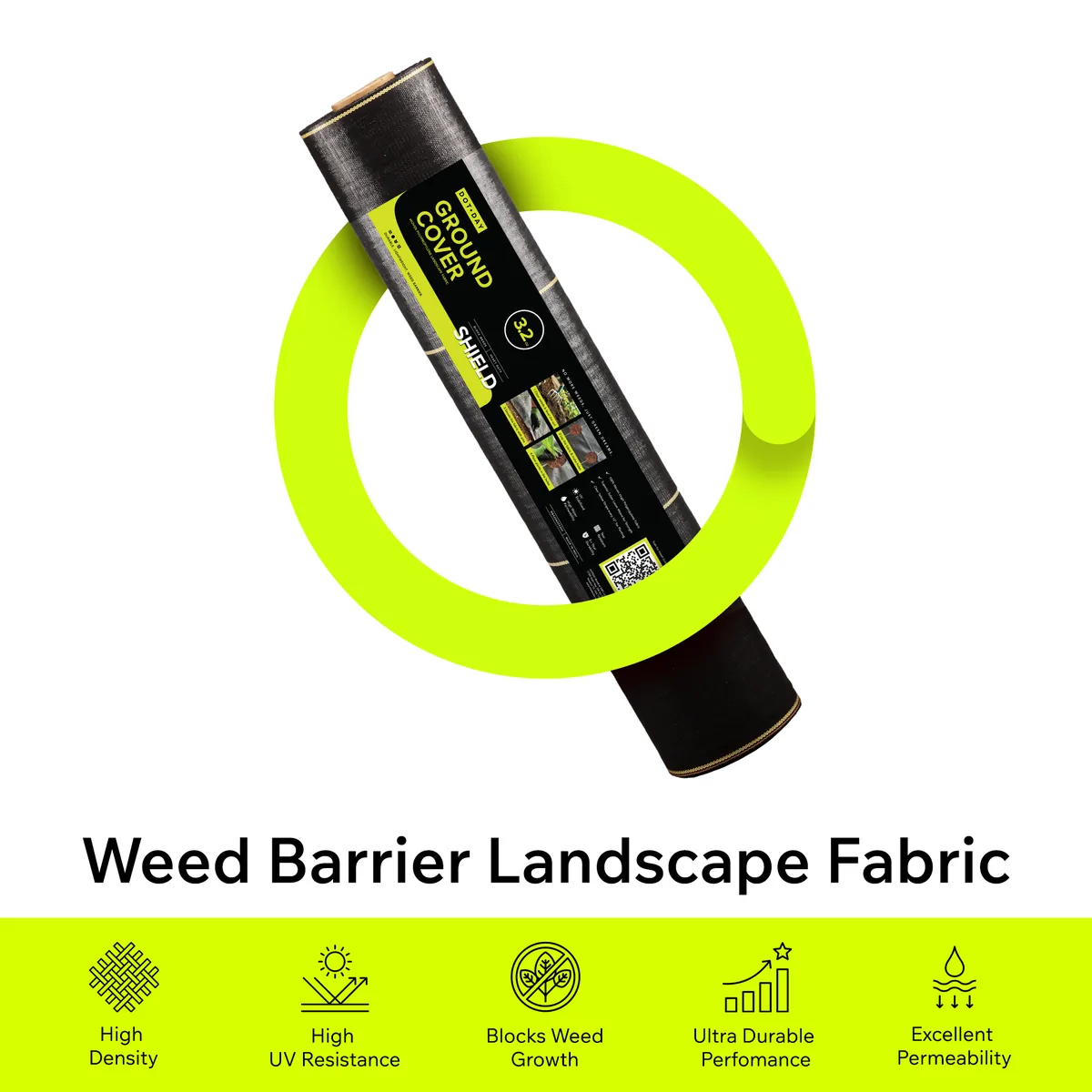
Most quality weed barriers are woven polypropylene. DOTDAY SHIELD is a 3.2 oz woven polypropylene barrier built for garden beds, farms, nurseries, and mulch beds.
What engineers mean by "geotextile"
Geotextile is the broader category. It covers permeable fabrics used in civil and site work, and each is picked for a specific function:
- Separation: keeping two materials apart, like gravel and soft soil, so they don't mix under load.
- Filtration: letting water pass while holding soil particles back.
- Drainage: moving water through or along the fabric.
- Stabilization: helping a base spread load over weak ground.
Geotextiles come in two main builds. Woven geotextiles are made from flat tapes and are strong in tension. Non-woven geotextiles are felt-like mats of fibers, bonded by needle-punching or heat, and they pass water freely in every direction.
Geotextile fabric vs landscape fabric: woven, non-woven, which job
Search traffic for "woven vs non woven" is high for a reason: the build decides the job.
| Build | Best job | DOTDAY product |
|---|---|---|
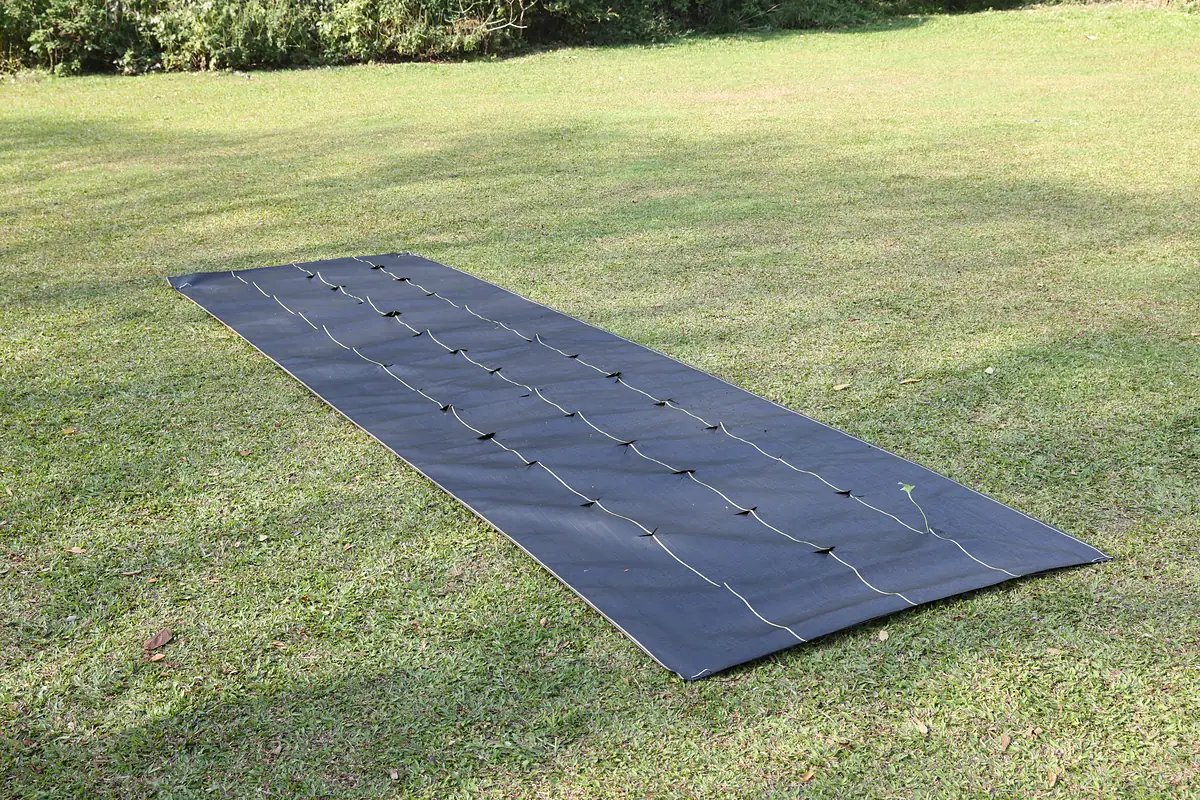
| Woven (flat tapes, guide stripes) | Weed block under mulch in beds and rows | [SHIELD](https://www.thedotday.com/product-page/dotday-shield-weed-barrier-fabric-heavy-duty-3-2oz-landscape-fabric) 3.2 oz |
| Dual-layer (woven + non-woven) | Weed block and puncture resistance under gravel | [XBAR](https://www.thedotday.com/product-page/dotday-xbar-weed-barrier-fabric-heavy-duty-5oz-dual-layer) 5 oz |
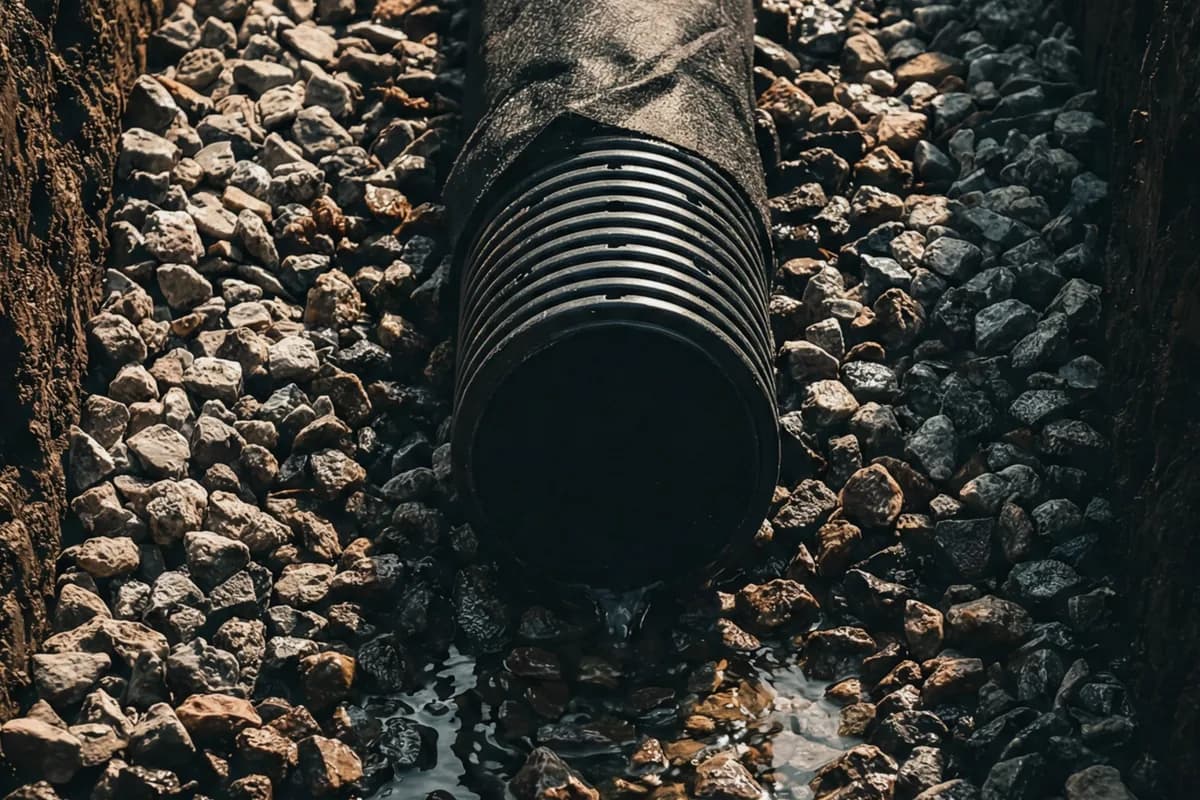
| Non-woven (black felt, no guide stripes) | Filtration and drainage (drains, walls, dry wells) | [TERRA](https://www.thedotday.com/product-page/dotday-terra-non-woven-geotextile-fabric-4-6-8-oz) 4 / 6 / 8 oz |
Do not put SHIELD in a French drain. Woven weed barrier clogs with silt and is the wrong intent for geotextile drainage searches. Drains and wall filters need non-woven TERRA. Beds need SHIELD. Gravel paths and driveways need XBAR. For a deeper build comparison, see woven vs non-woven landscape fabric.
Where the two terms overlap
A woven polypropylene weed barrier is, technically, a woven geotextile. The material family is the same. What changes is the job: weed control vs filtration, drainage, or separation.
Why the difference matters on the job
Buy by function. Beds and mulch: woven SHIELD. Gravel and traffic: dual-layer XBAR. Drains and wall filters: non-woven TERRA. Amazon and big-box listings that call a woven bed fabric "geotextile for French drains" are the wrong intent; that job is TERRA.
Quick decision guide
Answer one question: what's going on top, and what does the water need to do?
- Mulch, soil, or straw over a bed or row? Choose a woven weed barrier. SHIELD is built for this.
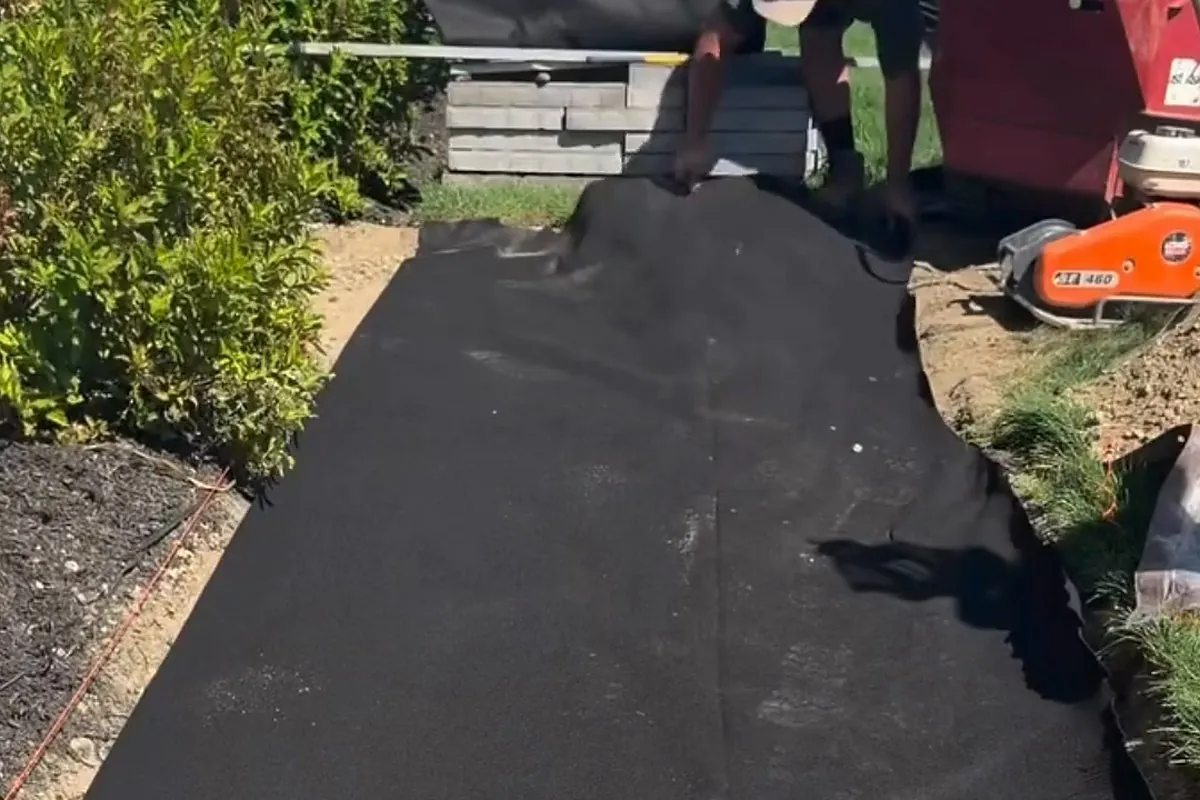
- Gravel, rock, or pavers, especially with foot or vehicle traffic? Choose a dual-layer or heavy woven fabric. XBAR is built for this.
- Water has to pass through while soil stays put? Choose a non-woven geotextile. TERRA is built for this.
Not sure which one you're dealing with? The Fabric Finder asks a few questions about your ground and points you to the right fabric, and the landscape fabric comparison compares all three.
SHIELD vs XBAR vs TERRA: pick landscape fabric by job
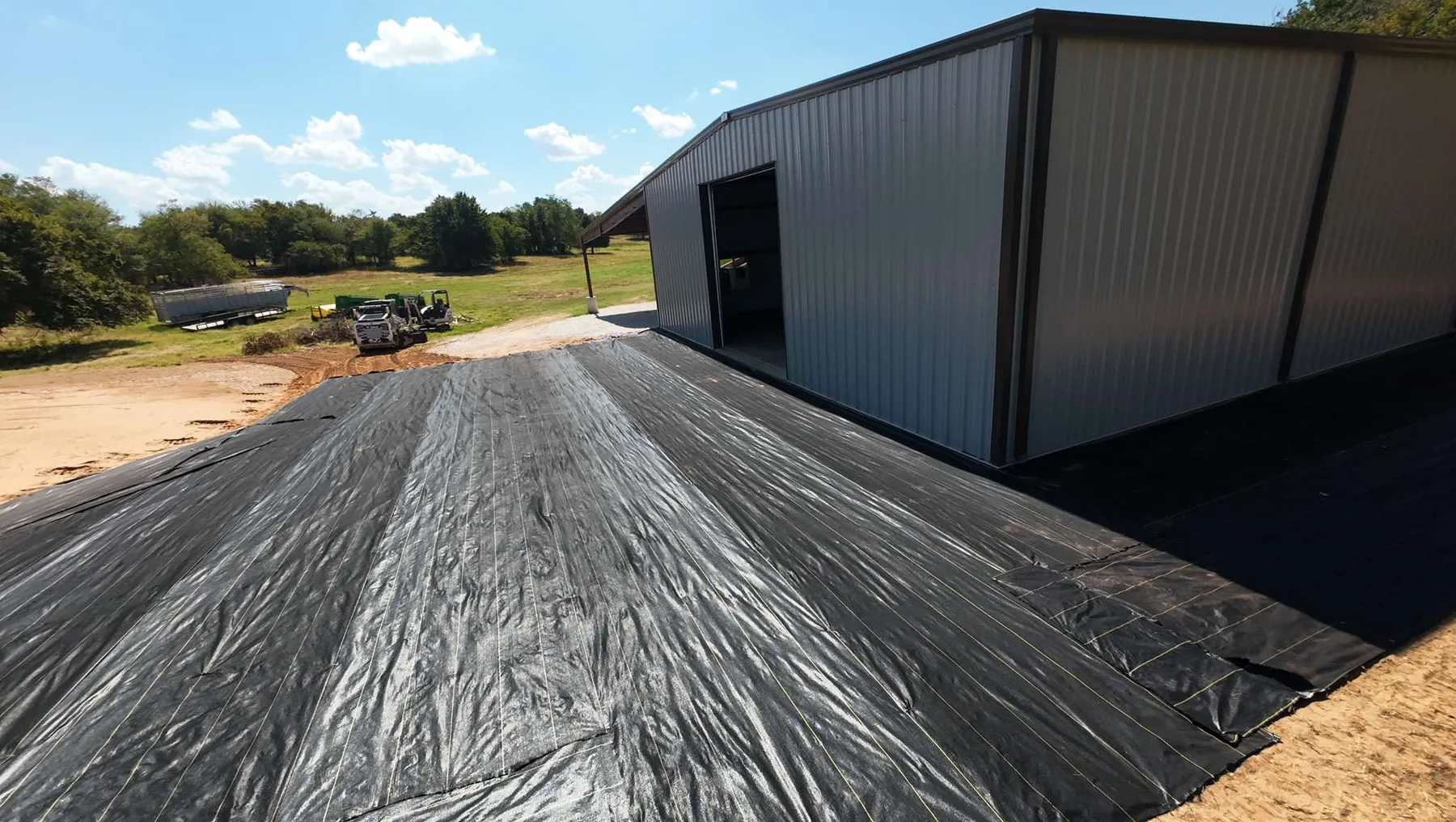
- Grade and compact the base before the fabric goes down.
- Overlap every seam and pin the edges so stone stays on top.
- Spread the gravel over the fabric instead of driving on it bare.
How much fabric does your job need?
Use the DOTDAY Fabric Calculator to handle the overlap and roll math for your area.
What we recommend
We match the fabric to what the ground has to do. For planting beds, that's SHIELD. For gravel, pavers, and driveways, it's XBAR. For drains, walls, and erosion work, it's TERRA.
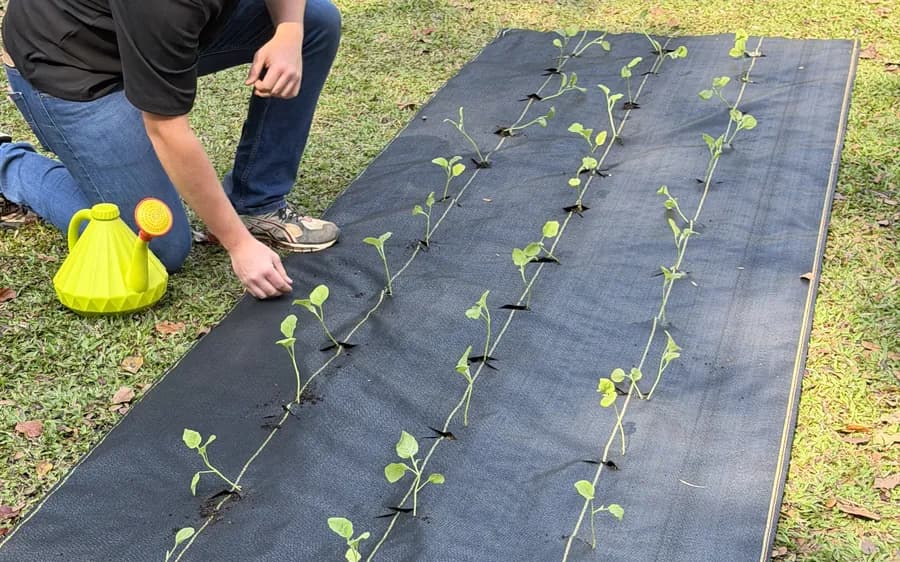
SHIELD is our 3.2 oz woven polypropylene weed barrier for beds, gardens, farms, and mulch. It lets water and air reach the soil and is built to sit under mulch, soil, or straw.
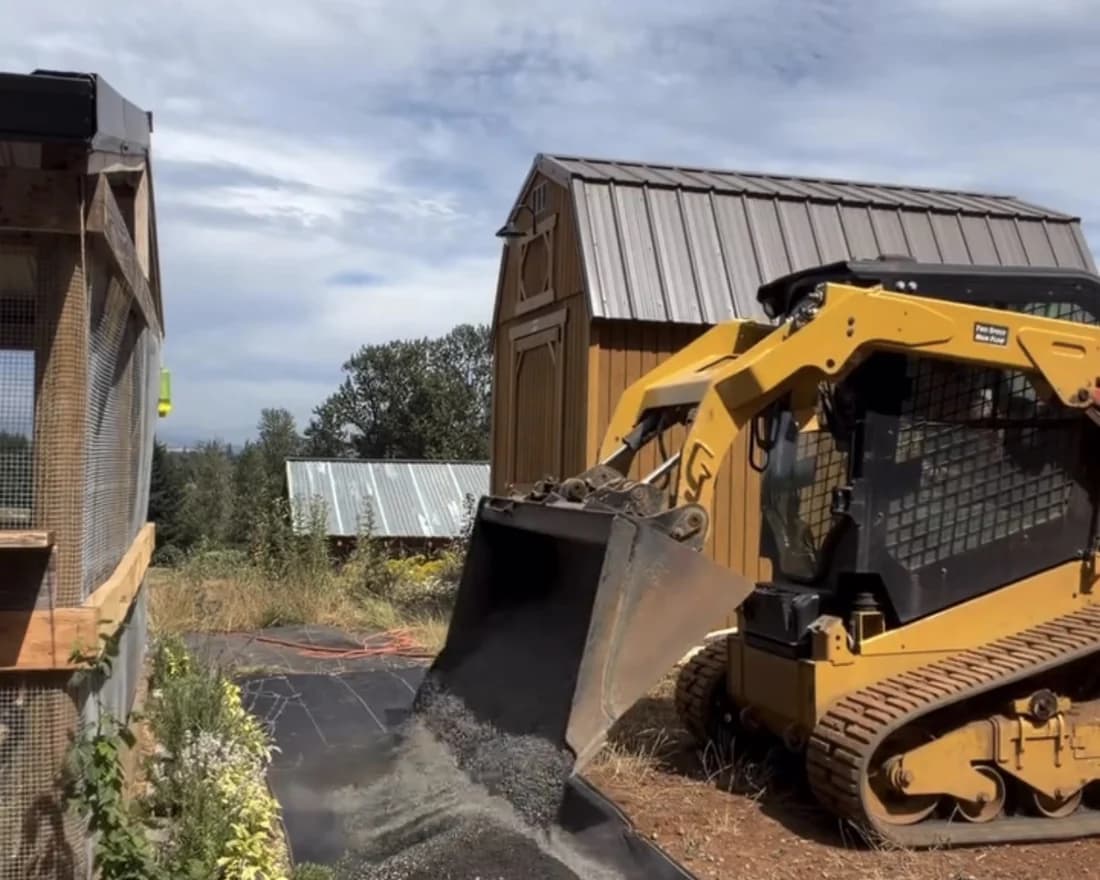
XBAR is our 5 oz dual-layer fabric: a woven top that carries load and suppresses weeds, bonded to a needle-punched non-woven backing that adds bulk and puncture resistance. Guide stripes every 12 inches help with straight cuts and even overlaps.
TERRA is our non-woven needle-punched geotextile in three weights: 4 oz for light drainage, 6 oz for French drains and walls, and 8 oz for road base and angular stone.
For how woven and non-woven builds differ on the job, see woven vs non-woven landscape fabric. For wall drainage layers, see retaining wall fabric. Trade buyers can request bulk pricing.
Wrapping up
Pick the fabric by the job, not the label: woven weed barrier for beds, dual-layer for stone, non-woven geotextile for water. At DOTDAY, we'd rather you buy the right fabric once than the wrong one twice.
Not sure which DOTDAY fabric fits?
SHIELD for beds, XBAR under gravel, TERRA for drainage and separation. The Fabric Finder matches your job to the right roll.
Find Your FabricThree fabrics. One simple rule.
Use the right fabric for the right ground condition.
SHIELD
Woven polypropylene weed barrier built to suppress weeds while letting water and air through.
XBAR
Heavy-duty woven hybrid engineered for load and separation under hard surfaces.
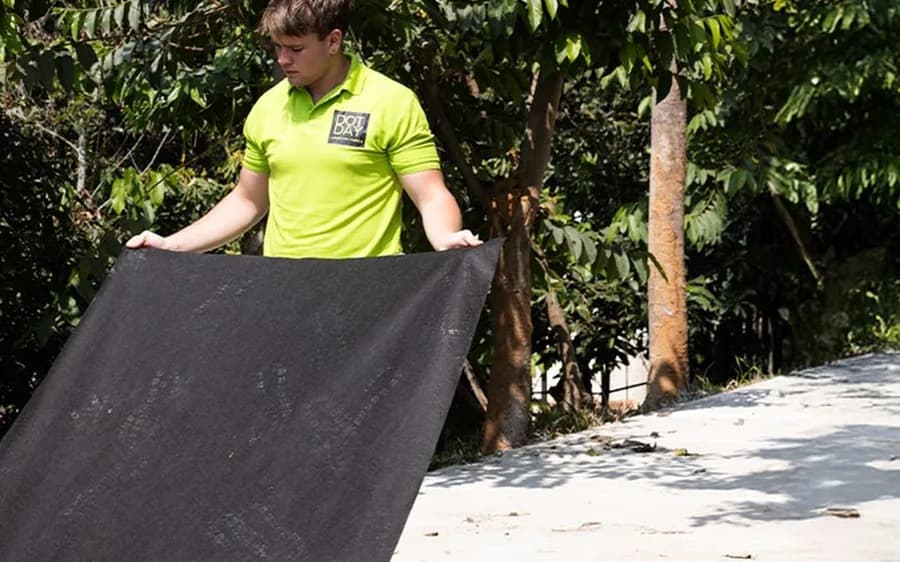
TERRA
Non-woven geotextile designed for drainage, filtration, and soil separation.